OpenAI CEO Sam Altman is stepping down as board chair of Helion, the fusion energy startup he supports, as discussions reportedly take place between the two companies about a potential power supply agreement.
According to a report by Axios, the proposed deal is still in its early stages. It could involve OpenAI securing 12.5% of Helion’s future electricity output, amounting to five gigawatts by 2030 and increasing to 50 gigawatts by 2035. Microsoft previously signed a comparable agreement with Helion in 2023, committing to purchase energy beginning in 2028.
If these projections hold, it would indicate that Helion anticipates scaling its fusion power production at an aggressive pace. The company has stated that each of its reactors is expected to produce around 50 megawatts of electricity. Meeting the reported targets would require Helion to deploy approximately 800 reactors by 2030, followed by an additional 7,200 reactors by 2035.
Helion has not confirmed whether negotiations with OpenAI are currently underway. A company spokesperson said it has not announced any new customer agreements beyond its existing partnerships with Microsoft and steelmaker Nucor.
“Sam is stepping down from Helion’s Board of Directors after more than a decade. This decision enables Helion and OpenAI to partner on future opportunities to bring zero-carbon, safe electricity to the world,” said David Kirtley, the company’s co-founder and CEO. He added that the company looks forward to continuing its collaboration with Altman in a different role.
Helion is working toward building its first commercial-scale fusion reactor within this timeline. Achieving that milestone would position the company ahead of most competitors, many of whom are targeting the early 2030s for their first commercial operations.
The startup raised $425 million last year from investors, including Altman, as well as firms such as Mithril, Lightspeed, and SoftBank.
Fusion startups typically follow one of two main approaches: generating heat from fusion reactions and converting it into electricity using steam turbines. Helion is pursuing a different design that directly converts fusion energy into electricity using magnetic fields.
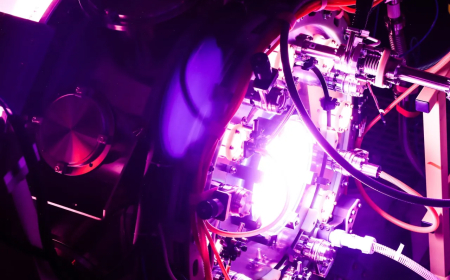
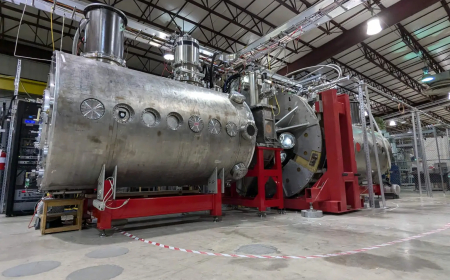
Inside Helion’s hourglass-shaped reactor, fusion fuel is converted into plasma at both ends and then accelerated toward the centre using magnetic fields. When the plasma streams collide, another set of magnets compresses the combined plasma until fusion occurs. The resulting reaction exerts a force on the magnetic field, allowing the system to generate electricity directly without the need for traditional turbines.
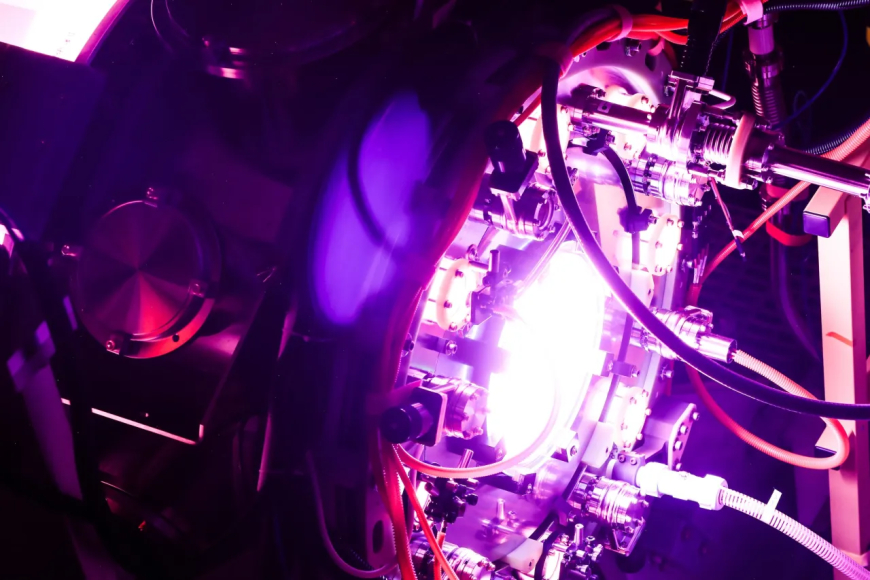
Helion is currently operating its Polaris prototype as part of its development efforts. In February, the company achieved plasma temperatures of 150 million degrees Celsius, approaching the 200 million degrees Celsius it believes is necessary for commercial viability.
Although Altman has stepped down as board chair and reportedly recused himself from the discussions, his influence remains evident. Last year, Altman also stepped down as board chair of Oklo, a small modular nuclear reactor company that had merged with his acquisition firm AltC. That move was intended to allow Oklo to pursue strategic partnerships with AI companies, including a potential collaboration with OpenAI, according to statements at the time by Oklo’s leadership.




























 Like
0
Like
0
 Dislike
0
Dislike
0
 Love
0
Love
0
 Funny
0
Funny
0
 Angry
0
Angry
0
 Sad
0
Sad
0
 Wow
0
Wow
0