
























Google signs 1.9GW clean energy agreement featuring 100-hour battery storage
Google has secured a 1.9GW clean energy deal that includes a large-scale 100-hour battery system, strengthening its long-term renewable power and grid reliability strategy.
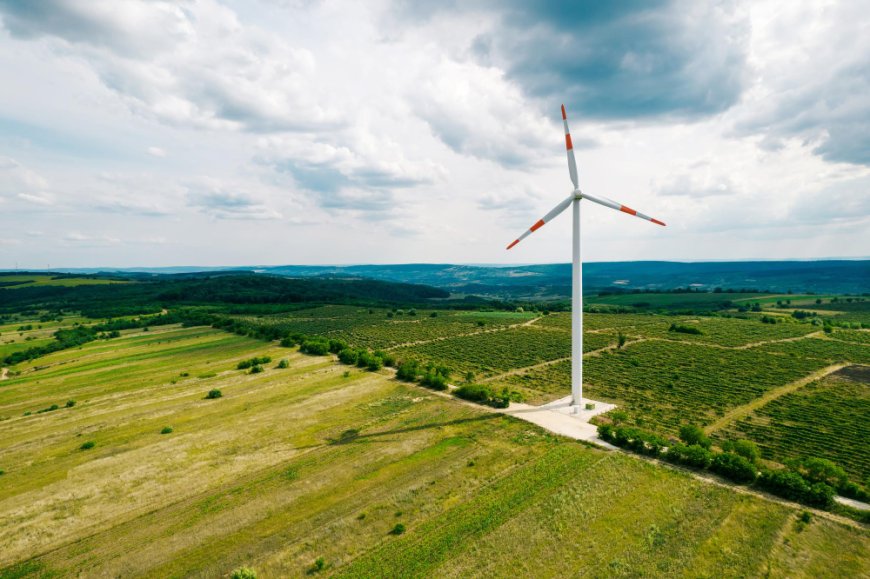
Google announced Tuesday that it will build a new data centre in Minnesota supported by 1.9 gigawatts of clean electricity, including a large 300-megawatt battery supplied by long-duration storage startup Form Energy.
The facility will be Google’s first data centre in Minnesota and will be located in Pine Island, roughly an hour southeast of Minneapolis.
To supply clean power, Google is partnering with Xcel Energy on 1.4 gigawatts of wind and 200 megawatts of solar generation. Those renewable sources will feed into Form Energy’s battery system, which can deliver its rated output continuously for 100 hours. With a total capacity of 30 gigawatt-hours, Google said the battery will be the largest in the world, helping the data centre remain powered by clean electricity for longer periods.
Long-duration batteries are built to keep renewable energy flowing at night or when wind and solar output drops, a process energy experts often call “firming” the power supply. Grid-scale lithium-ion batteries already perform a similar role on many power systems today, but typically for much shorter durations.
Form Energy’s technology is different from most grid-scale storage deployed today. Many modern grid-scale batteries use lithium-ion chemistries originally developed for the automotive industry. Form’s system instead stores and releases energy through a process of rusting and deoxidising iron.
In Form’s iron-air battery design, oxygen from the air passes over iron pellets inside the battery, causing the iron to rust and generate electricity. When charging, the system applies electrical current to reverse the process, deoxidising the rust back into metallic iron and releasing oxygen, which is then drawn out of the battery.
Iron-air batteries come with notable tradeoffs. They are heavier than lithium-ion packs and have lower efficiency. Typical iron-air systems can return only 50% to 70% of the energy used to charge them, compared with more than 90% for lithium-ion batteries. However, Form’s key advantage is cost. The company expects storage to ultimately cost about $20 per kilowatt-hour using its technology, which it says is at least three times cheaper than lithium-ion storage.
The project also introduces a new utility pricing approach in Minnesota designed to help utilities adopt cleaner technologies without clashing with regulators who push them to purchase the lowest-cost available electricity.
Google first developed the concept in Nevada, where it has been purchasing power from enhanced geothermal startup Fervo. Sometimes called the “clean transition tariff” or the “clean energy accelerator charge,” the structure in the Google-Xcel agreement allows the utility to move forward with projects that regulators might consider risky. At the same time, Google pays a premium so that ordinary ratepayers are not left responsible for higher costs.
Solar and wind are well-established, but Form’s iron-air batteries are still relatively new on the grid. Form’s first battery project is currently being installed in Minnesota in partnership with cooperative utility Great River Energy. That system is designed to store 150 megawatt-hours for 100 hours and deliver 1.5 megawatts to the grid at peak output. Form Energy manufactures its batteries at a facility in West Virginia. The company has raised $1.4 billion to date, according to PitchBook data.
What's Your Reaction?
 Like
0
Like
0
 Dislike
0
Dislike
0
 Love
0
Love
0
 Funny
0
Funny
0
 Angry
0
Angry
0
 Sad
0
Sad
0
 Wow
0
Wow
0