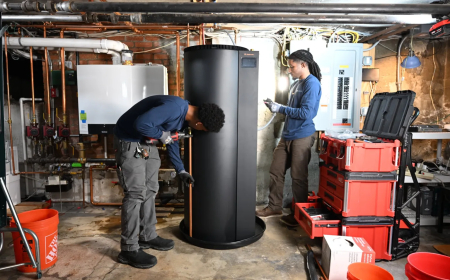
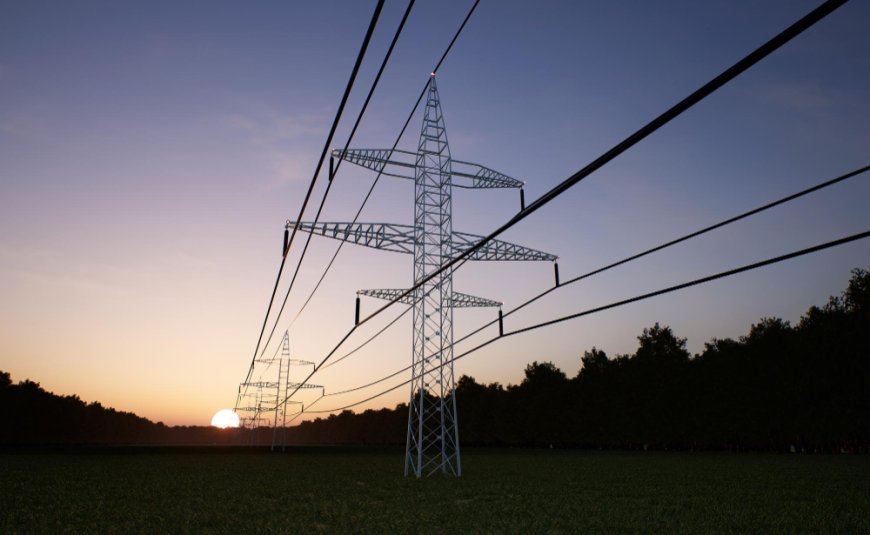
The electrical grid has undergone more change in the past decade than in the previous five, as solar, wind, and battery technologies have shifted energy production away from large, centralised providers. Despite these advances, the grid continues to face familiar challenges.
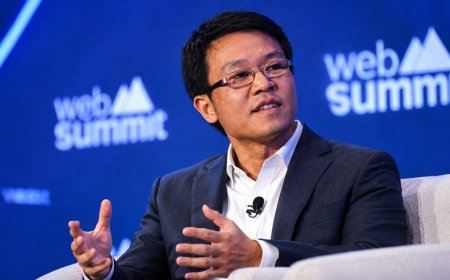
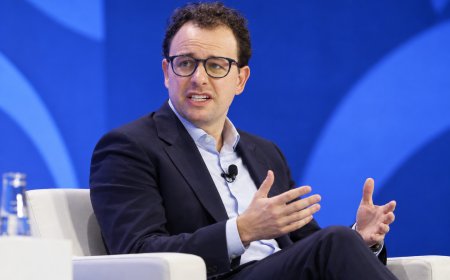
“The problem on the grid is a peak problem. Most of the time, you’re okay, you have plenty of power. But in those peak hours,s you might not have enough,” said Michael Phelan, co-founder and CEO of GridBeyond.
These shortages are increasingly felt by technology companies and data centre operators, which require large amounts of electricity to train and run AI models.
“But if you have enough energy stored in a battery or you have an industrial load you can turn down — and it’s hundreds of megawatts — then you can start building those hyperscalers,” Phelan explained.
GridBeyond has been developing both hardware and software to connect different parts of the grid and enable them to function as unified virtual power plants. The company currently manages around 1 gigawatt of energy from solar, wind, hydropower, and battery sources. On the demand side, it also controls “several gigawatts” across commercial and industrial operations.
To further expand its capabilities, GridBeyond recently secured a €12 million (approximately $13.8 million) equity investment led by Samsung Ventures. Additional investors in the round include ABB, Act Venture Capital, Alantra’s Energy Transition Fund, Constellation Technology Ventures, EDP, Energy Impact Partners, Enterprise Ireland, Klima, Mirova, and Japan-based Yokogawa.
The company has deployed its hardware controllers across batteries, renewable energy plants, and large-scale commercial and industrial sites in regions including Australia, Ireland, Japan, the U.K., and the United States.
Like many virtual power plant providers, GridBeyond’s origins trace back to an island setting. As Ireland expanded its wind energy capacity, grid balancing became a challenge due to its isolated nature. “They hit this problem where they were an island, and they had to balance the grid,” Phelan said, adding that flexible energy loads became a practical solution.
Utilities have long relied on large energy users to reduce consumption during peak demand periods, often offering financial incentives to do so. This approach has proven more cost-effective than building new infrastructure,e such as transmission lines or additional power plants. As renewable energy sources have grown, this strategy has evolved, allowing businesses to adjust usage in response to fluctuations in wind or solar output.
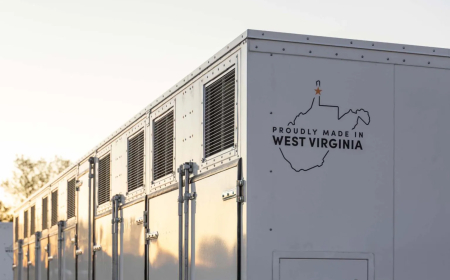
Battery storage has added another layer of flexibility. GridBeyond manages several large-scale storage systems, including a 200-megawatt battery facility in California. These systems help compensate for dips in renewable energy supply.
Batteries also provide faster response times compared to traditional peaking power plants, which can take several minutes to activate. This speed allows GridBeyond to buy and sell electricity quickly, enabling real-time energy trading strategies.
The technology is also becoming increasingly relevant for data centres. Unlike traditional facilities, many data centres experience fluctuating demand, especially during AI training workloads. These spikes can create instability on the grid. “You know the thing that collapsed the Spanish grid, which is not what people want,” Phelan noted.
By using on-site batteries or connecting to nearby virtual power plants, data centres can smooth out their energy usage and reduce stress on the grid. According to Phelan, this makes it easier for such facilities to secure grid connections and operate efficiently.




































 Like
0
Like
0
 Dislike
0
Dislike
0
 Love
0
Love
0
 Funny
0
Funny
0
 Angry
0
Angry
0
 Sad
0
Sad
0
 Wow
0
Wow
0