







































Blue Energy secures $380M to develop shipyard-built nuclear reactors for the grid
Blue Energy has raised $380 million to build modular nuclear reactors in shipyards, aiming to scale clean, reliable power for modern electricity grids.
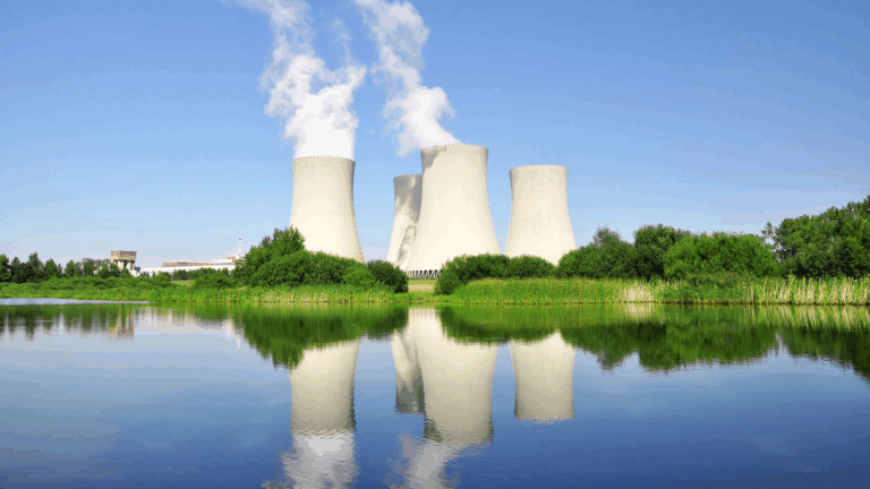
As electricity grids come under increasing pressure from electrification trends and the rapid growth of AI data centres, tech companies and utilities are once again evaluating nuclear power as a potential solution. However, after the two most recent nuclear reactors built in the U.S. went significantly over budget and behind schedule, the industry is cautious about repeating past mistakes.
Still, Jake Jurewicz, co-founder and CEO of the startup Blue Energy, believes the solution to faster, more cost-effective nuclear deployment lies in revisiting the sector’s early engineering history.
Blue Energy’s approach is to build nuclear reactors inside shipyards, where large-scale steel fabrication is already established, and then transport the completed systems to deployment sites.
“The nuclear power technology that is most common — light water reactors — was originally invented for nuclear submarines,” Jurewicz told. “There has actually always been a history of basically prefabbing it and looking at it in a shipyard context.”
To fund development of its first power plant — a 1.5-gigawatt project expected to begin construction later this year in Texas — Blue Energy has raised $380 million in combined equity and debt financing. The round was led by VXI Capital, with participation from At One Ventures, Engine Ventures, and Tamarack Global.
Unlike many nuclear startups, Blue Energy is not designing a new reactor type. Instead, it focuses on reengineering the way reactors and entire power plants are constructed. Jurewicz said he was influenced by liquefied natural gas (LNG) infrastructure developer Venture Global, which uses modularised construction methods to reduce timelines.
“They cut the schedule in half doing this, which was very disruptive,” he said.
By shifting most construction work into controlled shipyard environments, Blue Energy aims to improve standardisation, reduce on-site complexity, and eventually enable greater automation.
“It really minimises the amount of construction on-site, and it moves pretty much everything into a manufacturing environment. Then once you’ve centralised all that work, you can start moving away from manual welding,” he said.
Once completed, reactor modules and supporting infrastructure would be transported via barge to installation sites. While this limits potential locations, Blue Energy says waterways still provide access to major population and demand centres across the U.S., Europe, Africa, and Asia.
“The majority of our population and the majority of our load growth is happening around waterways,” Jurewicz said.
The company also claims its model is already drawing interest from infrastructure investors and lenders. “We’ve been engaged for a long time with several large infrastructure funds and banks, including three major project financing banks who have responded to our RFP,” he said.
According to Jurewicz, investor confidence is tied closely to Blue Energy’s ability to reduce costs and improve predictability in nuclear construction — historically one of the sector’s biggest challenges. “This is the crux of the issue with nuclear. It’s not the technology; it is how we get the construction costs and the construction schedule down to a place where it’s predictable,” he said.
What's Your Reaction?
 Like
0
Like
0
 Dislike
0
Dislike
0
 Love
0
Love
0
 Funny
0
Funny
0
 Angry
0
Angry
0
 Sad
0
Sad
0
 Wow
0
Wow
0