































Arbor Energy secures billion-dollar deal to deploy rocket turbine technology in power grids
Arbor Energy has secured a billion-dollar order to deploy rocket turbine technology in power grids, aiming to boost efficiency and transform energy generation.
Energy startup Arbor Energy announced Wednesday that it has secured a major agreement to supply up to 5 gigawatts of its modular turbine systems to GridMarke. This firm facilitates power infrastructure projects for data centres and industrial clients.
Demand for energy capacity continues to surge, particularly as large-scale computing and industrial operations expand. Arbor co-founder and CEO Brad Hartwig emphasised that customers are seeking power solutions faster than ever before, with timelines shrinking and project scales increasing significantly.
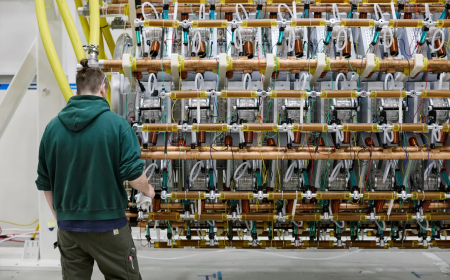
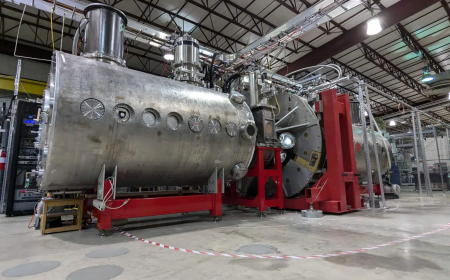
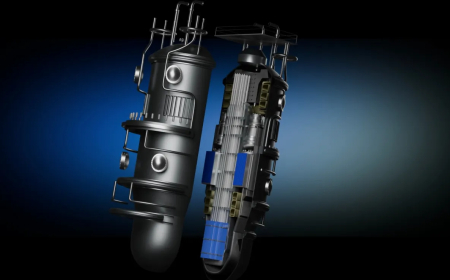
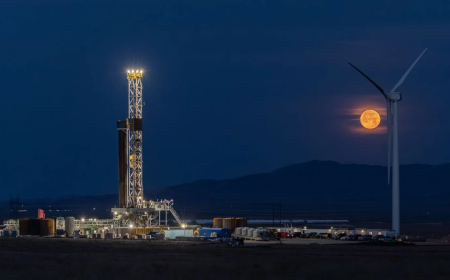
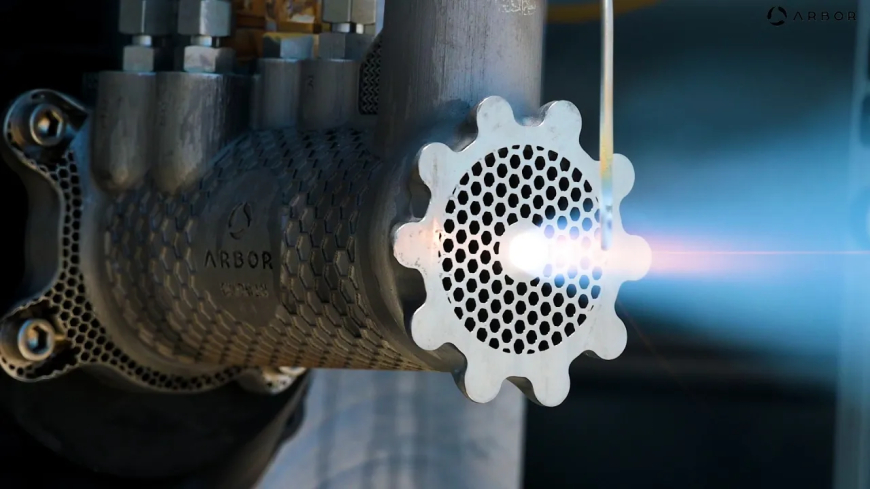
At the centre of the deal are Arbor’s Halcyon turbines, which are built using rocket turbomachinery — a high-performance technology originally developed for spaceflight applications. The company’s first commercial units will be produced using 3D printing techniques and are designed to generate 25 megawatts each. If the full agreement is executed, GridMarket’s order would translate into approximately 200 turbines.
While neither Arbor Energy nor GridMarket disclosed the exact financial terms, Hartwig noted that the market has shown a willingness to pay more than $100 per megawatt-hour. A source familiar with the transaction indicated that the total value of the deal reaches into the single-digit billions of dollars. Arbor plans to connect its first turbine to the grid by 2028, followed by a production ramp-up through 2030. By that point, the company aims to manufacture over 100 turbines annually, with a long-term objective of delivering enough units to support 10 gigawatts of new capacity each year.
Initially, Halcyon turbines were designed to operate exclusively on biomass, using organic materials such as agricultural waste and wood residues. These materials would be converted into syngas — a combustible gas mixture — and then burned with pure oxygen. This process produces concentrated carbon dioxide, which can be captured and stored underground.
Under this original configuration, the turbines would generate carbon-negative energy, since the biomass feedstock would otherwise decompose and release greenhouse gases like methane and CO2 into the atmosphere.
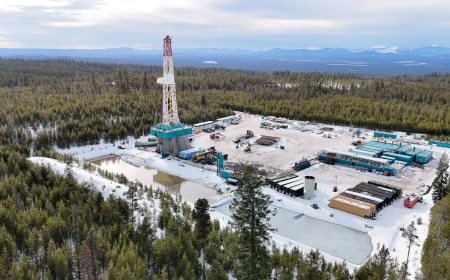
However, Arbor has since adapted the system to run on natural gas as well, making the turbines more flexible in their fuel inputs. The underlying process remains similar, allowing carbon dioxide emissions to be still captured and sequestered.
That said, when operating on natural gas, the system is no longer carbon negative. Methane leaks across the supply chain and the combustion process itself contribute to greenhouse gas emissions. Hartwig acknowledged this, noting that Arbor is working with suppliers that minimise leakage and that carbon capture remains economically beneficial in these scenarios.
The company believes it can eventually reduce emissions to below 10 grams of CO2 per kilowatt-hour — a substantial improvement compared to conventional natural gas power plants, which typically emit around 400 grams per kilowatt-hour without carbon capture technologies.
Despite the shift toward natural-gas compatibility, Arbour continues to pursue biomass-based projects. However, those initiatives remain smaller in scale compared to the GridMarket agreement, which represents one of the company’s largest commitments to date. Like many players in the energy sector, Arbor has benefited from the rapid expansion of data centres, which are driving unprecedented demand for reliable power. Traditional turbine manufacturers have struggled to keep pace, partly due to supply chain limitations and the complexity of producing key components such as turbine blades and vanes.
Hartwig pointed out that these components often require highly specialised manufacturing processes and skilled labour, making rapid scaling difficult. As a result, customers ordering conventional turbines today may face delivery timelines stretching into the early 2030s. Arbor is betting that its reliance on machined and 3D-printed components will allow it to bypass these bottlenecks and bring capacity online faster. Our approach meets the urgent demand for energy infrastructure, as industries increasingly require large volumes of power within shorter timeframes.
What's Your Reaction?
 Like
0
Like
0
 Dislike
0
Dislike
0
 Love
0
Love
0
 Funny
0
Funny
0
 Angry
0
Angry
0
 Sad
0
Sad
0
 Wow
0
Wow
0