



































How nuclear batteries could accelerate the race to fusion power
Nuclear batteries could help accelerate fusion power development by providing stable energy for experiments, improving efficiency and enabling continuous research.
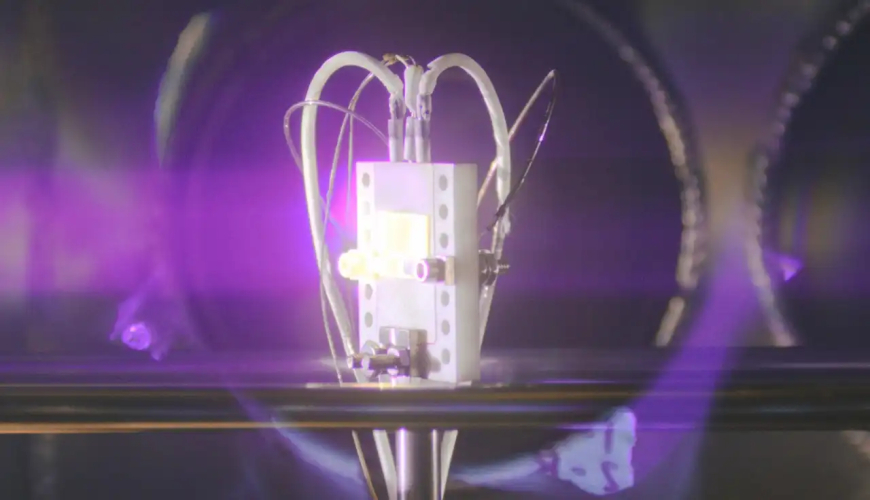
Fusion energy has long carried a paradox. Producing a fusion reaction itself is not the hardest part — in fact, even a university student has managed to build a small-scale fusion device at home — but converting that reaction into usable electricity remains a major hurdle.
“A fusion reactor that makes power — and there’s plenty of those, they already exist,” said Daniel Velázquez, materials science lead at Avalanche Energy. “A fusion reactor that makes electricity is better.” That distinction continues to define where the industry stands today.
Fusion works by combining lighter atoms into heavier ones, releasing vast amounts of energy in the process. However, extracting that energy efficiently has proven difficult. The conventional method relies on heat generated by the reaction to produce steam, which then drives turbines. Even under optimal conditions, this approach captures only about 60% of the available energy, leaving significant room for improvement.
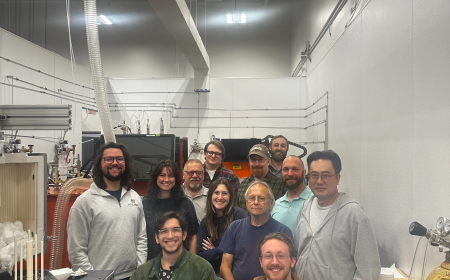
Avalanche Energy believes a different path could unlock more of that potential. The company is developing advanced materials known as radiovoltaics. These materials operate on a principle similar to solar panels — or photovoltaics — by using semiconductors to convert radiation directly into electricity. While the concept is not new, earlier versions of radiovoltaics have struggled with durability and efficiency, as they tend to degrade under the same radiation they are designed to harness.
The company recently received a $5.2 million contract from DARPA to develop next-generation radiovoltaic materials. DARPA is exploring their use in a new category of nuclear batteries, which generate electricity through the decay of radioactive elements such as polonium.
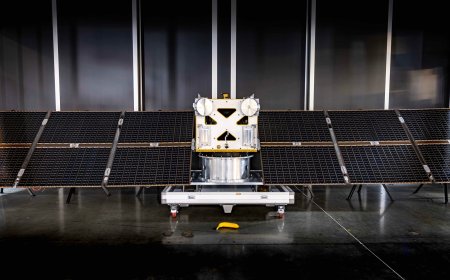
These nuclear batteries could play a critical role in powering long-duration systems. In space, they could support satellites and spacecraft for years without refuelling. On Earth, particularly in military settings, they could sustain autonomous systems or missions operating in environments where logistics and resupply are challenging.
Although Avalanche Energy’s core focus is not on nuclear batteries, the underlying technology overlaps significantly with its broader goals. Both fusion reactions and nuclear batteries produce alpha particles — a form of high-energy radiation capable of damaging equipment, including reactor walls. Capturing and utilising this radiation is central to improving efficiency.
Avalanche is currently working on a compact, desktop-scale fusion reactor intended as an alternative to diesel generators at remote military bases. If the company succeeds in developing more resilient and efficient radiovoltaic materials, it could use them as protective layers in its reactors. Such a layer would absorb alpha particles, shielding internal components while simultaneously converting that radiation into additional electrical output.
The company has also secured a separate $1.25 million award from the U.S. Air Force’s AFWERX research program to accelerate the discovery of new materials using computational techniques.
Across the fusion sector, startups are competing to reach a critical milestone known as breakeven, or Q>1. This refers to the point at which a fusion reaction generates more energy than is required to sustain it. Finding ways to convert alpha-particle energy directly into electricity could significantly improve the chances of achieving this goal and bring commercial fusion power closer to reality.
Avalanche Energy is not alone in working on reactor designs that generate alpha particles. If its approach proves successful, the company could end up supplying key components or materials to other fusion developers — reflecting a broader industry trend in which specialised technologies are shared across multiple players to accelerate progress.
What's Your Reaction?
 Like
0
Like
0
 Dislike
0
Dislike
0
 Love
0
Love
0
 Funny
0
Funny
0
 Angry
0
Angry
0
 Sad
0
Sad
0
 Wow
0
Wow
0