



























AI-Powered Weather Company Surpasses Traditional Government Forecast Models
This AI weather startup delivers more accurate forecasts than many government agencies by leveraging advanced machine learning, real-time data analysis, and modern forecasting technology.
A newly released AI-powered weather forecasting system from startup WindBorne Systems is delivering more frequent and, according to the company, more accurate predictions than the leading forecasting models developed by European government-backed institutions. The advancement is largely attributed to improvements in the incorporation of real-world sensor data into deep-learning weather models.
Founded in 2019 by a group of Stanford students, WindBorne initially focused on developing advanced weather balloons to sell atmospheric data. However, after the emergence of AI-based weather forecasting models in 2022, the company recognised an opportunity to expand beyond data collection and build its own forecasting technology.
Today, WindBorne is launching the sixth generation of its forecasting platform, WeatherMesh. The company says WeatherMesh-6 delivers stronger performance than both traditional forecasting systems and AI-based forecasts from the European Centre for Medium-Range Weather Forecasts (ECMWF), widely regarded by meteorologists as one of the most accurate weather prediction organisations in the world.
WindBorne Chief Product Officer Kai Marshland said one way to understand the improvement is that WeatherMesh-6 can provide forecasts five days in advance with a level of accuracy comparable to that of traditional forecasting systems just one day ahead, particularly for surface temperatures.
The new model generates updated forecasts every hour, compared with the six-hour update cycle commonly used by traditional forecasting systems. Its resolution has also improved significantly, reaching 3 kilometres across Europe and the continental United States, where weather data availability is strongest.
Conventional weather forecasting relies on highly complex physics-based simulations that require substantial computing resources and expensive supercomputers. While AI weather models developed by startups and organisations such as Google DeepMind can produce forecasts more quickly, they have historically struggled to match the resolution and long-range accuracy of traditional systems.
That gap is narrowing rapidly. AI weather forecasting technology continues to advance and is already being used by major government agencies worldwide. Researchers are actively exploring ways to integrate AI into the systems responsible for collecting weather observations and generating public forecasts.
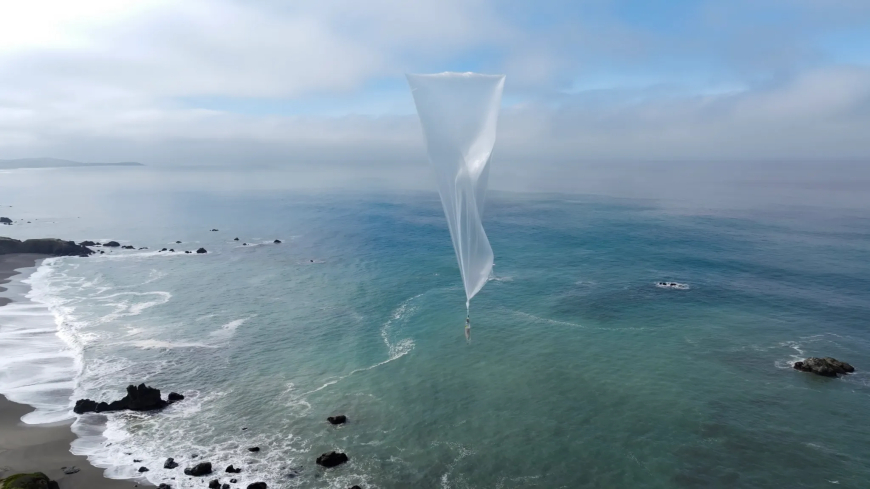
WindBorne’s approach combines forecasting technology with its own data-gathering infrastructure. The company currently operates around 400 weather balloons at any given time, launched from 15 locations worldwide. These balloons continuously collect atmospheric measurements, and improvements in WeatherMesh-6 are largely tied to advancements in how those observations are fed directly into the forecasting model.
“I don’t understand, personally, the business model of being [an] AI-based weather company without a dataset advantage,” WindBorne CEO John Dean said.
ECMWF’s long-standing leadership in weather forecasting is often attributed to its expertise in data assimilation, the process of transforming vast amounts of sensor data into a comprehensive, machine-readable representation of global weather conditions. Most AI weather models today still rely heavily on datasets produced by ECMWF and the U.S. National Oceanic and Atmospheric Administration (NOAA).
WindBorne and several other organisations are working to reduce that dependence by feeding observations directly into AI systems. According to the company’s Head of AI, Joan Creus-Costa, the direct integration of data from WindBorne’s balloon network and other sources is one of the primary reasons behind the gains seen in WeatherMesh-6. Achieving those improvements required roughly a year of refinement and significant changes to the underlying transformer-based architecture while maintaining forecast stability.
“When we started doing [data assimilation], we were still very heavily reliant on ECMWF,” Dean said. “I predict today, if we removed ECMWF’s initial conditions, we would actually still do pretty well.”
The company faced a notable incident last year when a United Airlines aircraft collided with one of its weather balloons. Although the aircraft sustained minor damage, no injuries were reported. WindBorne said compliance with U.S. regulations governing sensor payload sizes helped minimise the impact. The company now uses the global ADS-B aviation surveillance network to monitor aircraft movements and manoeuvre its balloons away from approaching air traffic, reducing the likelihood of similar incidents.
WindBorne has raised $25 million in venture funding and was reported to have reached an $85 million valuation in 2024. The company supplies weather-balloon data to NOAA, where it contributes to U.S. forecasting operations, as well as to the U.S. Air Force and Navy. It also provides forecasting services to investors and commodity traders. However, Dean said the company remains focused on expanding its forecasting technology and data infrastructure rather than investing heavily in commercial software products, partly due to uncertainty about how people will access information in the future.
“I’m not trying to invest a massive team into building a SaaS product if the way people want consumer information two years from now is through an agent, right?” Dean said.
Correction: An earlier version of the story incorrectly described how WindBorne uses ADS-B technology to avoid air traffic. The company currently monitors aircraft activity and adjusts balloon positions accordingly, but has not yet equipped its sensor platforms with ADS-B transponders.
What's Your Reaction?
 Like
1
Like
1
 Dislike
0
Dislike
0
 Love
0
Love
0
 Funny
0
Funny
0
 Angry
0
Angry
0
 Sad
0
Sad
0
 Wow
0
Wow
0