Over the past five years, venture capital firms have poured more than half a trillion dollars into AI startups, steadily increasing their exposure to the sector. However, a new perspective is emerging — one that suggests the most strategic investment tied to AI may actually lie in energy infrastructure rather than AI itself, according to a report from Sightline Climate.
Researchers found that as many as 50% of announced data centre projects could face delays, with access to sufficient power identified as a primary bottleneck. Of roughly 190 gigawatts of data centre capacity currently being tracked, only 5 gigawatts are under construction. Around 6 gigawatts came online last year, while a much larger portion — approximately 36% — experienced delays in 2025. These setbacks could eventually ripple through the broader ecosystem, impacting enterprises and businesses that rely heavily on AI-driven operations.
This imbalance between supply and demand presents a notable opportunity for investors. Major technology companies such as Google and Meta are already allocating significant capital toward energy generation, including solar, wind, and nuclear projects. They are also investing in emerging technologies, such as Form Energy’s long-duration battery systems, while collaborating with utilities to accelerate deployment.
At the same time, a growing number of startups are focusing on solving the energy constraints tied to AI expansion. Companies like Amperesand, DG Matrix, and Heron Power are working on advanced power conversion systems, while firms such as Camus, GridBeyond, and Texture are developing software solutions designed to optimise the flow and management of electricity.
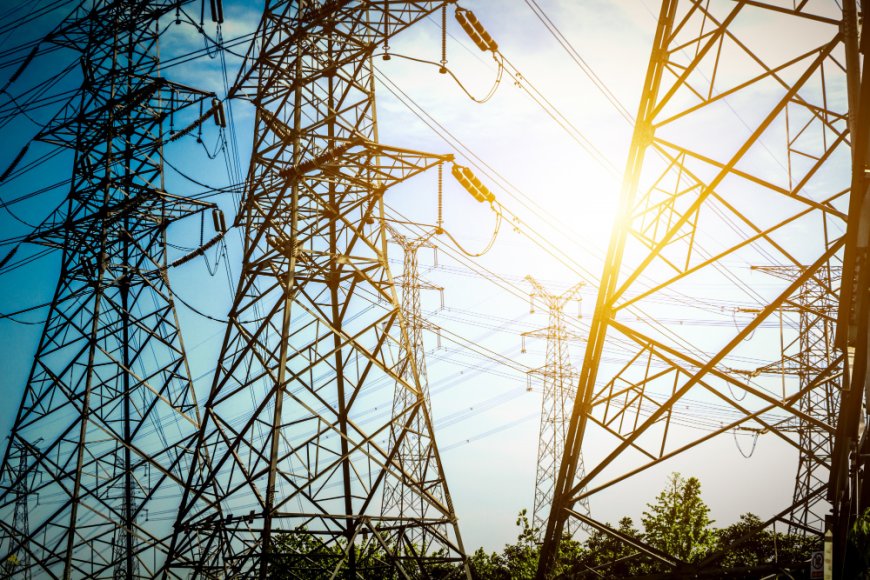
Power availability remains one of the biggest limitations for scaling data centres, and this challenge is unlikely to ease in the near future. Goldman Sachs estimates that AI-driven demand could increase data centre power consumption by 175% by 2030. These pressures are already straining electricity grids and driving up costs, prompting tech companies to explore alternative energy strategies. Policymakers have also taken notice, encouraging companies to build independent power sources, absorb higher costs, or adopt hybrid approaches.
Large-scale data centre projects are increasingly moving toward on-site or hybrid power models that combine local generation with grid connections. While fewer than a quarter of projects with identified power sources rely on these methods, they account for 44% of total capacity, highlighting their growing importance.
This shift is partly due to shortages in traditional power infrastructure, including gas turbines, as well as the limitations of ageing grid systems. As a result, alternative energy solutions are gaining traction. For example, Google’s recent data centre project in Minnesota combines wind and solar energy with a 30-gigawatt-hour battery from Form Energy. The company also collaborated with Xcel Energy to introduce a new pricing structure to support the adoption of innovative energy technologies.
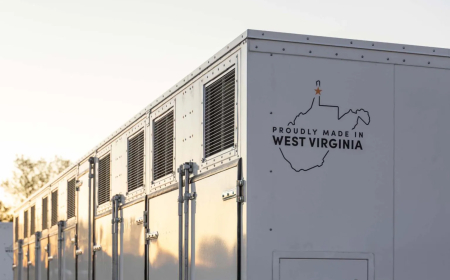
Grid-scale battery storage is expected to play a major role in addressing these challenges. By the end of this year, U.S. battery storage capacity is projected to reach nearly 65 gigawatts, according to the U.S. Energy Information Administration. Companies like Form Energy are positioning themselves to benefit from this momentum, including plans to raise significant funding ahead of a potential IPO.
Beyond energy generation and storage, another critical aspect is how electricity is managed once it reaches data centres. Transformers — a core component of power distribution — are becoming a limiting factor. Traditional transformers rely on iron cores and copper windings, a design that dates back more than a century. While reliable, they are increasingly inefficient for modern, high-density data centres.
As server racks approach power densities of 1 megawatt, the supporting electrical infrastructure could occupy twice as much physical space as the computing equipment itself. This inefficiency has driven investor interest toward solid-state transformer technologies, which use advanced silicon-based electronics. Although these systems are currently more expensive, they offer greater flexibility and can replace multiple components, potentially making them cost-effective over time.
Compared to the massive funding rounds seen in AI startups, investments in energy technologies such as batteries and transformers remain relatively modest. However, this smaller scale can be advantageous for investors, offering more accessible entry points.
As global electrification continues across industries — from transportation to manufacturing — power demand is set to rise steadily. In that context, energy infrastructure may serve not only as a critical enabler of AI growth but also as a hedge against potential volatility in the AI sector itself. In the end, the most strategic investment tied to AI may not be AI technology directly, but the energy systems that make it possible.







































 Like
0
Like
0
 Dislike
0
Dislike
0
 Love
0
Love
0
 Funny
0
Funny
0
 Angry
0
Angry
0
 Sad
0
Sad
0
 Wow
0
Wow
0