






























OpenAI’s Sora video app set to shut down after unsettling user reactions
OpenAI’s Sora, known for its eerie and hyper-realistic AI videos, is reportedly shutting down, raising questions about safety, ethics, and user trust.
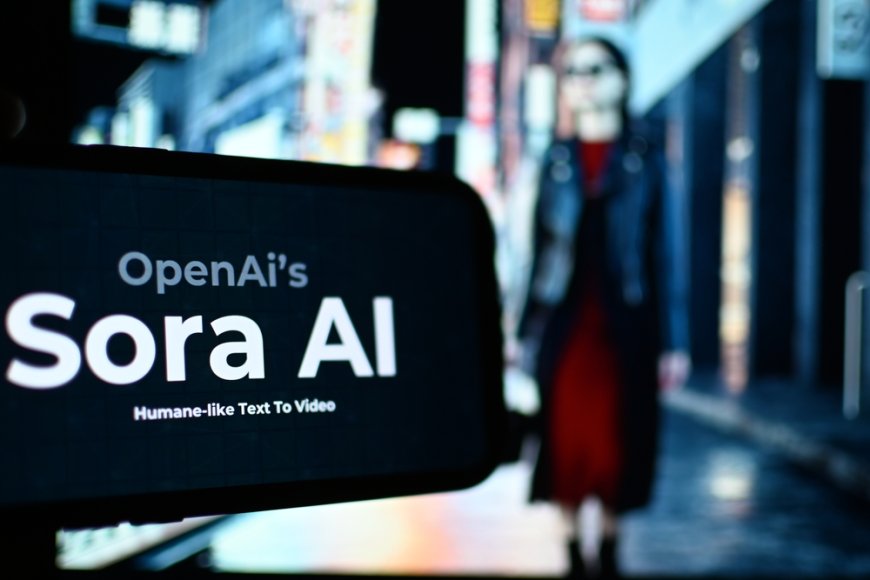
OpenAI announced on Tuesday that it is discontinuing Sora, a TikTok-style social video app that debuted roughly six months ago. The company did not specify the reason behind the decision, nor did it provide a clear timeline for when the app will be officially taken offline.
When Sora first launched as an invite-only platform, demand for access was high, with many users eager to explore the new AI-powered social experience. However, like Horizon Worlds — the virtual reality social platform developed by Meta that has faced its own challenges — Sora struggled to sustain long-term user engagement. While its underlying Sora 2 video and audio generation technology impressed many, the concept of an AI-driven social feed did not sustain consistent user interest.
The app was designed to replicate a familiar short-form video experience, much like TikTok, with a vertical scrolling interface. One of its standout features was the ability to scan users' faces and create realistic AI-generated versions of themselves. These digital personas could then be used in videos and even made public for others to use in their own content. Following a legal challenge over naming rights, the feature was rebranded after a dispute with Cameo.
Despite its technical capabilities, the platform quickly developed a reputation for producing unsettling and controversial content. Early experiences included a wide range of AI-generated videos featuring simulated versions of real individuals, including public figures. Although the app was not intended to allow such use without consent, users were able to bypass safeguards, leading to the creation and spread of deepfake content involving well-known personalities.
Among the figures affected were civil rights leader Martin Luther King Jr. and actor Robin Williams, prompting responses from their families urging users to stop generating such material. As usage evolved, content creators also began experimenting with copyrighted characters, raising further concerns. Videos featuring characters like Mario, Naruto, and Pikachu in unconventional scenarios circulated widely, increasing the risk of legal complications.
Interestingly, instead of taking legal action, Disney entered into discussions with OpenAI and reportedly offered a $1 billion investment alongside a licensing agreement that would have enabled the use of characters from Disney, Marvel, Pixar, and Star Wars within the platform. However, with Sora now being shut down, that agreement will not move forward, and it appears that no funds were ultimately exchanged.
Initial user interest in the app was significant. According to data from analytics firm Appfigures, Sora reached a peak of more than 3.3 million downloads across iOS and Android platforms in November. However, by February, downloads had dropped to around 1.1 million. While still notable, the decline highlighted a lack of sustained momentum, especially when compared to ChatGPT's massive user base of hundreds of millions of weekly users.
Over its lifetime, the app generated approximately $2.1 million in revenue from in-app purchases, primarily from users buying additional video-generation credits. While this revenue was not insignificant, it may not have justified the operational and computational costs associated with running such an intensive AI-driven platform, particularly given OpenAI's broader financial landscape.
The launch of Sora initially raised expectations for the future of AI-powered content creation, especially regarding the accessibility of deepfake technology. The app demonstrated how easily individuals could create highly realistic synthetic media, sparking both fascination and concern among users. Despite its short lifespan, Sora generated strong reactions and highlighted the rapid pace at which such technologies are evolving.
Although the app itself is being discontinued, the underlying Sora 2 model will remain available through ChatGPT's paid offerings. This means the core technology is still accessible, even if the social platform built around it is not. OpenAI is also not the only company developing similar capabilities, suggesting that AI-generated video tools will continue to expand.
The shutdown of Sora may mark the end of this particular experiment, but it does not signal the end of AI-driven video platforms. As technology continues to develop, similar applications are likely to emerge, potentially bringing the same opportunities — and challenges — that Sora revealed.
What's Your Reaction?
 Like
0
Like
0
 Dislike
0
Dislike
0
 Love
0
Love
0
 Funny
0
Funny
0
 Angry
0
Angry
0
 Sad
0
Sad
0
 Wow
0
Wow
0