


























Cursor acknowledges its coding model is built on Moonshot AI’s Kimi
Cursor confirms its latest coding model is built on Moonshot AI’s Kimi, raising questions about transparency, AI development, and model dependencies.
AI coding company Cursor introduced a new model this week, called Composer 2, which it promotes as delivering “frontier-level coding intelligence.” However, shortly after its release, questions began to surface about the model’s origins.
An X user known as Fynn claimed that Composer 2 was essentially “just Kimi 2.5” with added reinforcement learning. Kimi 2.5 is an open-source model recently released by Moonshot AI, a Chinese company supported by Alibaba and HongShan, formerly known as Sequoia China.
To support the claim, Fynn pointed to snippets of code that appeared to reference Kimi as the underlying model. “At least rename the model ID,” the user remarked, highlighting what they saw as a lack of transparency.
The situation raised eyebrows given Cursor’s position as a major U.S.-based startup. The company raised $2.3 billion in funding last fall at a $29.3 billion valuation and is reportedly generating more than $2 billion in annualised revenue. Despite this scale, Cursor had not mentioned Moonshot AI or Kimi in its initial announcement.
Soon after, Cursor’s vice president of developer education, Lee Robinson, confirmed that the model was built using an open-source foundation. “Yep, Composer 2 started from an open-source base!” he said. He also clarified that only about a quarter of the compute used in the final model came from that base, while the remaining work involved Cursor’s own training efforts. According to Robinson, this additional training results in performance that differs significantly from the original Kimi model across various benchmarks.
Robinson also emphasised that Cursor’s use of Kimi complies with licensing terms. This point was echoed by the official Kimi account on X, which congratulated Cursor and stated that the model had been used as part of an authorised commercial partnership with Fireworks AI.
“We are proud to see Kimi-k2.5 provide the foundation,” the Kimi account said. “Seeing our model integrated effectively through Cursor’s continued pretraining and high-compute reinforcement learning is exactly the kind of open model ecosystem we aim to support.”
The question remains as to why Cursor did not initially acknowledge Kimi. Beyond potential reputational concerns about not building a model entirely from scratch, there may also be sensitivities around using a Chinese-developed model, particularly as the AI industry is often framed as a competitive race between the United States and China. This tension has been evident before, for example, when the Chinese company DeepSeek released a competitive model that raised concerns across Silicon Valley.
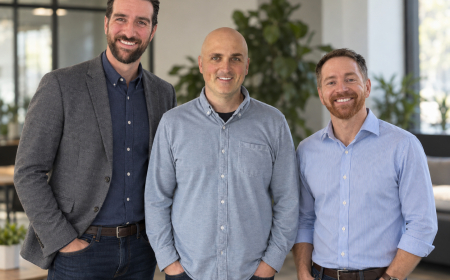
Cursor co-founder Aman Sanger later addressed the issue, admitting it was a mistake. “It was a mistake not to mention the Kimi base in our blog from the start,” he said, adding that the company plans to correct this approach in future model announcements.
What's Your Reaction?
Like
0
Dislike
0
Love
0
Funny
0
Angry
0
Sad
0
Wow
0