




































India’s first GenAI unicorn pivots to cloud services amid AI model challenges
India’s first GenAI unicorn is shifting focus toward cloud services as building large AI models becomes increasingly expensive and competitive.
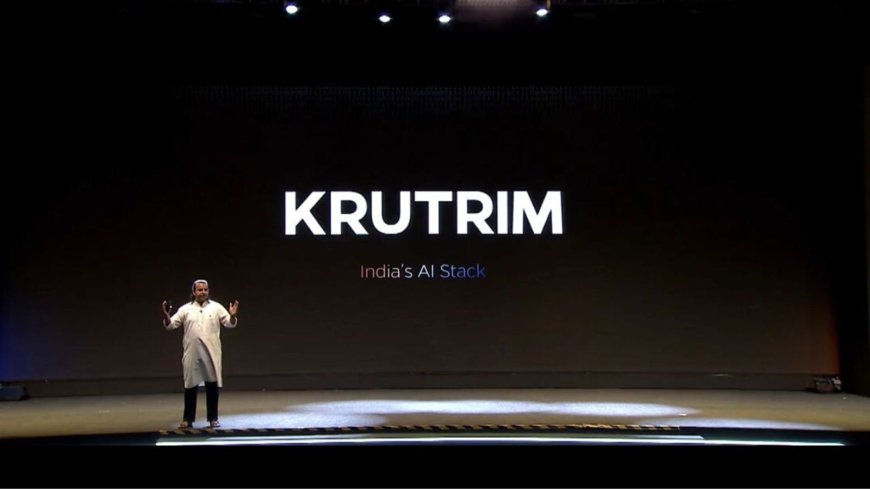
Krutrim, India’s first GenAI unicorn, is shifting its strategy from building large AI models to focusing on cloud services, following months of limited product updates. This shift highlights the growing economic challenges of developing large-scale AI systems.
On Tuesday, Krutrim confirmed it is moving toward cloud offerings, noting that the transition comes after an internal restructuring in late 2025 that involved reallocating resources, shifting talent, and pausing its chip design initiatives. This announcement arrives more than a year after the Bengaluru-based company introduced its Krutrim-2 base model.
The change follows a relatively quiet period for the startup, which has not shared major product developments in recent months, with its most recent activity on X dating back to December. The company was also absent from sessions at India’s AI Impact Summit in New Delhi, where global AI leaders such as Anthropic, Google, and OpenAI participated.
Meanwhile, rival Sarvam took part in several sessions during the six-day event, showcasing new open-source AI models, hardware advancements, and commercial collaborations.
The strategic pivot also follows workforce reductions at Krutrim over the past year, with local reports indicating that more than 200 roles were eliminated across multiple rounds of layoffs. Additionally, the company removed its Kruti AI assistant app from app stores in April.
Krutrim was founded by Bhavish Aggarwal, who also heads Ola and Ola Electric. Initially, the startup positioned itself as one of India’s earliest contenders in generative AI, aiming to build domestic alternatives to models developed by companies like Anthropic, OpenAI, and xAI. It raised $50 million at a $1 billion valuation in January 2024, reflecting strong early investor confidence in India’s AI ecosystem, even though overall AI funding in the country remains significantly lower than in the United States.
The company reported generating approximately ₹3 billion (around $31.52 million) in revenue for the financial year 2026, marking a threefold increase compared to the previous year. It also reported its first annual net profit, with margins exceeding 10%. However, Krutrim did not specify how much of this revenue came from external clients versus its parent ecosystem, and earlier reports suggested that roughly 90% of its FY25 revenue originated from affiliated group companies.
Despite the shift away from core model development, Krutrim says it is experiencing rising demand for its AI cloud services, with more than 25 enterprise customers spanning industries such as telecommunications, financial services, and healthcare. The company also stated that most of its GPU compute capacity has already been allocated to external workloads.
Sanchit Vir Gogia, chief analyst at Greyhound Research, described the move toward cloud infrastructure as commercially logical, though he noted that the company’s profitability claims would need closer scrutiny. “The standard of proof must rise with the claim,” he said.
While Krutrim pivots toward infrastructure, competitors like Sarvam continue advancing their AI model development efforts and forming partnerships, including a recent collaboration with space-tech company Pixxel to build an AI-powered orbital data centre.
As Gogia pointed out, infrastructure may represent a more practical short-term opportunity in India’s AI landscape, even as the broader goal of developing competitive AI models remains part of the long-term vision.
What's Your Reaction?
 Like
0
Like
0
 Dislike
0
Dislike
0
 Love
0
Love
0
 Funny
0
Funny
0
 Angry
0
Angry
0
 Sad
0
Sad
0
 Wow
0
Wow
0