































Littlebird secures $11M funding for AI-powered recall tool that reads computer screens
Littlebird raises $11M to develop its AI-powered recall tool that reads computer screens, helping users efficiently capture, search for, and recall digital activity.

There has been an increasing focus on building better context for AI systems. In consumer software, several startups are working across areas like search, documents, and meetings, all aiming to capture signals from a user's digital life, connect them across tools, and make that information queryable. Some solutions have taken things further — tools like Rewind, which later became Limitless and was acquired by Meta, and Microsoft Recall attempt to record everything happening on a user's screen to help them retrieve it later.
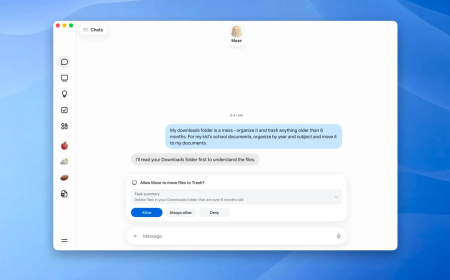
A new startup called Littlebird is approaching this concept in a slightly different way. Instead of storing screenshots or visual data, the platform reads what is happening on the screen and converts it into structured text-based context.
The idea behind the product is that by continuously understanding what a user is doing, it removes the need for manual input or additional context in productivity workflows. The company's approach is to stay largely invisible, running quietly in the background and surfacing only when needed, rather than interrupting users.
During setup, users can decide which apps to exclude from tracking. Littlebird says it automatically avoids capturing data from password managers and sensitive form inputs such as passwords and credit card details. Users can also integrate external services like Gmail, Google Calendar, Apple Calendar, and Reminders to expand the system's understanding of their activities.
The application allows users to query their own data using natural language. It provides suggested prompts such as "What have I been doing today?" or "What kind of emails are important to me?" Over time, these prompts adapt and become more personalised based on usage patterns.
Littlebird also includes a built-in note-taking system similar to Granola's, which uses system audio to transcribe meetings and automatically generate summaries and action items. When reviewing a meeting, users can access the "Prep for meeting" feature, which pulls together information from past discussions, emails, and company history to provide relevant context. The tool can also gather insights from external sources, including Reddit, to offer perspectives on specific products or organisations.
Another feature, called Routines, enables users to automate recurring prompts on a daily, weekly, or monthly basis. The platform provides templates such as daily briefings, weekly summaries, and overviews of previous work, and allows users to create custom routines tailored to their needs.
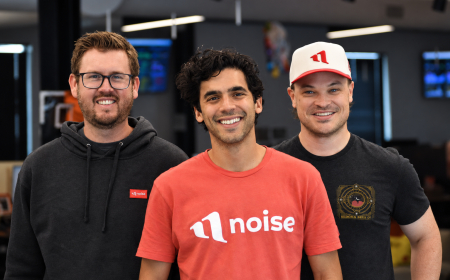
Littlebird was founded in 2024 by Alap Shah, Naman Shah, and Alexander Green. Alap and Naman previously built Sentieo, a platform for institutional investors that AlphaSense later acquired, and also co-founded the health-focused company, Thistle. Green has experience building products across hardware, software, and AI.
The idea for Littlebird emerged from the belief that AI systems lack meaningful personal context. Green explained that models do not inherently understand users, which limits their usefulness, and that this gap presents an opportunity for new interfaces and operating-system-level experiences.
He noted that while earlier tools like Rewind were conceptually similar, their reliance on screenshots created limitations, including storage demands and less efficient search capabilities. Littlebird's text-based approach aims to address those issues while being less intrusive.
Users can delete their data at any time, and the company stores information in encrypted form in the cloud. According to Green, cloud storage allows the system to run more advanced models for various AI workflows, which would be difficult to achieve locally.
The platform is available for free with basic usage, while premium plans starting at $20 per month unlock higher limits and additional features such as image generation.
Littlebird has raised $11 million in funding led by Lotus Studio, with participation from investors including Lenny Rachitsky, Scott Belsky, Gokul Rajaram, Justin Rosenstein, Shawn Wang, and Russ Heddleston.
Several of these investors are also active users of the product. Rajaram, who has worked on advertising systems at Google and Facebook, said the tool reduces the friction involved in recalling and explaining past work. Heddleston, CEO of DocSend, said he used the product to rewrite his company's marketing site by leveraging context from meetings, email, and Notion.
Rachitsky emphasised that the effectiveness of AI depends heavily on context, noting that most tools miss large portions of a user's daily activity. He said he uses Littlebird to improve productivity and explore ways to enhance personal workflows, but added that long-term success will depend on identifying a clear, essential use case.
He also pointed out that many AI product developers discover real-world applications only after releasing their tools, suggesting that early deployment and iteration remain key strategies for refining products like Littlebird.
What's Your Reaction?
 Like
0
Like
0
 Dislike
0
Dislike
0
 Love
0
Love
0
 Funny
0
Funny
0
 Angry
0
Angry
0
 Sad
0
Sad
0
 Wow
0
Wow
0