





























Google introduces prompt-based avatar control in its Vids app
Google now allows users to direct avatars using prompts in its Vids app, enabling faster AI-driven video creation and smarter content production.

Google has introduced a new set of updates to its video editing platform, Google Vids, expanding its AI capabilities with features that let users control and customise avatars using simple text prompts. The update also includes support for new video-generation tools, YouTube export functionality, and a Chrome-based recording extension.
With the new prompt-based controls, users can guide avatars to perform actions in a scene using natural-language instructions. This includes directing avatars to interact with objects such as products, props, or equipment. Despite the flexibility and variability of generated scenes, Google says the platform maintains consistency in how characters appear and behave throughout a video.
The update also enhances customisation options. Based on the project's overall theme, users can modify avatar appearance, adjust clothing, and generate entirely new backgrounds using prompts, making it easier to tailor content without manual editing.
Google is further strengthening Vids' generative capabilities by integrating its Veo 3.1 video model. This model allows users to create short video clips — up to eight seconds in length — directly within the editor. All users receive 10 free generations per month, while subscribers to the Google AI Ultra and Workspace AI Ultra plans can generate up to 1,000 clips per month.
This builds on earlier additions to the platform. Last month, Google incorporated its Lyria 3 and Lyria 3 Pro models, enabling users to generate music and sound effects for their videos. Together, these tools aim to provide a more complete AI-driven production workflow inside Vids.
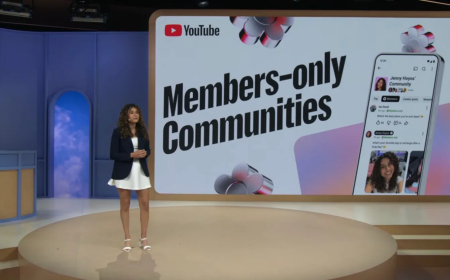
Another key addition is the ability to export videos directly to YouTube. This removes the need for manual downloads and uploads, streamlining the publishing process. Videos exported through this feature are set to private by default, allowing creators to review their content before making it public.
Google has also introduced a Chrome extension for screen recording within the Vids ecosystem. This tool allows users to capture their screen with audio or video, making it easier to create tutorials, presentations, and other content.
Since first unveiling Vids in 2024, Google has continued to expand its capabilities, particularly for enterprise users focused on content creation. The company introduced AI-powered avatars last year and later extended access to a broader audience. In February, it added both 2D and 3D cartoon-style avatars, along with support for additional voice-over languages, including French, German, Italian, Korean, Portuguese, Spanish, and Japanese.
As Google continues to develop Vids, the platform is competing with other AI-driven video tools such as Synthesia, HeyGen, D-ID, and Lemon Slice, all of which are working to simplify video production through artificial intelligence.
What's Your Reaction?
 Like
0
Like
0
 Dislike
0
Dislike
0
 Love
0
Love
0
 Funny
0
Funny
0
 Angry
0
Angry
0
 Sad
0
Sad
0
 Wow
0
Wow
0