




































In Japan, robots are stepping in to do jobs people no longer want
Japan is using robots to fill labour shortages in ageing industries, helping businesses maintain productivity where human workers are scarce.
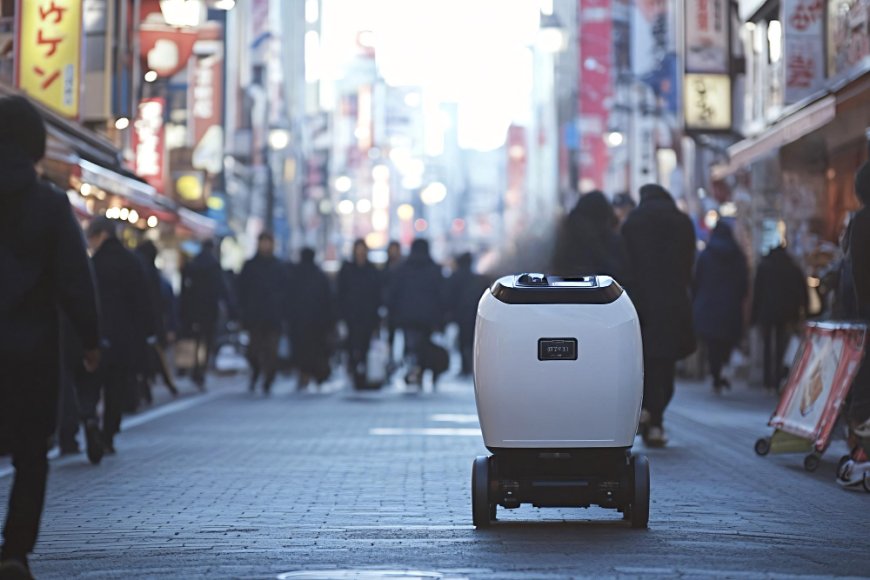
Physical AI is rapidly becoming one of the most important arenas in modern industry. In Japan, the momentum behind it is driven less by ambition than by necessity. As the country faces a shrinking workforce and growing pressure to maintain productivity, businesses are increasingly turning to AI-powered robots across factories, logistics networks, and critical infrastructure systems.
Japan’s Ministry of Economy, Trade and Industry announced in March 2026 that it aims to establish a strong domestic physical AI sector and secure a 30% share of the global market by 2040. The country already has a solid foundation in robotics, with Japanese manufacturers accounting for roughly 70% of the global industrial robot market in 2022, according to the ministry.
Labour shortages are driving adoption.
A combination of factors is accelerating the adoption of robotics in Japan, including widespread cultural acceptance of automation, demographic-driven labour shortages, and a long-standing strength in mechatronics and advanced hardware supply chains. According to Ro Gupta, managing director at Woven Capital, these elements are shaping the country’s approach to physical AI.
Hogil Doh, general partner at Global Brain, noted that robotics is increasingly being used as a continuity tool. Companies are asking how they can keep factories, warehouses, infrastructure, and service operations running efficiently with fewer workers. He emphasised that labour shortages remain the primary driver behind this shift.
Japan’s demographic challenges are intensifying. The country’s population declined for the 14th consecutive year in 2024, and the working-age population now represents just 59.6% of the total. This figure is expected to drop by nearly 15 million over the next two decades. A 2024 Reuters/Nikkei survey found that labour shortages are the leading factor pushing Japanese companies to adopt AI technologies.
Sho Yamanaka, a principal at Salesforce Ventures, described the situation as a shift from efficiency to survival. He explained that Japan is facing a physical supply constraint where essential services cannot continue without automation, making physical AI a national priority.
Efforts to accelerate automation are already visible across the manufacturing and logistics sectors. Issei Takino, CEO and co-founder of Mujin, highlighted how government initiatives are encouraging automation to address structural labour issues. Mujin has developed software platforms that enable industrial robots to perform picking and logistics tasks autonomously, with a focus on enhancing existing hardware through advanced control systems.
Hardware leadership and system-level challenges
Japan has historically excelled in producing the physical components that power robotics, such as actuators, sensors, and control systems. However, whether this strength will translate into leadership in the AI-driven robotics era remains uncertain. While Japan and China dominate hardware capabilities, the United States is advancing more quickly in building integrated systems that combine hardware, software, and data.
Yamanaka pointed out that Japan’s expertise in high-precision components represents a strategic advantage, acting as a critical interface between AI and the physical world. However, he stressed the importance of accelerating system-level integration, in which AI models are deeply embedded in hardware systems.
Takino echoed this perspective, explaining that physical AI requires a deep understanding of hardware behaviour alongside software development. Unlike traditional software-driven industries, robotics demands specialised control technologies that take years to develop and incur high costs if mistakes occur.
Startups are also contributing to this transformation. WHILL, which operates in both Tokyo and San Francisco, is combining Japan’s tradition of craftsmanship—known as “monozukuri”—with a full-stack development approach. CEO Satoshi Sugie explained that the company integrates electric vehicles, sensors, navigation systems, and cloud-based fleet management to create autonomous mobility solutions. WHILL uses Japan to refine hardware and address the needs of an ageing population, while leveraging the United States for software development and large-scale testing.
From experimentation to real-world deployment
Government investment is supporting this transition. Under Prime Minister Sanae Takaichi, Japan has committed approximately $6.3 billion to strengthen AI capabilities, advance the integration of robotics, and support industrial deployment.
The move from pilot projects to real-world applications is already underway. Industrial automation remains the most mature segment, with tens of thousands of robots being installed annually, particularly in the automotive industry. At the same time, newer use cases are emerging.
Doh explained that the key indicators of progress include customer-funded deployments instead of vendor-funded trials, reliable performance across full operational shifts, and measurable productivity improvements and reduced human intervention.
In logistics, companies are deploying automated forklifts and warehouse systems. In facilities management, inspection robots are now being used in data centres and industrial environments. SoftBank is applying physical AI by combining vision-language models with real-time control systems, allowing robots to interpret surroundings and perform complex tasks autonomously.
In defence, where autonomous systems are becoming increasingly important, competitiveness will depend on integrating operational intelligence with physical AI capabilities. Terra Drone CEO Toru Tokushige noted that combining operational data with AI enables reliable performance in real-world environments and supports the modernisation of Japan’s defence infrastructure.
Investment trends are also evolving. Companies are allocating more resources not just to hardware but to orchestration software, digital twins, simulation environments, and system integration platforms.
The rise of hybrid ecosystems
Japan’s physical AI ecosystem is developing differently from traditional tech sectors. Instead of a winner-take-all model, the industry is moving toward a hybrid structure in which established corporations and startups play complementary roles.
Major companies such as Toyota Motor Corporation, Mitsubishi Electric, and Honda Motor continue to benefit from large-scale manufacturing capabilities, established customer networks, and deployment expertise. At the same time, startups are driving innovation in areas like orchestration software, perception systems, and workflow automation.
Yamanaka described this relationship as mutually beneficial, noting that combining the scale and experience of large corporations with the agility and innovation of startups can strengthen Japan’s global competitiveness in robotics.
The defence sector is also evolving in a similar direction. According to Tokushige, large corporations remain focused on platforms and integration, while startups are advancing smaller systems, software, and operational capabilities, where speed and adaptability are critical.
Companies like Mujin are building platforms that operate across different hardware systems, enabling multi-vendor automation and faster deployment. Others, including Terra Drone, are applying similar strategies to autonomous systems by combining AI with operational data to support real-world applications at scale.
As Doh summarised, the most valuable position in this emerging landscape will belong to those who control deployment, integration, and continuous improvement—areas that will define the long-term success of physical AI in Japan and beyond.
What's Your Reaction?
 Like
0
Like
0
 Dislike
0
Dislike
0
 Love
0
Love
0
 Funny
0
Funny
0
 Angry
0
Angry
0
 Sad
0
Sad
0
 Wow
0
Wow
0