



































Mundi Ventures closes on €750M for Kembara, its largest deep tech and climate fund
Mundi Ventures has closed €750 million for Kembara, its largest fund to date, targeting deep tech and climate-focused startups across Europe and the US.
Europe pours billions into early-stage climate startups, only to see many stall or fail at the Series B stage, according to a recent report. New funds are now emerging to address that gap, and Spain-based Mundi Ventures’ latest vehicle, Kembara Fund I, is among them.
After securing a €350 million anchor commitment from the European Investment Fund under the European Tech Champions Initiative in 2024, Mundi Ventures has now completed a €750 million first close for Kembara Fund I. This marks the firm’s fifth fund and its largest to date.
Regulatory filings in Spain show that the fund, which focuses on deep tech, could ultimately reach a final close of up to €1.25 billion. Still, according to Kembara co-founder and general partner Yann de Vries, raising €750 million in roughly two years as a first-time fund in the current environment “was not easy.”
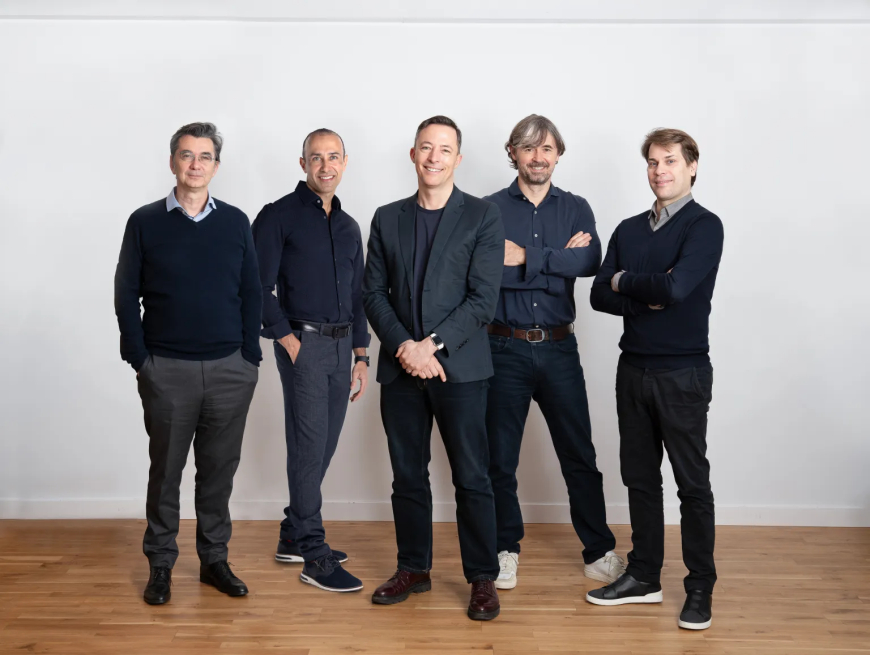
Kembara is managed by a dedicated team within Mundi Ventures, with operations in Madrid, London, Barcelona, and Paris. Mundi Ventures founder Javier Santiso is also a co-founder and general partner of Kembara, which has now disclosed its full senior leadership lineup.
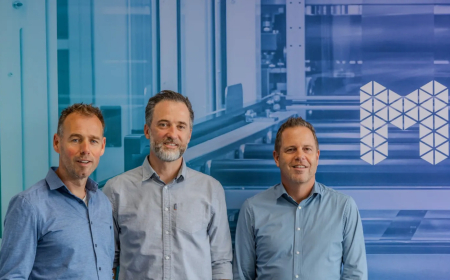
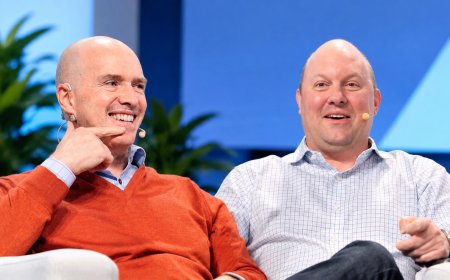
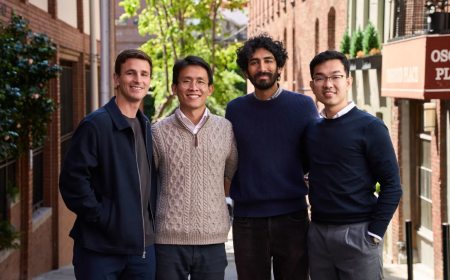
Alongside de Vries and Santiso, climate-tech investor Robert Trezona and deep-tech investor Pierre Festal have joined as general partners. Former Atomico partner Siraj Khaliq has come on board as senior strategic advisor. (Pictured left to right: Santiso, Khaliq, Trezona, de Vries, and Festal.)
The team’s individual track records helped attract institutional investors increasingly aware of Europe’s need for growth-stage capital capable of turning university spinouts into scaled companies with industrial relevance. Their experience has also given them firsthand insight into the structural challenges facing European climate and deep-tech startups, particularly for de Vries.
A veteran investor who founded Redpoint eVentures Brazil before becoming a partner at Atomico, de Vries later moved into an operating role at German electric aircraft startup Lilium. Lilium ultimately ceased operations in 2024 after raising more than $1 billion and going public via a SPAC.
In de Vries’ assessment, Lilium collapsed because it was unable to secure sufficient growth capital. While he described the experience as “traumatizing,” it also clarified a broader pattern. “I saw so many amazing teams in Europe that were going through the same journey,” he said. “Europe doesn’t have an innovation problem. It doesn’t have a startup problem. The problem it has is a scale-up problem.”
Kembara’s investment focus will centre on Series B and C rounds, with initial checks ranging from €15 million to €40 million across roughly 20 companies. Given the fund’s size, it can also support substantial follow-on rounds to finance manufacturing scale-up and global expansion, with total investments per company potentially reaching €100 million.
That level of capital exceeds the total size of many European venture funds, though the landscape is evolving. Deep tech firm Elaia and asset manager Lazard have partnered to form Lazard Elaia Capital, targeting initial investments of €20 million to €60 million. Operator-led fund Plural is also reportedly raising a new fund of up to €1 billion.
Even so, the capital-intensive nature of climate and deep-tech companies means equity financing alone is often insufficient. One lesson de Vries took from Lilium is that relying exclusively on equity can put companies under strain later. That insight helped shape Kembara’s approach.
“Several of us have lived through this, and what we want to do now is to productize non-dilutive financing for these deep tech founders to help them de-risk their future financing and optimise the capital structure to minimise dilution,” de Vries said. He added that Kembara is bringing in limited partners who not only invest in the fund but also co-invest directly in portfolio winners.
Geopolitics is another driver for these investors. De Vries expects growing support from European sovereign wealth funds, governments, and corporations seeking to build and retain deep-tech champions in Europe. “There’s going to be a lot of support … to push and drive for building these European champions in deep tech out of Europe,” he said.
Those geopolitical considerations are reflected in Kembara’s sector focus, which includes dual-use and defence technologies designed to protect European sovereignty, according to a press release. Still, de Vries rejected the notion that Kembara merely replaces capital that European startups might otherwise raise abroad.
“There are lots of gems that are under the radar in Europe, that could be scaling into global champions, and that are not realizing their full potential,” he said. He cited DeepMind as a related example, noting that it lacked sufficient growth capital in Europe and was acquired too early. (Google bought DeepMind for more than $500 million in 2014; it is now widely estimated to be worth billions.)
Preserving European ownership has become more urgent across sectors aligned with Kembara’s thesis, including quantum computing, semiconductors, and space technology. At the same time, the fund’s ambition is to build global champions that operate across borders. Fittingly, “Kembara” means “to wander” in Malaysian, though the team also references an older interpretation: “the humble path to excellence.”
The fund also has tangible links to Malaysia. Santiso previously served as CEO for Europe at Malaysian sovereign wealth fund Khazanah Nasional, and those ties could become increasingly relevant as countries reassess their exposure to the U.S.
“For the second close, we’re going to be looking for global investors, because we want to have global access to markets, but also global access to the supply chain,” de Vries said.
What's Your Reaction?
 Like
0
Like
0
 Dislike
0
Dislike
0
 Love
0
Love
0
 Funny
0
Funny
0
 Angry
0
Angry
0
 Sad
0
Sad
0
 Wow
0
Wow
0