






































‘Our funds are 20 years old’: Limited partners confront VCs’ liquidity crisis
LPs say venture funds now stretch 18–20 years, valuations are collapsing, and emerging managers are struggling as the VC liquidity crisis deepens.

Being a limited partner in venture capital has become far more complicated than it used to be. The LPs who finance VC firms are dealing with an industry that has shifted under their feet: venture funds now last nearly twice as long as before, new managers are struggling to raise capital, and billions remain tied up in startups that may never live up to their 2021 valuations.
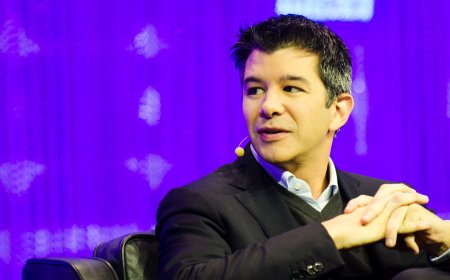
At a recent StrictlyVC panel in San Francisco, five well-known LPs — representing endowments, fund-of-funds, and secondaries firms collectively overseeing more than $100 billion — shared a surprisingly stark picture of today’s venture landscape. However, they still see opportunity in the ongoing reset.
One of the most eye-opening realities is that venture funds are now lasting far longer than they were ever intended to.
“Conventional wisdom may have suggested 13-year-old funds,” said Adam Grosher of the J. Paul Getty Trust, which manages $9.5 billion. “In our own portfolio, we have funds that are 15, 18, even 20 years old that still hold marquee assets… but the asset class is just a lot more illiquid today.”
This slow return cycle is forcing institutions to rethink their allocation strategies. Makena Capital’s Lara Banks — whose firm manages $6 billion — said they now model an 18-year fund life, with the bulk of distributions arriving only in years 16 to 18. The Getty Trust is reassessing how much capital it deploys, taking a more conservative stance to avoid concentration risk.
One alternative LPs are relying on is the booming secondaries market.
“I think every LP and every GP should be actively engaging with the secondary market,” said Matt Hodan of Lexington Partners, which oversees about $80 billion. “If you’re not, you’re self-selecting out of what has become a core component of the liquidity paradigm.”
Valuations are further apart than people realise
The panel openly acknowledged the profound disconnect between VC valuations and what buyers are willing to pay.
TechCrunch moderator Marina Temkin gave a striking example: a startup previously valued at 20x revenue now receiving just 2x revenue offers in the secondary market — a staggering 90% cut.
Cendana Capital founder Michael Kim, whose firm manages nearly $3 billion, explained that many mid-stage companies are stuck in what he calls the “messy middle”:
• growing only 10–15% annually
• generating $10M–$100M ARR
• yet carrying billion-dollar valuations from the overheated 2021 market
Meanwhile, public and PE investors are valuing similar companies at four to six times revenue.
AI enthusiasm has made things worse, Hodan added. Companies that conserved cash during the downturn grew more slowly while AI-native competitors surpassed them. “If they don’t adapt, they’re going to face some severe headwinds and maybe die,” he said.
Emerging managers are in trouble.
For new fund managers, the fundraising environment is brutal.
“In the first half of this year, Founders Fund raised 1.7 times the amount of all emerging managers,” said Cendana partner Kelli Fontaine. “Established managers in total raised eight times more than all emerging managers.”
This consolidation is happening because institutional LPs overcommitted during the pandemic boom and are now retreating into “flight-to-quality” mode. Larger brand-name firms are capturing most of the available capital.
The silver lining, Kim noted, is that the “tourist managers” who launched funds during the 2021 frenzy are mostly gone.
Is venture capital even an asset class?
The panel largely agreed with Roelof Botha’s recent claim that venture isn’t truly an asset class.
“I’ve been saying for 15 years that venture is not an asset class,” Kim said. “The best managers significantly outperform everyone else.”
Grosher added that such wide dispersion makes planning extremely difficult. The Getty Trust, therefore, balances exposure across platform funds for consistency while using emerging managers to generate alpha.
Banks argued that venture is becoming strategically essential — for example, exposure to Stripe gives their portfolio a hedge against Visa’s potential disruption.
The rise of early selling
Another key trend is the normalisation of GPs selling shares early — not just in distressed situations.
“A third of our distributions last year came from secondaries, and it wasn’t from discounts,” Fontaine said. “It was from selling at premiums.”
She explained that if a company is worth three times a fund’s size, it’s rational to consider a partial sale rather than holding until the outcome doubles again.
This aligns with insights shared earlier this year by pre-seed investor Charles Hudson, who said LPs increasingly want managers to behave more like private equity investors—opoptimisingor liquidity rather than unicorn outcomes.
The stigma around secondaries is effectively gone, Kim added.
How to raise funds in this climate
The panel warned emerging managers that raising institutional capital will be extremely difficult unless they have elite credentials.
Instead, they advised focusing on:
• family offices (“more willing to take bets on new managers”)
• offering co-investment rights
• building a clear, differentiated sourcing advantage
“Proprietary networks no longer exist,” Fontaine said. “If you’re a legible founder, even Sequoia will be tracking you.”
Kim emphasised that access, selection ability, and “hustle” are now the real differentiators. He highlighted Topology Ventures’ Casey Caruso, who lives in hacker houses to build relationships with founders — a level of effort many older managers can’t match.
Where the capital is flowing
The LPs agreed that:
• AI dominates deal flow
• American dynamism is gaining momentum
• San Francisco remains the centre of gravity
Other regions still have strengths — such as biotech in Boston, fintech and crypto in New York, and Israel’s resilient tech ecosystem.
Banks also believe a new consumer wave is ahead. “Platform funds have put consumers to the side, so I think we’re ripe for a new paradigm,” she said.
What's Your Reaction?
 Like
0
Like
0
 Dislike
0
Dislike
0
 Love
0
Love
0
 Funny
0
Funny
0
 Angry
0
Angry
0
 Sad
0
Sad
0
 Wow
0
Wow
0