




























Pebble Founder Says His New Company Is ‘Not a Startup’
Pebble founder Eric Migicovsky says his new company, Core Devices, is intentionally not a startup, focusing instead on sustainable hardware products, including a rebooted Pebble smartwatch and an AI ring.

Eric Migicovsky, the founder of the original Pebble smartwatch, says he is taking a very different approach with his latest venture — and insists that it should not be considered a startup.
Migicovsky is rebooting the Pebble smartwatch brand and launching a new AI bright ring through his new company, Core Devices. The team is intentionally small, inventory is produced only after products are sold, and there is no external funding. Most importantly, Migicovsky says, the company is designed to be sustainable rather than venture-backed.
“We’ve structured this entire business around being a sustainable, profitable, and hopefully long-running enterprise, but not a startup,” Migicovsky said while speaking on the sidelines of the Consumer Electronics Show in Las Vegas.

Image Credits: Pebble
“Startups are good for the world,” he added. “You need money to build really new ideas. But this is not a new idea. This is an old idea. We’re just bringing it back.”
Migicovsky said his perspective has been shaped by hard lessons learned from Pebble’s first run. The original Pebble company was acquired by Fitbit in 2016 for roughly $40 million; Google later acquired Fitbit for $2.1 billion.
In the months leading up to Pebble’s sale, the company faced serious challenges. After overestimating demand ahead of the 2015 holiday season, Pebble was left with excess inventory that had to be sold at a discount. Retail partners were unhappy with shrinking margins, cash ran short, layoffs followed, and product development stalled.
“Hardware is different from software,” Migicovsky said. “You have to predict ahead of time how much you’re going to sell, because you need to build the hardware.”
At the time, Pebble had projected $102 million in annual sales but ended the year at about $82 million—an impressive figure for a smartwatch brand, but not enough to avoid financial strain given its inventory commitments.
Migicovsky also acknowledged that Pebble drifted from its original vision. “At the beginning, it was very clear,” he said, recalling Pebble’s early Kickstarter days. “Then we meandered. We tried health tracking. We tried things that didn’t feel like us.”
This time, he says, the focus is intentionally narrow. The rebooted Pebble watches are not designed for mass-market appeal, fitness enthusiasts, or users who want a smartphone replacement on their wrist.
“I want a companion to my phone, not a replacement,” Migicovsky said. “I want it to be more like a Swatch than a Rolex — fun, casual, playful, and plasticky.” He added that he is now comfortable with a limited vision and scope. “I’m okay with a watch that doesn’t try to do everything.”
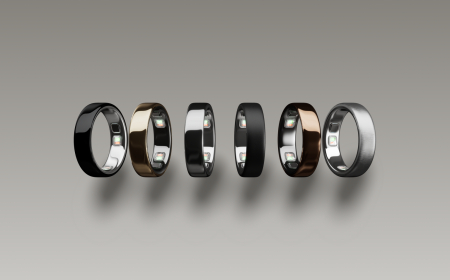
Under Core Devices, the company has announced three products: the Pebble Time 2, the round-faced Pebble Round 2, and a $75 AI bright ring called the Index 01.
The company operates with just five employees and sells directly to consumers through its website, rather than relying on distributors or building a large organisation like Pebble’s previous 180-person team.
A critical piece of the reboot is PebbleOS, the original Pebble operating system that Google later open-sourced. Migicovsky said that without PebbleOS, reviving the smartwatch would have been nearly impossible, as it initially took dozens of engineers years to build.
He recalled a chance encounter with a Google employee at a child’s birthday party, which eventually led to contact with Matthieu Jeanson and a request to open-source the OS — a request Google fulfilled about a year later.
“I’m really thankful to Google,” Migicovsky said. “I think they did it as an homage to the Pebble community.”
So far, the strategy appears to be working. Core Devices has sold about 25,000 smartwatch preorders and roughly 5,000 preorders for the Index 01 ring. Smartwatch shipments are currently running about six months out, though Migicovsky said the team expects to reduce that to just a few weeks.
The Pebble App Store currently includes around 15,000 watch faces and apps, and the company plans to relaunch its developer SDK in the coming weeks.
Migicovsky said the company is now in a “comfortable spot,” with expenses covered and enough revenue to fund future projects without outside investment. While he declined to share details about what hardware might come next, he said future products will follow the same philosophy.
“They’ll be fun, casual, simple hardware — things that make my life a little bit better, one block at a time,” Migicovsky said. “And they’re going to work together.”
What's Your Reaction?
 Like
0
Like
0
 Dislike
0
Dislike
0
 Love
0
Love
0
 Funny
0
Funny
0
 Angry
0
Angry
0
 Sad
0
Sad
0
 Wow
0
Wow
0