































Hands-On With Bee, Amazon’s Latest AI Wearable
A hands-on look at Bee, Amazon’s new AI wearable that records, segments, and summarises conversations, highlighting its design, privacy approach, and questions around consumer adoption.
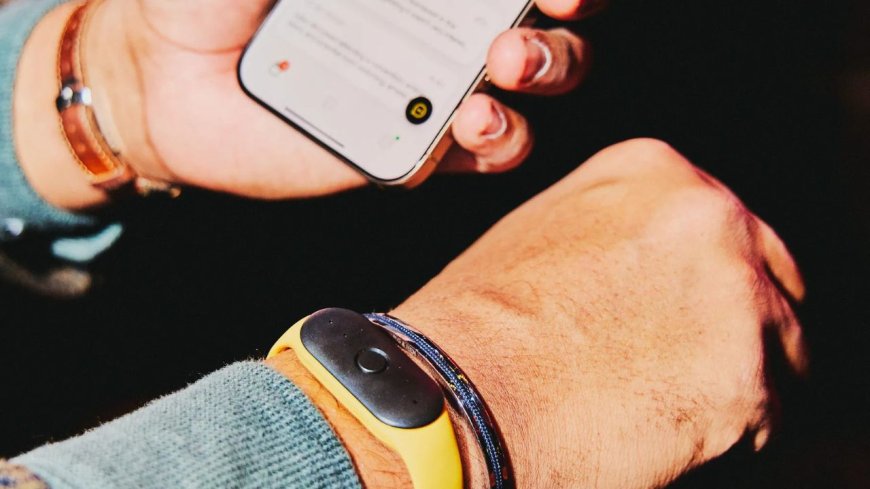
During early testing with a review unit of Bee, the device proved simple to operate. Recording can be turned on or off with a single button press. Within the companion app, users can choose whether a double press bookmarks part of a conversation, processes the current discussion, or does both. A press-and-hold gesture can be set to either leave a voice note or initiate a chat with the AI assistant. At present, the app prompts users to enable voice notes.
Like many other AI-powered products and services — including Plaud, Granola, Fathom, Fireflies, and Otter — Bee can listen to, record, and transcribe audio conversations. Where Bee differs is in how it presents that information. Rather than providing a single overview or a raw transcript, the app divides conversations into segments and summarises each section individually. An interview, for example, might be broken into an introduction, a detailed product discussion, an overview of industry trends, and other relevant topics.
Each segment is displayed in a different background colour, making it easier to scan conversations. Tapping on a section reveals the exact transcription for that portion.
Speaker labelling is less intuitive. While users can tap a segment to confirm whether they were the speaker, the app does not yet allow clearly labelling multiple speakers, as many professional transcription tools do. Bee also deletes the original audio after transcription, which limits its usefulness in scenarios where users need to replay recordings to verify accuracy.
Bee is not positioned primarily as a professional productivity tool. Amazon envisions the device as an AI companion that fits into daily life. Through integration with Google services, Bee can connect recorded conversations to follow-up actions. For instance, after meeting someone at a conference, the app might suggest connecting on LinkedIn or researching that person’s product.
Users can also leave voice notes as an alternative to typing notes manually. Another area of the app lets users revisit memories from previous days, while a “Grow” section provides insights as the system learns over time. There is also a “facts” section where users can confirm or add personal details, similar to how other AI chatbots retain contextual memory.
Amazon says additional features for Bee are planned over the coming year.
Privacy considerations are central to Bee’s design. The device is not always listening by default, unlike some competing wearables, such as the Friend AI pendant, which faced criticism for continuous recording. Bee requires users to initiate recording actively, and Amazon recommends obtaining consent before recording private conversations. When recording is active, a green light illuminates to signal that the device is in use.
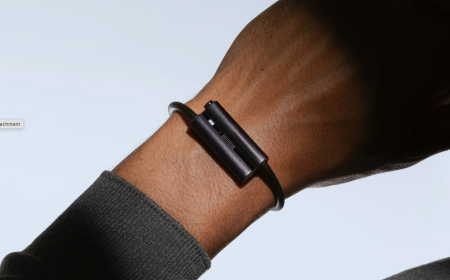
The physical design has some drawbacks. The sports band felt somewhat flimsy and detached twice during light, stationary use, such as sitting in a taxi. The clip-on pin, while not thoroughly tested, appears more secure.
Overall, the Bee mobile app is polished and intuitive, standing out compared to some of Amazon’s other in-house mobile experiences, such as the Alexa app. Still, the broader idea of a consumer-focused AI device dedicated to recording conversations remains largely unproven. It raises questions about whether people want such technology outside professional contexts, such as meetings or interviews.
If AI listening devices become widespread, social norms may need to evolve. Recording everyday interactions — even when legal — can feel intrusive, and audio recording without explicit consent may be viewed as inappropriate. Not everyone will follow those social expectations, which could lead people to be more cautious about what they say in public.
At CES, one interaction highlighted this tension. While speaking with a representative at a Soundcore booth, a casual remark about a competitor prompted the rep to joke, “Say that louder into my microphone,” while pointing to an AI recording device pinned to their shirt. The moment underscored how easily everyday conversations could become permanently recorded.
How Bee performs in the market will help Amazon determine whether consumers are ready for a future where AI-powered listening devices are a routine part of daily life.
What's Your Reaction?
 Like
0
Like
0
 Dislike
0
Dislike
0
 Love
0
Love
0
 Funny
0
Funny
0
 Angry
0
Angry
0
 Sad
0
Sad
0
 Wow
0
Wow
0