

































Apple’s John Ternus is set to lead a tech giant, but the role comes with major challenges
Apple executive John Ternus is emerging as a key leader for the tech giant, but the high-stakes role brings intense pressure and complex challenges.
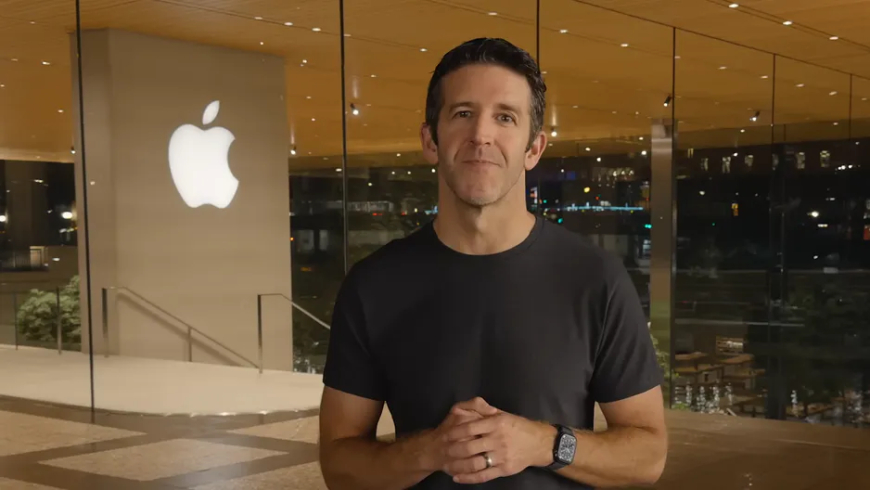
Over his 15-year tenure as Apple's top executive, Tim Cook has become one of the most recognisable figures in global tech, amassing significant influence and considerable personal wealth. Estimates place his net worth at around $3 billion, largely accumulated through performance-based equity awards, as Apple's market capitalisation grew more than 11-fold under his leadership, reaching roughly $4 trillion.
However, Cook's leadership has also been defined by persistent challenges. He has navigated two Trump administrations and one Biden administration, each with differing approaches to Big Tech regulation, China relations, and antitrust enforcement. He has also faced legal battles with the FBI over encryption, defended Apple's App Store model against long-running monopoly accusations, and made difficult compromises to maintain Apple's presence in China—decisions that drew criticism from human rights organisations. At the same time, Apple's most ambitious hardware effort in recent years, the Vision Pro headset, has struggled to gain mainstream traction, while the company continues to face uncertainty in artificial intelligence.
Incoming CEO John Ternus now inherits all of these challenges.
One of Cook's most defining early moments came in 2016, when the FBI requested Apple's assistance in unlocking an iPhone belonging to one of the perpetrators of a mass shooting in San Bernardino, California. Cook refused, arguing that weakening encryption would compromise user privacy globally. The standoff ended after the FBI accessed the device through alternative means. Still, it cemented Apple's public identity as a privacy-focused company and set the stage for ongoing tensions between technology firms and governments. Ternus will inherit that legacy along with its policy implications.
Apple's long-running antitrust disputes also remain unresolved. The company faced a major lawsuit from Epic Games over its App Store policies, including its requirement that developers use Apple's in-app payment system and its commission structure. While Apple largely prevailed in court in 2021, it was ordered to allow external payment links. Subsequent attempts to implement alternative fee structures led to further legal challenges, including contempt rulings that Apple is still contesting on appeal and that may reach the Supreme Court.
Beyond Epic, Apple is also facing broader regulatory pressure. The U.S. Department of Justice filed an antitrust lawsuit in March 2024, accusing the company of maintaining dominance in the smartphone market by restricting third-party developers and limiting interoperability with competing devices. Meanwhile, Apple is also facing international scrutiny, including a potential $38 billion fine in India for alleged abuse of dominance in the app ecosystem.
China remains another complex challenge. Apple's deep reliance on Chinese manufacturing has helped it scale its global operations, but has also exposed it to geopolitical risk. The company has made controversial concessions to operate in the Chinese market, including removing VPN apps and storing local iCloud data on state-controlled infrastructure. While Cook managed to maintain relatively stable relations during trade tensions, Apple has indicated that he will continue advising Ternus in an executive chairman role to help manage geopolitical strategy.
Artificial intelligence presents perhaps the most immediate strategic uncertainty. Apple's AI chief,f, John Giannandre, is set to depart following delays in upgrading Siri and expanding Apple Intelligence's capabilities. In response, Apple has increasingly relied on external partners such as Google and OpenAI to power parts of its AI ecosystem. Analysts suggest that Ternus' biggest task will be strengthening Apple's in-house AI capabilities while reducing reliance on external models.
At the same time, Apple has experienced notable leadership turnover, including departures in operations, legal, and design roles. This leaves Ternus with both a challenge and an opportunity to reshape Apple's executive structure early in his tenure.
The broader concern for Apple is whether its long-standing business model centred on the iPhone and App Store can remain dominant in a rapidly shifting technology landscape. Some industry observers believe AI agents could eventually replace app-based ecosystems entirely, while emerging hardware platforms may reduce dependence on smartphones. As Ternus steps into leadership, he inherits not only one of the world's most valuable companies but also a complex mix of legal, geopolitical, technological, and structural challenges that will define Apple's next era.
What's Your Reaction?
 Like
0
Like
0
 Dislike
0
Dislike
0
 Love
0
Love
0
 Funny
0
Funny
0
 Angry
0
Angry
0
 Sad
0
Sad
0
 Wow
0
Wow
0