


































Tim Cook to step down as Apple CEO: A look back at his 15-year leadership and expansion era
Tim Cook is set to step down as Apple CEO after 15 years, leaving behind a legacy of product innovation, service growth, and major expansion in China.
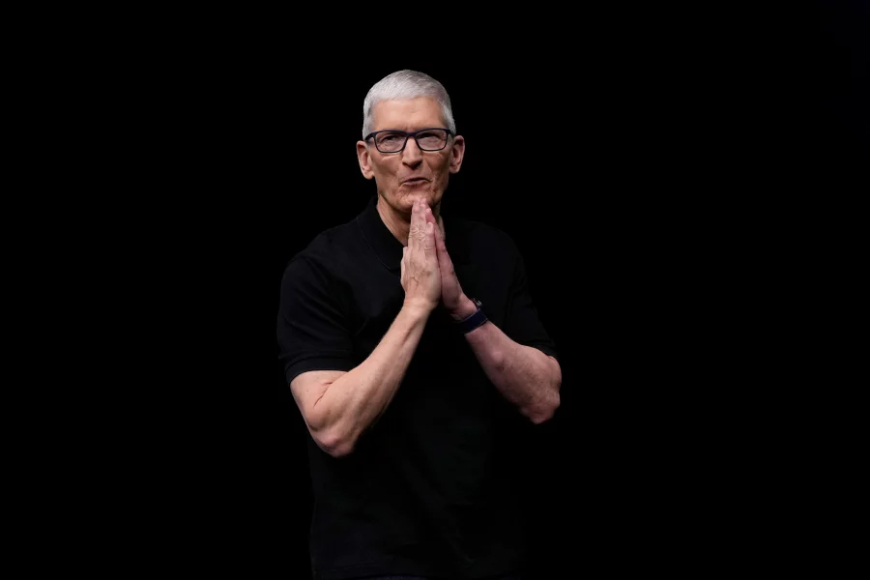
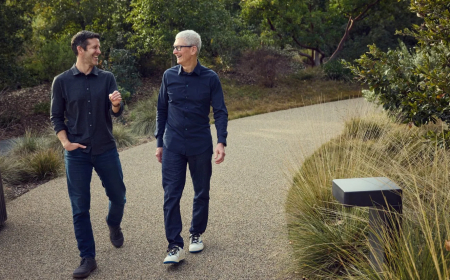
After 15 years at the helm, Tim Cook is stepping down as CEO of Apple and will hand over leadership to the company’s senior vice president of hardware engineering, John Ternus. Cook, who joined Apple in 1998 and succeeded Steve Jobs in 2011, played a central role in transforming the company into a global technology powerhouse valued at around $4 trillion.
As his tenure comes to a close on September 1, here is a look at the key milestones that defined Cook’s leadership era.
Financial growth
Apple was already a major global company when Cook became CEO, but under his leadership, its valuation expanded dramatically. When he took over in August 2011, Apple’s market capitalisation was just under $350 billion. The company crossed $1 trillion in 2018, reached $2 trillion in 2020, surpassed $3 trillion in 2022, and hit $4 trillion in 2025. It now stands at approximately $4.01 trillion.
The company reported $112 billion in net income for the fiscal year ending September 2025, roughly eight times its profit in 2010. This 699% increase came despite major global challenges, including the COVID-19 pandemic and rising geopolitical tensions between the U.S. and China.
Before becoming CEO, Cook served as Chief Operating Officer and was widely credited for building Apple’s highly efficient global supply chain. During his tenure as CEO, he significantly expanded Apple’s retail footprint, including continued growth in China and the addition of around 200 new stores worldwide.
New product categories
Cook expanded Apple’s ecosystem beyond the iPhone and Mac into a broader portfolio of devices and wearables.
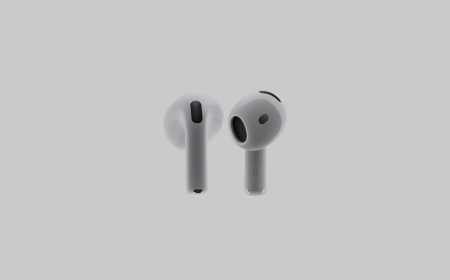
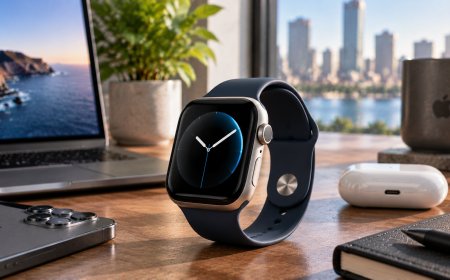
The Apple Watch launched in 2015 and has evolved into a major health-focused device, offering features such as ECG monitoring and blood oxygen tracking. In 2016, Apple disrupted the audio market with AirPods, redefining wireless earbuds. The company later introduced over-ear headphones in 2020 and acquired Beats in 2014.
In 2024, Apple launched the Vision Pro headset, positioning it as a spatial computing device. However, it struggled to gain mass consumer adoption due to its high price point.
Apple also diversified its iPad lineup across multiple sizes and price tiers, turning it into a versatile computing device for education, work, and entertainment. Cook oversaw major iPhone innovations as well, including Face ID, edge-to-edge displays, and the introduction of the more affordable iPhone SE.
While Apple gradually moved away from “i”-branded products, Cook presided over a major expansion of its overall hardware portfolio.
Services expansion
Under Cook, Apple developed a strong and fast-growing services business.
Apple Pay launched in 2014 and now serves an estimated 818 million users globally. Apple entered streaming with Apple TV+ in 2019 (now Apple TV), earning multiple awards, including an Academy Award for Best Picture.
Apple Music also launched in 2015 and has grown to more than 112 million subscribers. Apple Arcade followed in 2019, expanding the company’s gaming ecosystem.
Although iCloud was introduced under Steve Jobs, Cook oversaw its major expansion, including the launch of iCloud+ in 2021. He also consistently defended the App Store’s commission model, which remains a major part of Apple’s services strategy.
Apple’s services segment generated $109.16 billion in revenue in fiscal year 2025, accounting for a significant share of its total annual revenue of $416.16 billion.
Shift to in-house processors.
One of Cook’s most important strategic shifts was transitioning Apple away from Intel chips toward its own Apple Silicon processors, beginning in 2020. The transition was completed across the Mac lineup by 2023, resulting in improved performance, better energy efficiency, and longer battery life across devices.
AI era
Apple entered the artificial intelligence space in 2024 with the introduction of Apple Intelligence. However, the company has faced delays in rolling out a more advanced Siri upgrade.
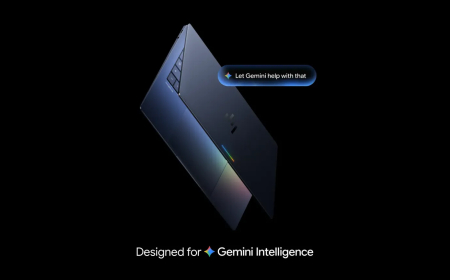
Unlike competitors that moved quickly into generative AI following OpenAI's 2022 launch of ChatGPT, Apple has taken a more cautious approach. Earlier this year, Apple also partnered with Google, integrating Gemini technology into its AI systems.
$600 billion U.S. investment commitment
Cook joined U.S. President Donald Trump in announcing a $600 billion investment commitment in the United States. The four-year plan includes expanded hiring, manufacturing, and investment in domestic semiconductor and advanced technology supply chains.
Apple Park
One of Cook’s most visible legacies is Apple Park, the company’s 175-acre headquarters in Cupertino, California, completed in 2017. Designed under Steve Jobs’ vision and executed during Cook’s tenure, the campus houses over 12,000 employees and runs on 100% renewable energy. It has also become the primary backdrop for Apple’s product launches.
Tim Cook’s 15-year leadership period reshaped Apple into one of the world’s most valuable and influential companies, setting the stage for John Ternus to lead the next chapter.
What's Your Reaction?
 Like
0
Like
0
 Dislike
0
Dislike
0
 Love
0
Love
0
 Funny
0
Funny
0
 Angry
0
Angry
0
 Sad
0
Sad
0
 Wow
0
Wow
0