


































IQM Becomes Europe’s First Public Quantum Computing Company as Industry Faces an Uncertain Future
IQM has become Europe’s first publicly listed quantum computing company after its Nasdaq debut. Explore what the milestone means, the challenges facing quantum technology, and the future of the industry.
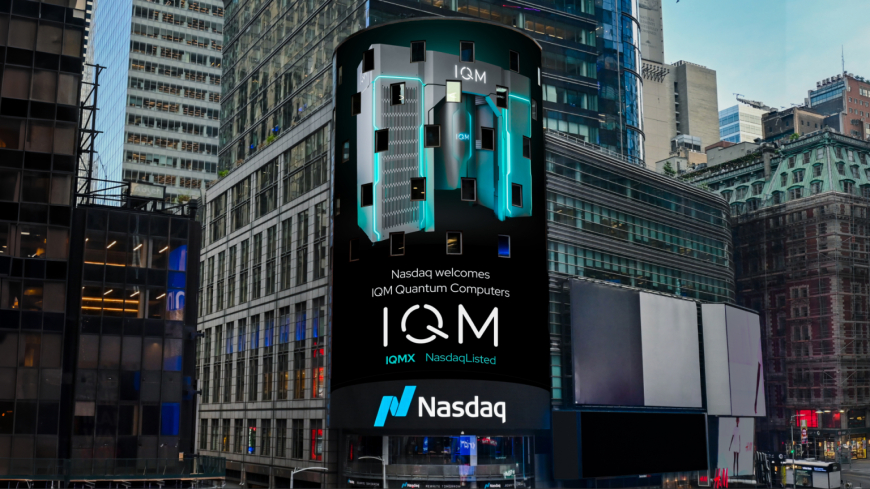
Finnish quantum computing company IQM officially became Europe’s first publicly listed quantum business on Thursday after completing its Nasdaq debut through a SPAC merger that valued the company at approximately $1.9 billion. Despite the milestone, investor enthusiasm remained muted, with the stock spending much of its first trading day below its IPO price.
SPAC listings have generally struggled to generate strong retail investor interest in recent years. In IQM’s case, investor caution may also have been influenced by a statement in the company’s prospectus acknowledging that “large-scale commercial traction of quantum computing technology may never occur.”
That warning is not unique to IQM and broadly reflects the uncertainty facing the entire quantum computing industry. Nevertheless, companies in the sector are already generating business by offering today’s quantum capabilities for applications such as simulations and optimisation. IQM provides both physical quantum computers and cloud-based quantum computing services, with customers including Finland’s VTT Technical Research Centre and Germany’s Leibniz Supercomputing Centre.
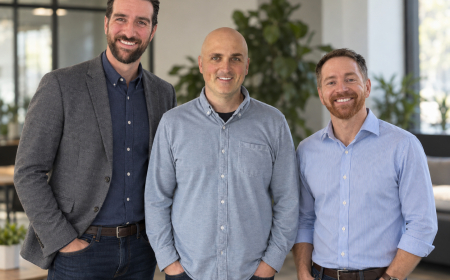
“We sell computers into advanced supercomputing centres and data centres, and we sell computing time through the cloud,” said IQM co-founder and CEO Jan Goetz.
The company expanded its customer base from eight organisations in 2024 to 22 in 2025, a milestone that is particularly significant because two of its newest customers are from the private sector. Even so, the figures also illustrate that broader commercial adoption may remain limited until the industry reaches what is commonly described as “quantum advantage”—the point at which quantum processors consistently outperform classical computers across a much wider range of complex computational tasks. Achieving that milestone could unlock applications across industries such as biotechnology and financial services while also reshaping modern encryption technologies.
However, neither IQM nor other companies in the industry can confidently predict when that breakthrough will occur.
Despite the uncertainty, investor interest in both public and private quantum computing companies continues to grow. Additional momentum followed recent executive orders issued by President Donald Trump aimed at accelerating quantum technology development in the United States. In response, the U.S. Department of Energy announced plans to deploy what it described as “the world’s first fault-tolerant, scientifically relevant quantum computer” by 2028.
Those initiatives mirror similar commitments already announced by France, Germany, and the United Kingdom. For IQM, however, the U.S. programme is particularly important because the company recently established a quantum technology centre in Maryland and installed one of its quantum computers at Oak Ridge National Laboratory, which the Department of Energy operates.
“We can benefit directly from it,” Goetz said.
Unlike several European technology unicorns that have shifted much of their operations toward the United States, IQM intends to maintain its European roots. While the company now trades in the U.S. under the ticker symbol IQMX, alongside many of its publicly listed quantum computing peers, it is also scheduled to begin trading on Nasdaq Helsinki, where it expects continued backing from investors including Finland’s sovereign wealth fund, Tesi.
IQM’s origins remain closely connected to Finland. The company was founded in 2018 as a spinout from Aalto University in Espoo, a city widely recognised as one of Europe’s leading technology and quantum research centres. Around two-thirds of IQM’s workforce remains based there. Another 100 employees work from Munich, while the remainder of its approximately 420-person global workforce is spread across multiple international locations to support the company’s worldwide expansion plans.
In its prospectus, IQM noted that this combination of strong European support and growing international operations appealed to RAAQ, the special purpose acquisition company that facilitated its public listing. According to the RAAQ board, “As evidenced by over €200 million in public support for IQM, European sovereign states and companies have supported IQM’s emergence as a prominent quantum computing company in Europe. IQM also demonstrated its ability to operate outside of Europe.”
Although IQM has global ambitions, Goetz said becoming the first European quantum computing company to list in the United States remains an important achievement. The distinction comes only narrowly ahead of French competitor Pasqal, which has also announced plans to go public through a SPAC transaction.
“It always feels good to be first and to be a pioneer, but ultimately it’s about long-term success,” Goetz said.
The public listing is expected to provide IQM with approximately €198 million, or around $226 million, in new capital after expenses. Even so, the company had already secured $300 million in funding during a financing round completed last September.
“It’s a big success raising very shortly after the Series B,” Goetz said.
According to the company, the IPO is intended not only to strengthen its financial position but also to raise its global profile as competition intensifies in a quantum computing industry whose long-term commercial future remains uncertain.
What's Your Reaction?
 Like
0
Like
0
 Dislike
0
Dislike
0
 Love
0
Love
0
 Funny
0
Funny
0
 Angry
0
Angry
0
 Sad
0
Sad
0
 Wow
0
Wow
0