

























Americans Grow More Concerned About AI as Public Trust Falls
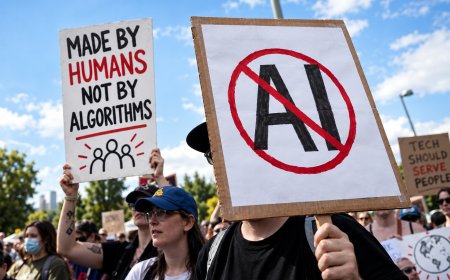
Americans are growing more concerned about AI, with new polling showing rising unease over its daily use, rapid expansion and impact on jobs and communities.
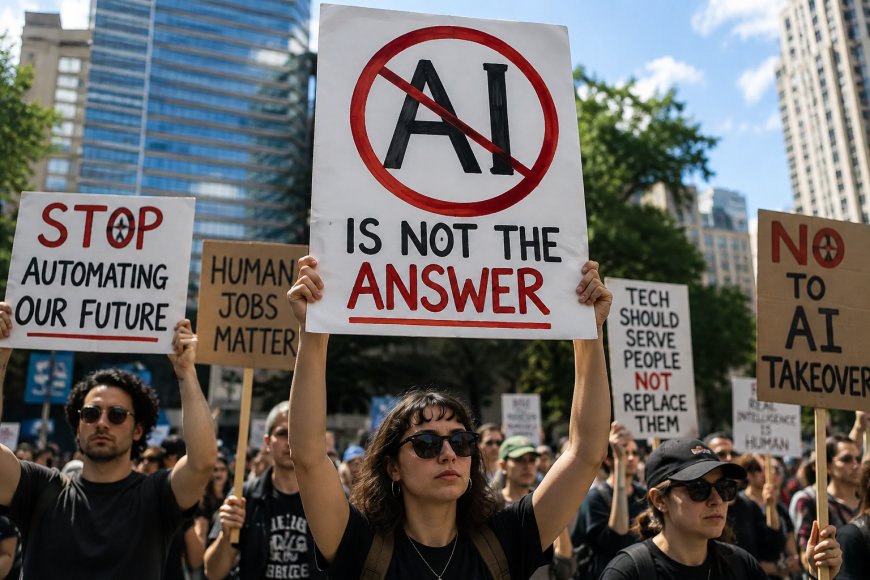
Americans are becoming more uneasy about artificial intelligence even as AI tools spread across workplaces, schools and consumer products. New polling and growing resistance to AI infrastructure suggest the technology industry is facing a widening trust problem alongside its rapid technical progress.
A Pew Research Centre survey found that 52% of U.S. adults are now more concerned than excited about the increased use of AI in daily life, compared with 37% in 2021. Only 9% said they were more excited than concerned. Concern has also risen among younger Americans, with 55% of adults under 30 now falling into the more-concerned group.
Separate polling points in the same direction. An Economist/YouGov poll found that 71% of Americans believe AI development is moving too quickly, while 51% described themselves as pessimistic about AI’s long-term impact on society. A CNBC poll of adults ages 18 to 34 also found widespread distrust of prominent AI industry leaders.
AI data centres are becoming a political issue.
Public concern is extending beyond software itself. Axios reported that the National Republican Senatorial Committee warned major AI companies that opposition to data centres was becoming a significant issue in Ohio’s Senate race.
Large data centres have faced local concerns over electricity demand, water use, utility costs and the relatively small number of permanent jobs some facilities create. The Wall Street Journal reported that technology companies are increasingly offering communities additional incentives to overcome resistance to new projects.
Those incentives have included employment commitments and infrastructure investments. In Louisiana, a Meta data centre project was connected to a program offering $50,000 bonuses to some teachers, illustrating how companies are adding local benefits to major infrastructure agreements.
Jobs, education and copyright add to the unease.
Employment remains one of the strongest concerns. Pew found that 71% of Americans believe AI will result in fewer U.S. jobs over the next 20 years, up from 64% in 2024. AI’s growing role in education has created another source of tension. Schools and universities are grappling with students using AI tools to complete assignments, with reports documenting concerns about AI-assisted cheating and questions about how widespread use of the technology may affect online degrees and academic assessment.
Copyright disputes have also kept AI training practices under scrutiny. Authors, musicians, and other creators have challenged the use of copyrighted material for training generative AI systems. In July, a federal judge approvedAnthropic’s $1.5 billion settlement of a class-action copyright lawsuit brought by authors.
AI executives acknowledge the trust problem
Some technology leaders are now publicly recognising that broader acceptance may depend on demonstrating more tangible benefits to ordinary users. Airbnb CEO Brian Chesky said during a recent podcast discussion that the industry needs to develop more AI products that regular people find genuinely useful, rather than treating public scepticism as simply a communications problem.
Anthropic CEO Dario Amodei made a similar argument in a post on X, describing negative perceptions of AI as part of a broader crisis of trust. He acknowledged that AI companies, including Anthropic, have not yet delivered on many of their biggest promises to benefit society.
The polling suggests widespread use alone has not translated into widespread enthusiasm. As AI companies continue to invest heavily in models, products, and the infrastructure required to operate them, public acceptance increasingly appears to be tied to whether people see benefits that outweigh concerns about jobs, costs, education, intellectual property, and the technology’s growing presence in everyday life.
What's Your Reaction?
 Like
0
Like
0
 Dislike
0
Dislike
0
 Love
0
Love
0
 Funny
0
Funny
0
 Angry
0
Angry
0
 Sad
0
Sad
0
 Wow
0
Wow
0