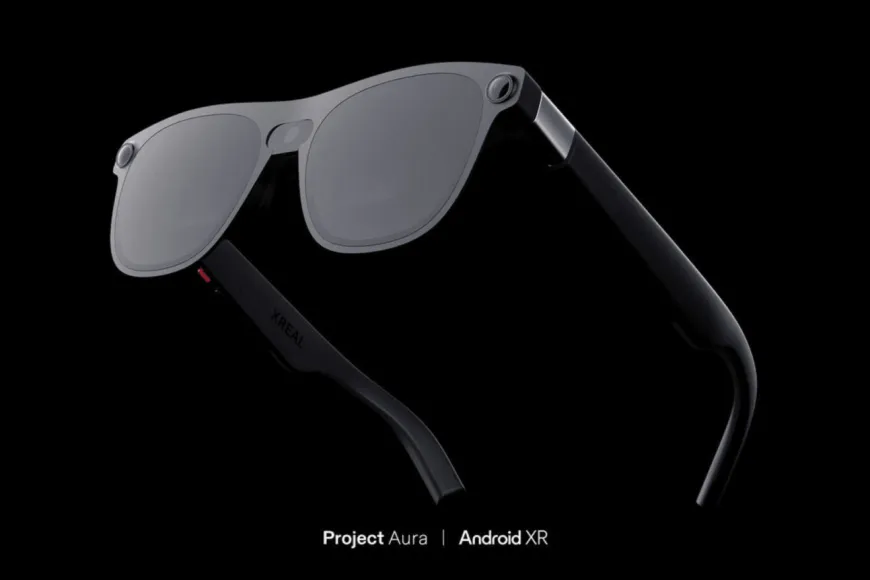
For years, smart glasses have represented one of Silicon Valley’s most ambitious yet elusive technology goals. The concept has always been attractive: replacing constant smartphone use with lightweight wearable devices that deliver digital information directly within a user’s field of view. Despite billions of dollars invested across the industry, however, turning that vision into a profitable business has proven far more difficult than many companies anticipated.
According to Xreal founder and CEO Chi Xu, nearly every major player in the smart glasses market has faced the same challenge.
“Everybody’s losing money,” Xu said while speaking at Google’s I/O developer conference in Mountain View, California, where he showcased Xreal’s latest project, known as Project Aura. Despite the industry’s financial struggles, Xu believes recent technological advances may finally be creating the conditions necessary for smart glasses to reach mainstream adoption.
Historically, smart glasses have struggled with several fundamental issues. Many early devices were bulky, uncomfortable to wear for extended periods, and often provided limited functionality that failed to justify their cost. The combination of awkward hardware and underdeveloped software prevented the category from gaining widespread consumer acceptance.
Today, industry leaders believe those obstacles are beginning to fade. Xu points to improvements in hardware design, operating systems, and user interfaces as evidence that the market is approaching an important turning point. He also notes that growing consumer interest in products like Meta’s Ray-Ban smart glasses has demonstrated that people are increasingly open to wearable computing devices when the experience feels natural and practical.
Xreal hopes to capitalise on that momentum through its newest product, Aura, a pair of extended reality (XR) glasses developed in partnership with Google. Unlike traditional smart glasses that primarily focus on notifications or audio features, Aura includes integrated OLED displays that can display high-resolution digital content directly within the lenses.
The system is powered by a compact external computing device, often described as a “puck,” which connects to the glasses and can be carried in a user’s pocket. While the additional hardware introduces some complexity, it allows the glasses to support a much wider range of immersive experiences than standalone wearable devices.
Users can access applications such as Google Maps in an augmented reality environment, watch immersive YouTube content, browse the web, and interact with creative tools that utilise hand tracking. One example the company demonstrated is a digital painting application that enables users to create virtual artwork visible only through the glasses. Interactive games and productivity-focused experiences are also expected to be part of the platform.
According to Xreal, the goal is to create a versatile computing experience that can adapt to different situations throughout the day. Users may follow floating recipe instructions while cooking, work within a private virtual workspace at a coffee shop, or watch content on a large virtual display from home.
Xu also believes the technology has potential beyond entertainment. While immersive media experiences remain a key attraction, he sees significant opportunities for professional users seeking a portable productivity tool that works almost anywhere.
Currently, Aura remains available only to developers as Xreal continues refining the platform. The company expects a broader commercial launch later this year as it works to expand both its software ecosystem and hardware capabilities.
At the same time, Xreal is preparing for another major milestone. The company is reportedly pursuing an initial public offering that could take place before the end of 2026, although Xu declined to provide specific details about the timeline.
Financial sustainability remains an important objective for the business. Xu said Xreal has been focused on improving gross margins while simultaneously reducing sales and marketing expenses. Those efforts, combined with anticipated growth in the smart glasses market, could move the company significantly closer to profitability.
While the smart glasses sector has spent years searching for a breakthrough moment, Xreal believes the combination of improved hardware, stronger software platforms, and partnerships with companies like Google may finally bring wearable computing closer to mainstream adoption. If the company’s vision proves correct, devices such as Aura could represent one of the next major steps in the evolution of personal technology.