



































What’s next for Apple’s hardware strategy under John Ternus
Apple’s hardware roadmap under John Ternus signals continued focus on custom silicon, product refinement, and long-term innovation across devices.

As Apple works to remain competitive in artificial intelligence while dealing with tariffs and ongoing supply chain uncertainty, the company is preparing for a leadership transition that could reshape its direction.
On Monday, Apple announced that John Ternus will step into the role of CEO later this year, succeeding Tim Cook.
Cook’s tenure turned Apple into a company valued at around $4 trillion, significantly expanded its services division, and coincided with some of the most profitable years in the technology sector. Ternus, by contrast, brings a background rooted deeply in hardware development, having spent his career focused on building Apple’s products rather than overseeing its broader business operations.
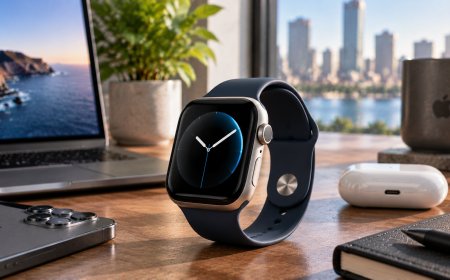
Ternus joined Apple in 2001 and steadily advanced through its hardware engineering ranks. Over the years, he has contributed to major products such as AirPods, Apple Watch, and Apple Vision Pro.
His appointment points toward a renewed emphasis on hardware at a time when Apple is under pressure to define the next phase of its evolution. Ternus is expected to play a central role in shaping that direction.
Hardware with AI at the centre
Instead of directly competing with companies building the largest AI models, Apple under Ternus may prioritise AI-powered devices themselves — whether embedded in smartphones, worn as accessories, or integrated into the home environment.
There is already widespread speculation about upcoming products. Potential developments include smart glasses, a wearable pendant camera, and enhanced AirPods with built-in AI capabilities. These devices are expected to connect closely with the iPhone ecosystem, with Siri likely playing a key role in enabling interactions.
Ternus is also expected to advance products that have remained in development for extended periods. Foldable iPhones are among the most discussed examples. Although competitors have already introduced such devices, Apple has taken a more cautious approach, waiting for the technology to align with its standards. Reports suggest a potential September launch, placing Ternus at the forefront of that release.
Apple has also been exploring robotics, particularly for home use. One concept involves a tabletop device with a robotic arm attached to a display, designed to serve as an interactive assistant that can move and reposition. This area aligns with Ternus’s longstanding interest in robotics, dating back to his college work on assistive devices for individuals with disabilities.
Additional ideas under consideration include mobile robotic systems that could follow users, assist with simple tasks, or act as a moving video communication interface. Some reports even reference experimentation with humanoid robots, though such developments are likely still years away from commercialisation.
While it remains uncertain which of these concepts will reach the market, they collectively offer insight into the direction Apple may be considering.
At the same time, the company faces several external challenges. Ongoing memory chip shortages, evolving tariff policies under Donald Trump, and Apple’s heavy reliance on manufacturing in China could create operational pressures. Before tariffs, approximately 80% of iPhones were produced in China. More recently, Apple has shifted part of its production to India, where about 25% of iPhones were manufactured last year, according to reports.
What's Your Reaction?
 Like
0
Like
0
 Dislike
0
Dislike
0
 Love
0
Love
0
 Funny
0
Funny
0
 Angry
0
Angry
0
 Sad
0
Sad
0
 Wow
0
Wow
0