































Ring Founder Details the Camera Company’s ‘Intelligent Assistant’ Era
Ring founder Jamie Siminoff details the company’s move beyond video doorbells toward AI-powered home security and intelligent assistant features.

What does it take to bring a burned-out founder back to the company he sold to Amazon? For Jamie Siminoff, the answer was a mix of rapid advances in artificial intelligence — and the Palisades fires that destroyed his garage, the very place where Ring was born.
Siminoff's vision now is to transform Ring from a video doorbell business into an AI-powered "intelligent assistant" for the home and beyond. Several features supporting that ambition launched just ahead of this year's Consumer Electronics Show in Las Vegas, including fire alerts, notifications for "unusual events," conversational AI, facial recognition tools, and more. While some of these additions have drawn controversy over privacy concerns, together they represent Ring's next phase.
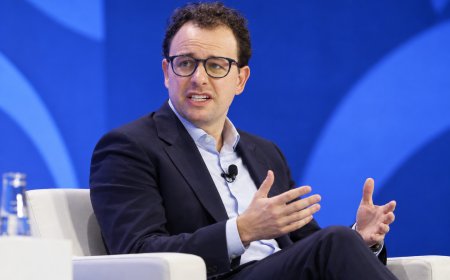
"Turn AI backwards — it's IA, it's an intelligent assistant," Siminoff said during a conversation at CES last week. "We keep doing these things together that are making us smarter, and making it so that, for you, there's less cognitive load."
By 2023, five years after selling Ring to Amazon, Siminoff said he was exhausted. "I built the company in my garage…I was there for all of it. We then get to Amazon, and I go even faster — like, more throttle," he told TechCrunch. "I didn't get to Amazon and say, 'I'm an exited entrepreneur, I'll just chill out.' I blasted the f**king gas."
When Siminoff eventually left Amazon, he said the timing felt right: Ring had shipped its products and was profitable. But rapid progress in AI soon pulled him back in.
Although he could have started something entirely new, Siminoff said the projects that most excited him were those that could be built on Ring's existing platform. "AI comes out, and you realise, 'Oh my God, there's so much we could do,'" he said.
Then came the Palisades fires, which devastated nearby communities and burned the back of Siminoff's home, destroying the garage where Ring was initially built. That experience helped inspire one of Ring's newest features, Fire Watch.
Developed in partnership with Watch Duty, Fire Watch allows Ring customers to opt in to share footage during significant fire events. The goal is to create better fire maps to deploy firefighting resources more effectively. AI analyses shared video for signs of smoke, fire, embers, and related indicators.
Another recently launched feature, Search Party, uses AI to help locate lost pets. The system matches images of missing animals with Ring camera footage shared by users who opt in after receiving an alert. According to Siminoff, the feature is already reuniting roughly one family with their dog per day.
"I had hoped to find one dog by the end of Q1," he said. "No one's ever done anything remotely like this, and I just didn't know how the AI would work."
Not all of Ring's moves have been as warmly received. The company has faced criticism over its relationships with law enforcement. In 2024, Ring ended earlier police partnerships that allowed officers to request footage directly from users in response to customer backlash. This year, however, Ring entered into new agreements with companies, including Flock Safety and Axon, which once again enable law enforcement agencies to request images and video from Ring customers.
Siminoff defended those decisions, emphasising that customers always have the option to share footage. "The requesting agency doesn't even know that they asked you," he said, explaining that alerts are sent broadly and responses are anonymous if users decline.
He also pointed to a December shooting near Brown University, claiming that a network of surveillance cameras — including Ring's — helped authorities locate the suspect. "Scrutiny is fine…I welcome it," Siminoff said. "But in the Brown shooting, the police needed this."
Despite those claims, concerns remain about the growing volume of data collected from private citizens and the risk of misuse. Additional criticism has been directed at Ring's "Familiar Faces" feature, which has drawn objections from the Electronic Frontier Foundation and a U.S. senator.
The feature uses AI to identify and store the faces of people who regularly come and go from a home, optionally labelling them by name. This allows users to receive alerts such as "mom is at the front door" or suppress notifications for familiar visitors. Siminoff argues that the tool personalises Ring's software to each household's unique patterns, reducing unnecessary interactions.
"Our products will not be on neighbors' houses if they don't trust us," Siminoff said. "There's no incentive for us to do something that would lose trust with our neighbors in maintaining their privacy."
Looking ahead, Ring's ambitions extend beyond residential use. Ahead of CES, the company also introduced new commercial camera systems, including mounted cameras, sensor arrays, and a solar-powered trailer. As Ring expands into business environments — from job sites and campuses to festivals and parking lots — its customer base will increasingly include organisations and homeowners.
What's Your Reaction?
 Like
0
Like
0
 Dislike
0
Dislike
0
 Love
0
Love
0
 Funny
0
Funny
0
 Angry
0
Angry
0
 Sad
0
Sad
0
 Wow
0
Wow
0