


































Trump administration rolls back fuel economy standards, again
The Trump administration lowers fuel economy standards for 2031 vehicles, reducing requirements to 34.5 mpg and reversing earlier efficiency regulations.
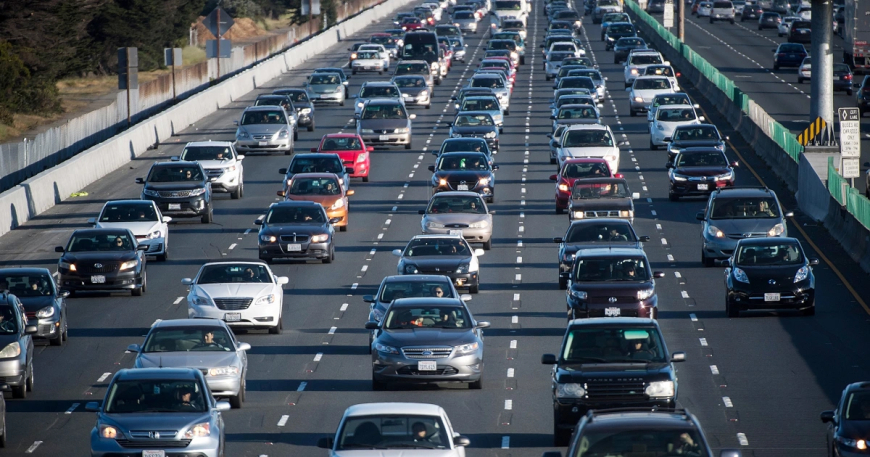
The Trump administration announced Wednesday that it plans to lower fuel economy standards for cars and light trucks sold in the United States.
With CEOs from Ford and Stellantis in attendance, President Donald Trump proposed reducing the fleet-wide fuel economy requirement to 34.5 miles per gallon for 2031 model-year vehicles. The previous standard required new cars to reach 50.4 mpg by 2031. The regulation change also reclassifies crossovers as cars instead of light trucks.
The National Highway Traffic Safety Administration oversees fuel efficiency guidelines under the Corporate Average Fuel Economy (CAFE) Standards. Established in 1975, these rules dictate how far a vehicle can travel on one gallon of fuel.
Trump also said he would authorise the Department of Transportation to allow automakers to manufacture “tiny cars” similar to those familiar in Japan and South Korea.
According to the White House, existing regulations would have increased vehicle prices by $1,000 per car. The earlier Trump administration made a similar claim in 2020 when it previously rolled back fuel economy requirements.
Since that rollback, however, the average price of new vehicles has climbed above $50,000 as automakers phased out lower-end models to capitalise on consumer preference for SUVs. Larger vehicles require more materials to produce, cost more, and deliver lower fuel economy.
Consumer trends may contradict the administration’s argument that lower standards benefit buyers. Hybrid sales continue to surge, with a 6% growth in October compared to the previous month.
Experts remain sceptical that weaker fuel-economy rules will affect vehicle prices. Most cars are designed for the global market, where efficiency remains a priority.
“The rest of the world will continue to innovate and create cleaner cars that people want to buy and drive, while we’re forced to sit in our clunkers, paying more for gas, and pumping out more tailpipe emissions,” former EPA administrator Gina McCarthy said in a statement. “With their backwards thinking and never-ending efforts to create more pollution in this country, we are ceding the global car market and technological innovation to China.”
Since the passage of the One Big Beautiful Bill Act this summer — which removed penalties for automakers failing to meet fuel economy targets — the standards have become toothless. The regulatory shift appears intended to make it harder for future administrations to restore stricter rules.
Automakers have already been pivoting back toward less efficient vehicles.
Ford has indefinitely halted production of its electric F-150 Lightning pickup and redirected resources to internal combustion models. Stellantis has reintroduced its Hemi V-8 engines, though reviews show the Ram 1500’s updated powertrain performs worse in nearly every category than its more efficient inline-6 alternative.
Not all automakers are reversing course. Hyundai remains committed to electric vehicles, and Kia has introduced $10,000 discounts across its EV lineup.
What's Your Reaction?
 Like
0
Like
0
 Dislike
0
Dislike
0
 Love
0
Love
0
 Funny
0
Funny
0
 Angry
0
Angry
0
 Sad
0
Sad
0
 Wow
0
Wow
0