































Waabi Raises $1B, Expands Into Robotaxis With Uber Partnership
Autonomous vehicle startup Waabi has raised $1 billion in funding and partnered with Uber to deploy Waabi Driver-powered robotaxis on the ride-hailing platform as it expands beyond autonomous trucking.
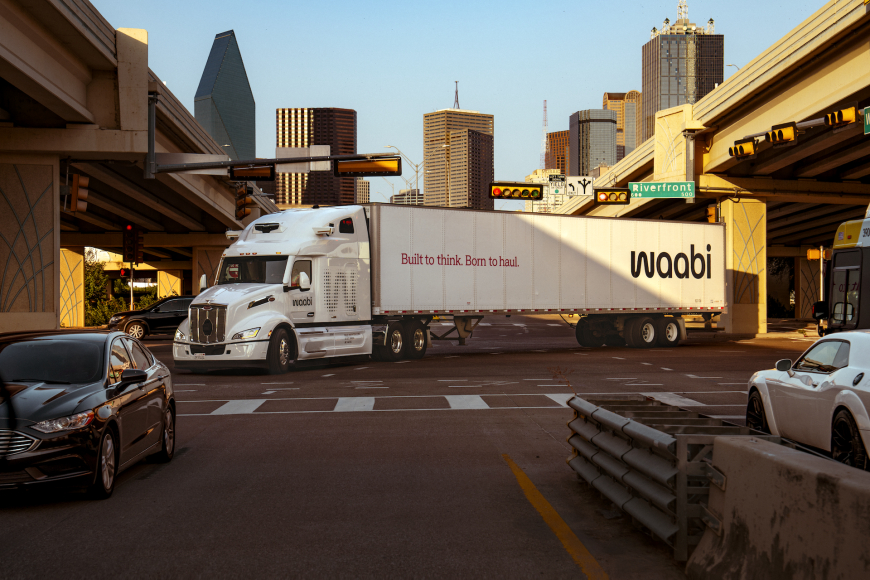
Autonomous vehicle startup Waabi has secured $1 billion in new funding and entered a partnership with Uber to bring self-driving passenger vehicles to the ride-hailing platform, marking the company’s first move beyond autonomous trucking.
The financing includes an oversubscribed $750 million Series C round co-led by Khosla Ventures and G2 Venture Partners, as well as approximately $250 million in milestone-based funding from Uber. The Uber capital is tied to plans to deploy 25,000 or more robotaxis powered by Waabi’s Driver technology exclusively on Uber’s platform. The companies did not disclose when deployments at that scale might begin.
The agreement reflects a shared belief that Waabi’s AI-driven approach can scale across multiple autonomous vehicle categories using a single technology foundation. Several competitors have attempted to operate both robotaxi and trucking businesses before narrowing their focus. Still, Waabi founder and CEO Raquel Urtasun says her company’s general-purpose AI architecture and capital-efficient model position it differently.
“Our core technology enables a single system to operate across different verticals at scale,” Urtasun said in an interview. “This isn’t about running separate programs or maintaining multiple stacks.”
The partnership also brings Urtasun back into Uber’s autonomous ecosystem. She previously served as chief scientist at Uber ATG, the company’s former self-driving unit that was sold to Aurora Innovation in 2020. The deal builds on Waabi’s existing collaboration with Uber Freight.
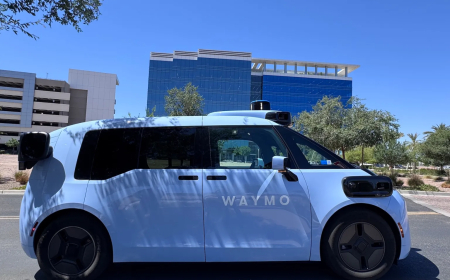
Waabi joins a growing roster of autonomous vehicle companies working with Uber, including Waymo, Nuro, Avride, Wayve, WeRide, and Momenta. The announcement comes shortly after Uber unveiled Uber AV Labs, a new division designed to collect driving data for its autonomous partners.
Unlike some rivals that rely heavily on massive real-world datasets, Waabi emphasises simulation as a core part of its development process. Its autonomous system is trained and validated using Waabi World, a closed-loop simulator that generates digital replicas of real environments, simulates sensor inputs, and creates edge-case scenarios to test the system. According to Urtasun, the approach enables the Waabi Driver to learn from mistakes without human intervention and to generalise from fewer real-world examples.
Over the past4.5f years, Waabi has focused on developing highway and surface-street capabilities for autonomous trucks. However, Urtasun says the company’s AI is already adaptable to different vehicle types, noting that passenger vehicles were included in its data and simulation work from early on. She has also hinted that robotics could be an area for future expansion.
That strategy, she says, has allowed Waabi to move faster and operate more efficiently than many competitors.
“We don’t need massive fleets, enormous data centers, or endless human labeling,” Urtasun said. “Our system is designed to be more efficient from the ground up.”
With the latest round, Waabi’s total funding now stands at approximately $1.28 billion, following a $200 million Series B raised in June 2024. By comparison, Aurora Innovation has raised more than $3.4 billion, while Kodiak Robotics has secured about $448 million.
Waabi has already launched several commercial trucking pilots in Texas with safety drivers onboard. The company had initially aimed to introduce fully driverless trucks on public highways by the end of last year, but that timeline has shifted into the coming quarters.
The startup is working with Volvo to produce purpose-built autonomous trucks, which were unveiled last October. Urtasun said the software is ready, but final vehicle validation is still underway.
She remains confident in the demand for Waabi’s trucking business, pointing to the company’s direct-to-customer model, which allows shippers to purchase autonomous-ready trucks directly. With the Uber partnership, she believes Waabi can scale quickly across passenger and freight markets.
“We’re still very early in the rollout of robotaxis,” Urtasun said. “There’s significant room for expansion ahead.”
Urtasun declined to name the automaker Waabi will partner with for robotaxis but said the company plans to integrate its hardware and software directly at the factory level, similar to its trucking strategy.
“We believe full vertical integration with OEMs is the right path to building safe and scalable autonomous systems,” she said.
Additional participants in Waabi’s Series C round include Uber, NVentures (Nvidia’s venture arm), Volvo Group Venture Capital, Porsche Automobil Holding SE, BlackRock, BDC Capital’s Thrive Venture Fund, and others.
What's Your Reaction?
 Like
0
Like
0
 Dislike
0
Dislike
0
 Love
0
Love
0
 Funny
0
Funny
0
 Angry
0
Angry
0
 Sad
0
Sad
0
 Wow
0
Wow
0