

















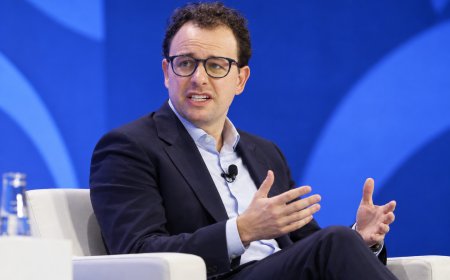





















VC Kara Nortman Bet Early on Women’s Sports — and Now She’s Helping Create the Market
Venture capitalist Kara Nortman is reshaping women’s sports through significant investments, innovative team models, and the $250M Monarch Collective fund.

When Angel City FC wrapped up its season earlier this month, the Los Angeles women's soccer club — co-founded in 2020 by venture capitalist Kara Nortman — finished 11th out of 13 teams. The on-field results were far from ideal, yet they represent just one chapter in a far broader story that is changing how the investment world evaluates women's sports.
Even without a strong competitive showing, Angel City has become a model case — even the subject of a Harvard Business School case study — demonstrating how to build a successful women's sports organisation from the ground up. The star-powered ownership group, featuring figures like Natalie Portman and Serena Williams, helped the team generate unprecedented attention. At the same time, Angel City's commercial strategy set sponsorship records long before the club's first competitive match.
"We went from zero to $30 million in revenue. We sold out games. We built something people didn't think was possible," Nortman said in an interview last month, reflecting on how quickly Angel City became a commercial force.
Those commercial achievements, rather than championship trophies, shaped the foundation for Monarch Collective — the $250 million fund Nortman launched in 2023 — the first investment vehicle devoted solely to women's sports. While the fund's inspiration came from a team still searching for its first playoff win, Monarch's portfolio now stretches far beyond Angel City's Southern California base.
Today, Monarch holds ownership stakes in several National Women's Soccer League clubs: San Diego Wave, Boston Legacy FC (set to debut in 2025), and, most recently, FC Viktoria Berlin in Germany. Monarch's newly announced 38% investment in the German club makes it the first foreign investor to hold a stake in a women's soccer team in Germany.
The portfolio reflects Nortman's core belief: women's sports have reached a significant turning point, independent of how any individual team performs. The data appears to support her view.
"The men's global sports market is valued at roughly half a trillion dollars," she explains. "When Monarch launched in 2023, women's sports were estimated at half a billion. Today, that estimate is closer to $3 billion."
According to Nortman, tapping into this explosive growth requires an approach different from the one that built men's sports. It's not a copy-paste strategy.
"How many men's teams are dropping Sephora boxes from the rafters, or running a Fenty lipstick cam at a Liberty game, or hosting Hello Kitty nights where the merch sells out instantly?" she asks.
Angel City's creative marketing, community-driven partnerships, and unconventional activations generated so much buzz that last year Disney CEO Bob Iger and journalist Willow Bay purchased a majority stake for $250 million — making Angel City the world's most valuable women's sports franchise.
For Nortman, who left traditional venture capital at Upfront Ventures to work full-time in women's sports, Angel City's commercial success has strengthened Monarch's core thesis. While media coverage often highlights the tension between the team's financial success and sporting challenges, the reality is apparent: with the right ingredients, women's sports can drive substantial revenue.
The bigger question now: Can the momentum continue?
Nortman acknowledges that women's sports have seen major peaks followed by sudden collapses. She often points to a historical warning — in 1920, a women's football match in Liverpool drew 60,000 spectators, a crowd larger than many modern Premier League attendances. One year later, England's Football Association banned women from competing, a setback that sidelined the sport for decades.
"Everyone discovers women's sports at their own moment," she says. "But what turns these moments into history is consistent, ongoing work."
That consistency, she argues, requires more than capitalising on the popularity of breakout stars like Caitlin Clark or Angel Reese. It demands serious investment in infrastructure, governance, and day-to-day operations—the less glamorous components that are needed to build profitable, enduring organisations.
This is where Monarch's model diverges from typical venture capital. Instead of placing dozens of small bets, the fund takes substantial positions in a curated group of teams and leagues, then becomes operationally involved. The strategy blends venture-like growth potential with private equity-style risk management.
"We work directly with owners and bring operational expertise," Nortman says. "The goal is to help teams reach breakeven or profitability so they're positioned to benefit disproportionately as media revenues expand."
Although Monarch currently invests heavily in soccer, it also has an interest in multiple sports. Nortman focuses on disciplines with proven viewer demand — sports where consumer interest is already validated.
"Does this sport draw viewers on TV or online?" she asks. "Some sports are popular to play — like pickleball — but that doesn't mean they're compelling to watch."
In addition to soccer, Monarch is actively exploring opportunities in women's basketball, tennis, and golf — all sports with existing infrastructure and sizable media upside.
Monarch's limited partners include Melinda French Gates and several former Netflix executives, among other high-net-worth individuals. And interest continues to accelerate. Notably, Monarch aimed initially to raise $100 million, but investor enthusiasm quickly propelled the fund to $250 million.
"When we started, most conversations were skeptical," Nortman recalls. "People didn't believe in women's basketball as a commercial product." Then Caitlin Clark's rise and the WNBA's record viewership changed the narrative almost overnight.
This shift reinforces Nortman's belief that success in women's sports comes from strengthening the ecosystem, not betting on a single franchise. Some teams will win titles. Others may lag competitively yet thrive financially. What matters is having enough committed owners, money, and expertise to withstand fluctuations.
Angel City itself has already inspired new female-led ownership groups across the NWSL — including in Kansas City, the Bay Area, and Washington, D.C. Whether intentional or not, the club has become a blueprint.
With the NWSL expanding, the WNBA growing, and new franchises like the Golden State Valkyries joining the landscape, many see women's sports entering a sustained boom period. Still, Nortman remains cautiously optimistic.
The determining factors, she argues, will be fundamentals: strong governance, long-term owner commitment, high-quality infrastructure, and authentic community engagement. Media attention opens the door — operational excellence keeps the industry thriving.
"Each surge of attention is a chance to build a consistent experience around it," Nortman says. "You have to look closely at the underlying fundamentals to determine what will endure."
What's Your Reaction?
 Like
0
Like
0
 Dislike
0
Dislike
0
 Love
0
Love
0
 Funny
0
Funny
0
 Angry
0
Angry
0
 Sad
0
Sad
0
 Wow
0
Wow
0