



































Elon Musk is getting serious about orbital data centers
Elon Musk is pushing deeper into the idea of orbital data centres, exploring how space-based computing could support AI workloads, reduce energy constraints, and reshape cloud infrastructure.
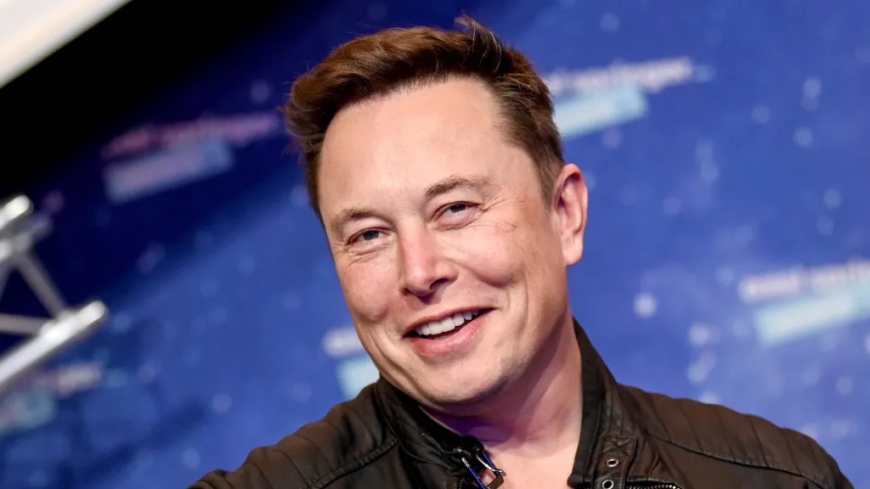
When SpaceX filed plans with the Federal Communications Commission (FCC) on Friday for a million-satellite data centre network, it might have seemed at first like Elon Musk was joking or testing the limits of plausibility. A week later, however, it is clear that the idea is being pursued in earnest.
The clearest signal is the formal merger between SpaceX and xAI, finalised on Monday. That deal officially brings together Musk’s space and artificial intelligence ventures, a move that makes far more sense if a shared infrastructure project — such as orbital computing — is underway.
Beyond the merger itself, the broader concept of orbital AI data clusters — essentially large networks of computers operating in space — is beginning to take shape as a concrete plan. On Wednesday, the FCC formally accepted SpaceX’s filing and opened a public comment period. While this step is typically procedural, FCC chairman Brendan Carr took the unusual step of publicly sharing the filing on X. Throughout his tenure, Carr has shown a willingness to support allies of former President Donald Trump and push back against perceived opponents. As long as Musk remains in Trump’s good graces, the proposal is widely expected to move forward without significant resistance.
At the same time, Musk has begun publicly outlining his rationale for putting AI data centres in orbit. On a recent episode of Cheeky Pint, hosted by John Collison and featuring guest Dwarkesh Patel, Musk explained why he believes space is ultimately a better location for large-scale AI computing. His core argument centres on energy: solar panels generate significantly more power in space than they do on Earth, which could reduce one of the highest ongoing costs of operating data centres.
“It’s harder to scale on the ground than it is to scale in space,” Musk said during the podcast. “Any given solar panel is going to give you about five times more power in space than on the ground, so it’s actually much cheaper to do in space.”
That logic, however, has gaps. While solar panels are more efficient in orbit, electricity is only one component of data centre costs, and solar power is not the only way to power extensive computing facilities. As Patel noted during the discussion, higher solar efficiency alone does not automatically make orbital data centres cheaper overall. Patel also raised practical concerns, such as how companies would service or replace GPUs that fail during intensive AI training runs—an issue that remains unresolved and was discussed further in the whole episode.
Despite those challenges, Musk appeared unconcerned. He identified 2028 as a pivotal year for orbital data centres, predicting a rapid shift in where AI infrastructure is built. “You can mark my words, in 36 months, but probably closer to 30 months, the most economically compelling place to put AI will be space,” Musk said.
He went even further, projecting dramatic long-term growth. “Five years from now, my prediction is we will launch and be operating every year more AI in space than the cumulative total on Earth,” Musk added.
For context, by 2030, global data centre capacity is expected to reach roughly 200 gigawatts, representing about $1 trillion in infrastructure — assuming it is all built on Earth.
Of course, SpaceX’s core business is launching payloads into orbit. Hence, the idea of orbital data centres conveniently aligns with Musk’s existing interests — especially now that SpaceX is formally linked to an AI company. With the newly combined SpaceX-xAI entity reportedly targeting an initial public offering in the coming months, discussion of orbital data centres is likely to intensify.
As technology companies continue to spend hundreds of billions of dollars each year on data centre construction, it is increasingly plausible that at least some of that investment may eventually leave the planet.
What's Your Reaction?
 Like
0
Like
0
 Dislike
0
Dislike
0
 Love
0
Love
0
 Funny
0
Funny
0
 Angry
0
Angry
0
 Sad
0
Sad
0
 Wow
0
Wow
0