As Spotify subscribers prepare for another round of price increases, the company is offering book lovers a set of updates that may help soften the impact. On Thursday, Spotify unveiled several changes to its audiobook business, including a notable move into selling physical books — a first for the largely digital-focused platform.
Under the new plan, users in the United States and the United Kingdom will soon be able to buy physical editions of select audiobooks directly through the Spotify app. This shift represents a significant expansion of Spotify’s role in the book ecosystem, enabling it to serve readers who still prefer print alongside digital audio.
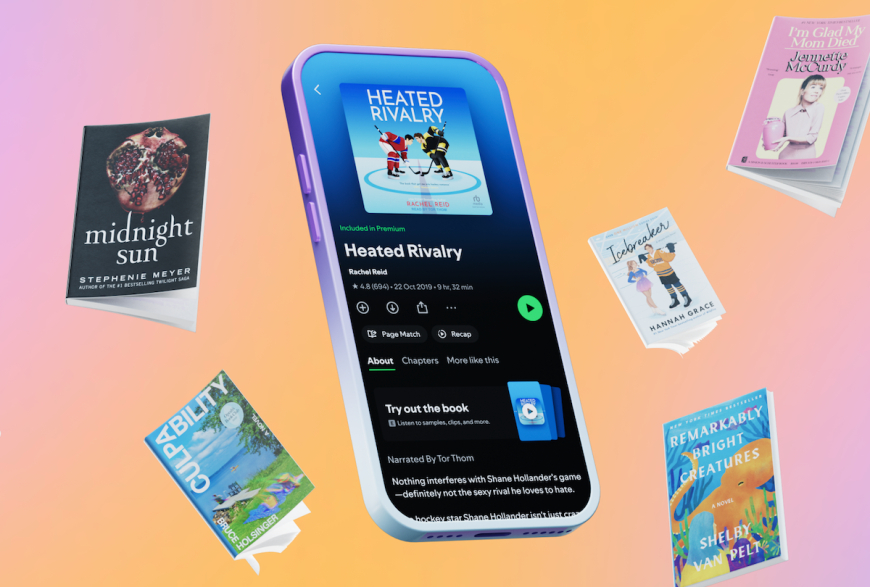
In addition to physical book sales, Spotify announced two new features to make audiobooks easier and more flexible to use. One of the key additions is a tool called Page Match, which allows users to scan a page from a physical book and immediately jump to the corresponding point in the audiobook.
Spotify is also expanding Audiobook Recaps, a feature that was previously limited to iOS. Starting this spring, Android users will also gain access to these short, personalised summaries, which help listeners quickly recall what they last heard before resuming an audiobook.
By enabling physical book purchases, Spotify is positioning itself as a new competitor to established booksellers such as Amazon and Barnes & Noble. The company has acknowledged that many readers still value printed books, and by combining physical and digital formats, Spotify aims to become a single destination for book discovery and consumption.
To support this initiative, Spotify has partnered with Bookshop.org, an online platform that helps support local, independent bookstores. Through this partnership, purchases made via Spotify will directly benefit independent bookshops, while Spotify earns an affiliate commission on each sale.
The physical book purchasing feature is expected to roll out this spring. Within the app, it will appear on audiobook pages as a button labelled “Add to your bookshelf at home.” Selecting this option will redirect users to Bookshop.org’s website, where pricing, stock availability, and shipping are managed.
To help connect physical reading with audio listening, Spotify is also rolling out Page Match more broadly. The feature is currently available to premium subscribers and is scheduled to be available to all audiobook users by late February. Page Match was first reported by Android Authority last month.
The Page Match feature lets users scan a page from a physical book or an e-book using their smartphone camera. The system analyses the text and automatically takes the listener to the exact location within the audiobook. Spotify says the tool is powered by a mix of its own technology and third-party computer vision and image-scanning solutions.
Users can move between formats seamlessly by tapping the “Scan to Listen” option to switch to audio, or “Scan to Read” to return to the printed book. This design is intended to make it easier for people to continue reading or listening wherever they are—at home, while commuting, or while travelling.
At launch, Page Match supports most English-language titles, with plans to expand to additional languages over time. Spotify now hosts more than 500,000 audiobook titles on its platform.
Since introducing audiobooks two years ago, Spotify has reported strong growth in this segment. In October, the company reported that the number of audiobook listeners increased 36% year over year, while total listening hours rose 37%. More than half of Spotify’s 281 million premium subscribers have now listened to at least one audiobook.
Spotify is scheduled to release its fourth-quarter earnings results on February 10, which may provide further insight into how its expanding audiobook strategy is contributing to overall growth.




































 Like
0
Like
0
 Dislike
0
Dislike
0
 Love
0
Love
0
 Funny
0
Funny
0
 Angry
0
Angry
0
 Sad
0
Sad
0
 Wow
0
Wow
0