


































The Washington Post is retreating from Silicon Valley when it matters most
The Washington Post is scaling back its Silicon Valley presence at a time when Big Tech, AI, and regulation demand deeper scrutiny and sustained coverage.
To say we live in a technology-driven society would be an understatement.
Software—particularly machine learning and artificial intelligence—combined with advanced manufacturing has embedded technology in nearly every aspect of daily life. It reaches street corners, classrooms, offices, factories, and even agricultural fields. Much of this technology, developed in Silicon Valley, now lives on our wrists, in our pockets, in the films we watch, and in the music we stream. It is also the infrastructure behind the Amazon package that was ordered, sorted, and delivered to your door.
This transformation has elevated founders, executives, and even middle managers into near-monarchical figures, wielding wealth and political power reminiscent of the Gilded Age. Seven of the ten wealthiest individuals in the world trace their fortunes directly to technology. Jeff Bezos — Amazon co-founder, chairman, and owner of The Washington Post — ranks third, behind Mark Zuckerberg and Elon Musk, according to Forbes. Larry Ellison, Larry Page, Sergey Brin, and former Microsoft CEO Steve Ballmer complete the list.
Yet at precisely this moment, the Bezos-owned Washington Post has dramatically reduced its coverage of technology and Silicon Valley as part of sweeping layoffs that affected more than 300 employees. According to Post technology reporter Drew Harwell, the combined team covering technology, science, health, and business was slashed by more than half, from roughly 80 people to 33. The technology desk alone lost 14 staff members, and the San Francisco bureau has been reduced to a shell.
Those impacted include reporters covering Amazon, artificial intelligence, internet culture, and investigative work. The newspaper also laid off journalists covering the media industry—a beat that had previously scrutinised Bezos’ ownership of the Post.
The cuts went far beyond technology. The Post eliminated its entire sports desk and severely reduced its foreign reporting operations, including its Middle East bureau and teams covering Ukraine, Russia, Iran, Turkey, and other regions. It shut down its Books section, dramatically reduced coverage of culture and the Washington, D.C., metro area, and laid off all reporters and editors covering race and ethnicity nationally.
Coverage of technology is not inherently more important than social, economic, or geopolitical reporting. But never before have the individuals exerting such extraordinary influence over global economics and geopolitics also been so directly responsible for controlling the flow of information about those forces.
Even as technology becomes central to global power and economic growth — or contraction — many of its most influential leaders are encouraging the public to look elsewhere.
The Post’s executive editor, Matt Murray, framed the layoffs as a strategic reset intended to reach readers and eventually return the paper to profitability. According to The New York Times, Murray told staff during a Zoom meeting that the changes were meant to reposition the outlet in an increasingly crowded and competitive media landscape.
“If anything, today is about positioning ourselves to become more essential to people’s lives in what is becoming a more crowded, competitive, and complicated media landscape,” Murray reportedly said.
The financial challenges facing The Post are well known. The newspaper has lost money and subscribers in recent years, in part due to decisions reportedly shaped or supported by Bezos. One such decision — ending presidential endorsements by the editorial board and scrapping a draft endorsement of Kamala Harris allegedly led to “hundreds of thousands” of cancellations, according to the New York Times. The paper is said to have lost around $100 million in 2024, partly due to those cancellations.
Audience decline has compounded the problem. Semafor reported that daily visits to the Post’s website fell to roughly 3 million by mid-2024, down from 22.5 million in January 2021.
Last spring, the Post reduced its workforce from around 1,000 employees to fewer than 800, with CEO Will Lewis citing the previous year’s $100 million loss.
These layoffs, however, are part of a broader industry crisis. Media organisations — legacy outlets and digital-native companies alike — are grappling with fragmented audiences and changes to Google Search algorithms that increasingly direct readers to AI-generated answers rather than original reporting.
Still, the scale, focus, and geography of the Post’s cuts deserve scrutiny, particularly in light of changes in media ownership over the past 15 years.
Bezos’ $250 million purchase of The Washington Post in 2013 was met with a mixture of scepticism and cautious optimism by journalists exhausted by consolidation, layoffs, and the painful transition from print-first to digital-first publishing.
That acquisition was part of a broader trend in which billionaires — many from the technology sector — bought struggling media institutions that had been battered by earlier private equity cycles. A few years later, Laurene Powell Jobs acquired The Atlantic, Marc Benioff purchased Time, and pharmaceutical executive Patrick Soon-Shiong bought the Los Angeles Times.
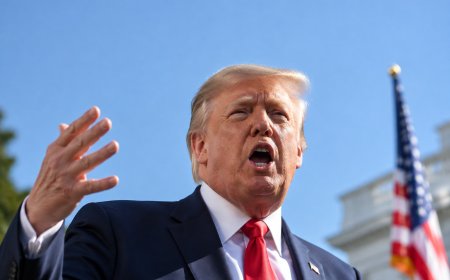
Like Benioff and Soon-Shiong — who also blocked their publications from endorsing Harris — Bezos has reportedly moved closer to Donald Trump following Trump’s 2024 election victory. Bezos’ space company, Blue Origin, relies heavily on federal contracts, while Amazon has faced heightened scrutiny from prior administrations.
Notably, Lewis was reportedly absent during the layoffs. Murray told Fox News that the CEO “had a lot of things to tend to today.” Bezos was also lacking. On the same Monday that the Post prepared to cut roughly one-third of its staff, Bezos was in Florida with Secretary of Defence Pete Hegseth, touring Blue Origin’s facilities.
Less than 48 hours later, The Washington Post laid off the journalist who had been reporting on Blue Origin.
The shadows are closing in.
What's Your Reaction?
 Like
0
Like
0
 Dislike
0
Dislike
0
 Love
0
Love
0
 Funny
0
Funny
0
 Angry
0
Angry
0
 Sad
0
Sad
0
 Wow
0
Wow
0