In May, AI sales automation startup Clay said it would allow most of its employees to sell a portion of their shares at a $1.5 billion valuation. Announced just months after the company’s Series B round, the move was notable in a market where tender offers — the term commonly used for these types of secondary share transactions — were still relatively rare among younger startups.
Since then, a growing number of fast-rising companies have followed suit, allowing employees to convert some of their equity into cash. Linear, a six-year-old AI-powered rival to Atlassian, completed a tender offer at the same $1.25 billion valuation as its Series C round. More recently, ElevenLabs, which is just three years old, approved a $100 million secondary sale for employees at a $6.6 billion valuation — double the company’s previous valuation.
Just last week, Clay announced yet another tender offer after a year of rapid expansion. The eight-year-old company, which tripled its annual recurring revenue (ARR) to $100 million in a single year, said employees could now sell shares at a $5 billion valuation. That represents an increase of more than 60% from the $3.1 billion valuation Clay disclosed in August.
At first glance, these secondary transactions—especially at increasingly lofty valuations for young, still relatively unproven companies—might look like an early “cash-out,” reminiscent of the 2021 startup bubble. One of the most widely cited examples from that period is Hopin, whose founder, Johnny Boufarhat, reportedly sold $195 million in stock just two years before the company’s assets were sold for a small fraction of their peak valuation of $7.7 billion.
However, there is an essential difference between today’s environment and the excesses of 2021.
During the era of near-zero interest rates, or ZIRP, many secondary transactions were structured primarily to provide liquidity to founders of high-profile startups like Hopin. By contrast, recent deals at companies such as Clay, Linear, and ElevenLabs are designed as employee-inclusive tender offers that allow staff, not just founders, to benefit.
While investors today tend to view the large founder payouts of the 2021 boom with scepticism, the shift toward broader employee tender offers has been received much more positively.
“We’ve done a lot of tenders, and I haven’t seen any drawbacks yet,” said Nick Bunick, a partner at secondary-focused venture firm NewView Capital.
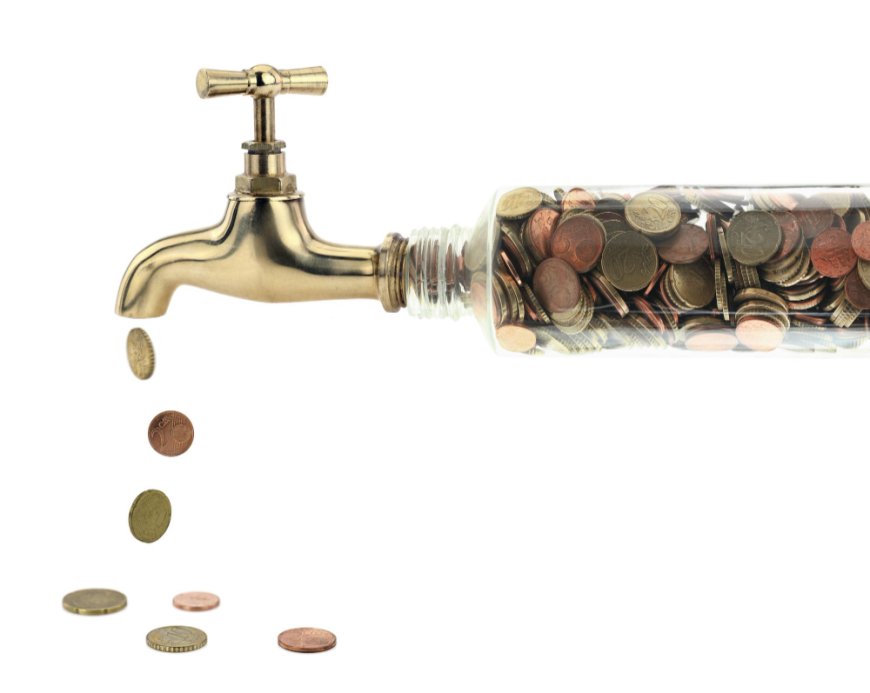
As startups remain private for longer and competition for top talent intensifies, allowing employees to realise some liquidity from their equity can be a powerful tool for hiring, retention, and morale, Bunick said. “A little liquidity is healthy, and we’ve certainly seen that across the ecosystem.”
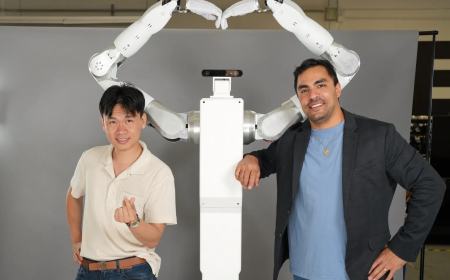
When Clay announced its first tender offer, co-founder Kareem Amin said the motivation was to make sure that “the gains don’t just accumulate to a few people,” but are shared more broadly among employees whose compensation is heavily tied to equity.
Some fast-growing AI startups are increasingly aware that, without offering early liquidity, they risk losing key employees to public companies or more established private firms like OpenAI and SpaceX, both of which regularly conduct staff tender offers. While employee sales offers are not without potential downsides. Ken Sawyer, co-founder and managing partner at secondary firm Saints Capital, pointed to possible second-order effects. “It is very positive for employees, of course,” Sawyer said. “But it enables companies to stay private longer, reducing liquidity for venture investors, which is a challenge for LPs.”
In other words, if tender offers increasingly serve as a long-term alternative to IPOs, they could create structural issues for the venture ecosystem. Without meaningful cash returns, limited partners may become more hesitant to commit capital to venture firms, ultimately affecting the startup funding pipeline.
































 Like
0
Like
0
 Dislike
0
Dislike
0
 Love
0
Love
0
 Funny
0
Funny
0
 Angry
0
Angry
0
 Sad
0
Sad
0
 Wow
0
Wow
0