







































Vega raises $120M Series B to rethink how enterprises detect cyber threats
Vega secures $120 million in Series B funding to advance its enterprise cybersecurity platform focused on faster, more accurate threat detection and response.
Enterprises today generate vast volumes of security data, yet traditional tools such as Splunk typically require organisations to centralise it before they can identify threats. This approach can be slow, expensive, and increasingly ineffective in cloud-based environments where data volumes continue to surge and reside across multiple systems.
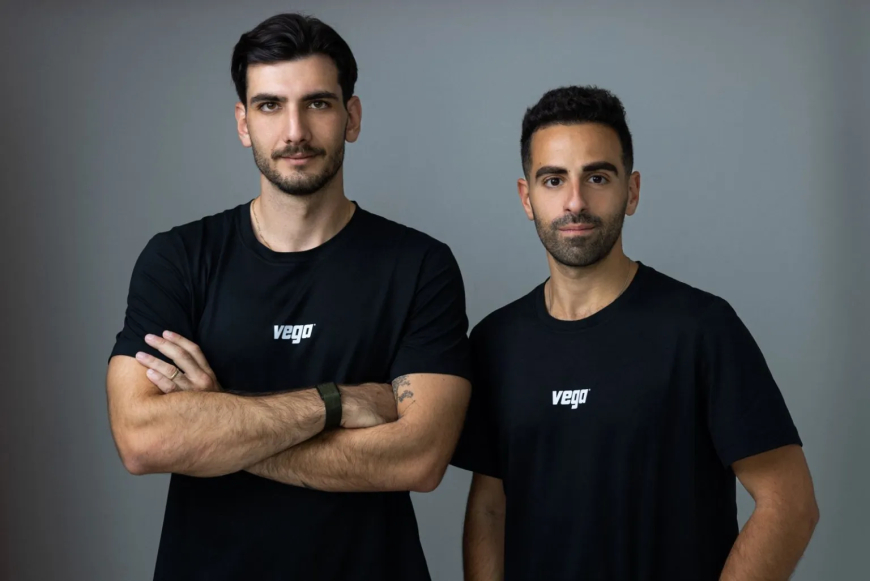
Vega Security aims to change that model by running security operations directly where data already resides—across cloud platforms, data lakes, and existing storage infrastructure. The two-year-old AI cybersecurity company has now raised $120 million in a Series B funding round to expand that strategy.
The round was led by Accel, with participation from Cyberstarts, Redpoint, and CRV. The financing nearly doubles Vega’s valuation to $700 million and increases its total funding to $185 million. The company plans to use the capital to enhance its AI-native security operations platform, grow its go-to-market teams, and expand internationally.
Shay Sandler, Vega’s co-founder and CEO, said the current security information and event management (SIEM) model — the dominant framework for the past two decades — has become prohibitively expensive and increasingly ill-suited for AI-native security operations. In complex cloud environments, he argues, the traditional model can inadvertently increase exposure to threats.
“Vega has defined a new operating model that enables organisations to leverage the full potential of their enterprise data to achieve incident response readiness, without all the complexity, the cost, the drama,” Sandler said. “We want to simply enable them to reach AI-native detection response capability anywhere the data is, at scale.”
Sandler previously served in Israel’s military cybersecurity unit before joining Granulate, which Intel acquired for $650 million in 2022. After spending a year at Intel, he decided to return to cybersecurity entrepreneurship.
That background drew the interest of Andrei Brasoveanu, a partner at Accel, and Vega’s ambitious challenge to established players in a market long dominated by Splunk.
Brasoveanu noted that legacy SIEM vendors have faced criticism for scalability challenges as data volumes have grown rapidly, particularly driven by AI workloads. Splunk itself was acquired by Cisco in 2024 for $28 billion.
“Splunk and every contender since has always centralised the data, but by doing that, you essentially hold the customer hostage,” Brasoveanu said.
Transitioning away from entrenched systems, however, can be difficult for enterprises managing complex IT environments. Sandler said Vega’s priority has been to deliver not only improved cost efficiency and threat detection but also simpler deployment for large organisations.
“Our North Star was to make it no drama, as simple as possible for the biggest, most complex enterprises in the world to adopt it within minutes,” he said.
The approach is gaining traction. Vega, which employs around 100 people, has secured multimillion-dollar contracts with financial institutions, healthcare organisations, and Fortune 500 companies. Its customer base includes cloud-focused firms such as Instacart.
“The only reason they would do that with a two-year-old startup is that the problem is so painful and other solutions on the market require an unrealistic expectation that the enterprise change the way they operate or do two years of data migrations,” Sandler said. “Vega enables them just to plug and play and achieve immediate detection response value.”
What's Your Reaction?
 Like
0
Like
0
 Dislike
0
Dislike
0
 Love
0
Love
0
 Funny
0
Funny
0
 Angry
0
Angry
0
 Sad
0
Sad
0
 Wow
0
Wow
0