




















An Ice Dance Duo Skated to AI-Generated Music at the Olympics
Czech ice dancers Kateřina Mrázková and Daniel Mrázek sparked debate at the Olympics after performing part of their rhythm dance to AI-generated music, raising questions about creativity, copyright, and technology in elite sport.
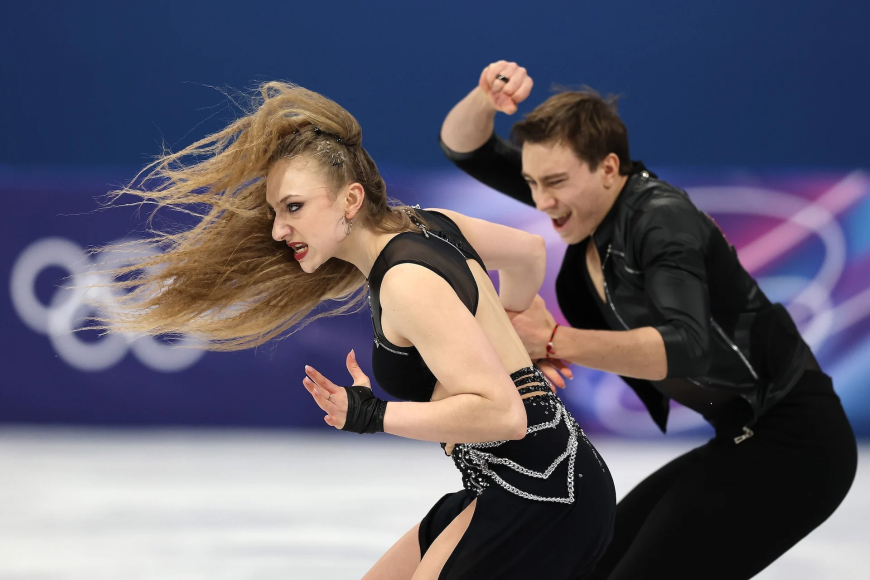
Czech ice dancers Kateřina Mrázková and Daniel Mrázek stepped onto Olympic ice this week, marking a milestone that reflects years—often decades—of relentless training and commitment. Yet instead of focusing entirely on their athleticism and choreography, their Olympic debut has sparked a broader cultural debate: the sibling duo performed part of their rhythm dance routine to AI-generated music.
The choice does not violate any official rules. Still, for many viewers, it came across as a stark and unsettling signal of where the creative industries may be headed.
As Mrázek launched his sister into a striking, cartwheel-style lift that made the pair appear almost gravity-proof, one of the NBC commentators casually noted, “This is AI-generated, this first part,” referring to the opening music. That offhand remark proved more jarring to some audiences than even the duo’s most daring technical elements.
How the Ice Dance Event Works
Olympic ice dance is divided into two segments: the rhythm dance and the free dance. In the rhythm dance, skaters must design their routine around a prescribed theme. This season’s theme is “The Music, Dance Styles, and Feeling of the 1990s.”
Other competitors leaned into recognisable nostalgia. British duo Lilah Fear and Lewis Gibson paid homage to the Spice Girls, while American medal hopefuls Madison Chock and Evan Bates skated to a medley of Lenny Kravitz tracks. Against that backdrop, the Czech siblings’ decision stood out.
Instead of relying entirely on licensed ’90s music, Mrázková and Mrázek skated to a routine that blends a portion of an AI-generated song with “Thunderstruck” by AC/DC. The contrast was hard to miss—and, for some, deeply uncomfortable.
According to the International Skating Union, the governing authority for competitive skating, the duo’s officially listed rhythm dance music this season is “One Two by AI (of 90s style Bon Jovi)” paired with “Thunderstruck”. The official Olympics website also confirms that the AI-generated track is being used during the rhythm dance portion of their program.
Not the First Time AI Music Raised Eyebrows
This Olympic appearance is not the first time the siblings’ music choice has drawn criticism. Earlier in the season, they used a different AI-generated, ’90s-inspired song that opened with the line, “Every night we smash a Mercedes Benz!” The lyric immediately rang alarm bells for listeners familiar with “You Get What You Give” by New Radicals, a defining hit of the late 1990s.
That resemblance did not stop at a single line. The AI-generated lyrics also included phrases such as “Wake up, kids / We got the dreamer’s disease” and “First we run, and then we laugh ’til we cry”—all lines that appear verbatim in the New Radicals song. Even the title of the AI track, “One Two,” mirrors the opening words of the original hit.
Following criticism, the duo adjusted the music before the Olympics. The revised version removed the New Radicals-style lyrics, replacing them with new AI-generated lines that many observers felt sounded suspiciously close to Bon Jovi. Journalist Shana Bartels highlighted examples like “raise your hands, set the night on fire,” a phrase that echoes “Raise Your Hands” by Bon Jovi—a song that, notably, predates the 1990s.
Adding to the unease, listeners pointed out that the AI-generated vocalist bears a striking resemblance to Bon Jovi’s voice. This updated version was the one performed during the Olympic rhythm dance, before transitioning into AC/DC’s very real, very human-written “Thunderstruck.”
Why This Happens With AI Music
The specific software used to create the track has not been disclosed, but the underlying mechanism is familiar. Music-generation models are trained on massive datasets, often assembled under legally contested circumstances. When prompted to create a song “in the style of” a particular artist or era, these systems generate statistically likely patterns—melodies, lyrics, phrasing—that resemble their training material.
That works passably well for functional tasks like code generation. For creative work, it can blur into outright imitation. Ask for something that sounds like Bon Jovi, and the output may drift uncomfortably close to actual Bon Jovi lyrics and vocal stylings.
A Broader Cultural Moment
Despite the backlash, the wider music industry has shown growing interest in AI-assisted or AI-fronted projects. Some creators are already finding commercial success using these tools. One recent example includes a poet-turned-musician who used Suno to turn her writing into songs under a fictional persona. This experiment ultimately led to a multimillion-dollar record deal.
That context makes the Olympic controversy feel less isolated and more emblematic of a larger shift.
An Achievement Overshadowed
It’s unfortunate that Mrázková and Mrázek’s Olympic debut—a rare achievement reached by only a tiny fraction of elite skaters—has been partially eclipsed by debate over their soundtrack. Ice dance is meant to celebrate creativity, musical interpretation, and artistic risk alongside technical excellence.
Yet for many watching, the question lingers: in a sport that prides itself on human expression and originality, what does it mean when part of the performance is driven by music no human truly wrote?
That uneasy tension, more than the lifts or footwork, may be what people remember most from this routine.
What's Your Reaction?
 Like
0
Like
0
 Dislike
0
Dislike
0
 Love
0
Love
0
 Funny
0
Funny
0
 Angry
0
Angry
0
 Sad
0
Sad
0
 Wow
0
Wow
0