




































Gather AI, maker of ‘curious’ warehouse drones, lands $40M led by Keith Block’s firm
Warehouse drone startup Gather AI has raised $40 million in a funding round led by Keith Block’s investment firm to scale autonomous inventory management.

Gather AI, a startup that provides an AI-powered platform for warehouse cameras and drones, has closed a $40 million Series B funding round led by Smith Point Capital, the venture firm founded by former Salesforce co-CEO Keith Block.
The Gather AI team first connected with Smith Point about a year ago at a logistics industry conference, and the alignment was immediate. “It took Keith and his team five minutes to get what we’re doing,” co-founder and CEO Sankalp Arora.
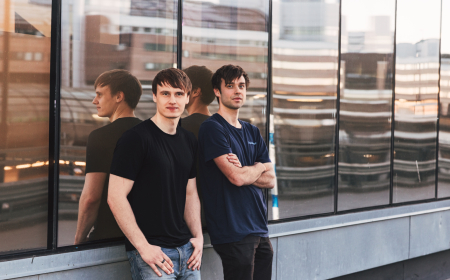
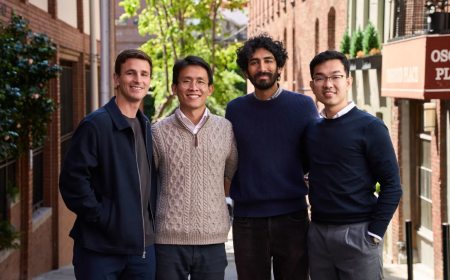
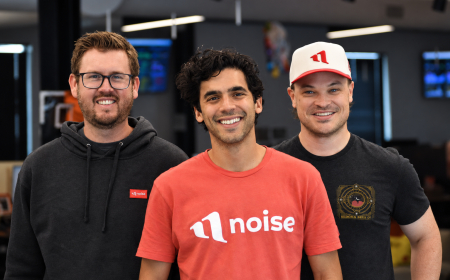
What sets Gather AI apart is the unusual background of its founders. The three met while pursuing PhDs at Carnegie Mellon University, where they helped develop one of the earliest autonomous helicopters and tested it at the FBI’s training facility in Quantico. Block also serves as a trustee at Carnegie Mellon.
In 2017, the founders applied what they had learned about teaching helicopters to fly and land safely to launch Gather AI. The company uses off-the-shelf cameras mounted on mobile equipment, such as forklifts and commercially available drones, that move through warehouses. These systems observe floor-level operations and feedfeed their detectionsectly into warehouse management software.
The key difference, however, is that the AI does not scan environments randomly. Instead, it operates with what Arora describes as “curiosity.”
“My PhD work focused on how to make different kinds of flying robots curious,” he said. “So they’re curious about boxes and bar codes and workflows.”
Beyond barcodes, the system identifies lot codes, printed text, expiration dates, case counts, damaged goods, space occupancy, and more. The goal is to detect and anticipate problems such as inventory shortages, misplaced items, and inefficient or unsafe workflows.
The technology is also designed to operate in environments that are difficult or dangerous for humans, including freezers and cold storage facilities.
Because Gather’s core technology was developed years before the rise of large language models, it does not rely on the same type of AI architecture.
“They’re not end-to-end neural networks,” Arora said. “They are classical Bayesian techniques, combined with neural networks.”
Vision-based Bayesian AI uses probability-driven methods to help computers interpret visual information. These systems combine incoming data with prior knowledge to make decisions, which means they do not suffer from the hallucination issues associated with LLMs.
Instead, as Arora explained, the system “gets curious,” gathering information and deciding what to examine next based on what it has already learned — a concept that inspired the company’s name.
While the approach may sound old-fashioned, Gather AI sits at the forefront of what many describe as the next major wave in artificial intelligence: embodied AI. This category includes robots that interact directly with the physical world, rather than AI systems that operate solely through chat interfaces or web applications.
Reflecting that focus, the startup won the 2025 Nebius Robotics Award for Vision AI and Streaming Video Analytics in December. Nebius is a Netherlands-based company that provides AI infrastructure.
Gather AI currently employs around 60 people, according to Arora. Its customers include Kwik Trip, Axon, GEODIS, and NFI Industries. With this latest round, the company has raised a total of $74 million to date. Additional investors include Bain Capital Ventures, XRC Ventures, and Hillman Investments.
What's Your Reaction?
 Like
0
Like
0
 Dislike
0
Dislike
0
 Love
0
Love
0
 Funny
0
Funny
0
 Angry
0
Angry
0
 Sad
0
Sad
0
 Wow
0
Wow
0