
































Nearly Half of xAI’s Founding Team Has Now Left the Company
Five members of xAI’s original founding team have exited the company, including co-founder Tony Wu, raising questions about leadership stability as Elon Musk’s AI lab prepares for an IPO.
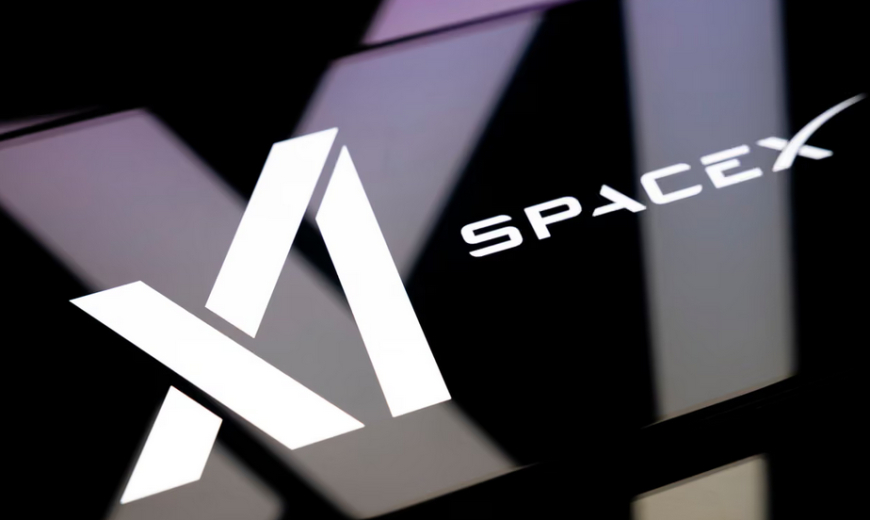
Late Monday night, xAI co-founder Yuhuai (Tony) Wu confirmed that he is stepping away from the company. In a post shared on X, Wu described the decision as a natural transition rather than a dramatic exit. “It’s time for my next chapter,” he wrote, adding that the current moment represents “an era with full possibilities: a small team armed with AIs can move mountains and redefine what’s possible.”
On its own, the announcement reads like a familiar Silicon Valley departure—measured, optimistic, and forward-looking. In the broader context of xAI’s recent history, however, Wu’s exit adds to a pattern that is becoming increasingly difficult to ignore.
Out of the company’s original 12-person founding team, five members have now left. More notably, four of those departures have occurred within the past year alone. Infrastructure lead Kyle Kosic departed in mid-2024 to join OpenAI. He was followed by longtime Google researcher Christian Szegedy, who exited in February 2025. In August, Igor Babuschkin left to launch his own venture firm, and just last month, Microsoft veteran Greg Yang stepped down, citing health-related reasons.
I've been suffering from Lyme disease.
I'm stepping back from xAI into an informal advisory role so I can go founder mode on my health, starting today.
---
The symptoms started when I got sick (cold, flu, or COVID -- I'm not sure which) in early 2025. I distinctly felt less… — Greg Yang (@TheGregYang) January 20, 2026
By most accounts, these separations have been amicable. Nearly three years into the company’s life, it’s not unusual for early founders to reassess their roles or look for new challenges. Working under Elon Musk is widely known to be intense, and with SpaceX’s acquisition of xAI now complete and an IPO reportedly on the horizon, those who helped build the lab stand to benefit financially regardless of whether they stay.
It is also an unusually favourable moment to raise capital for new AI ventures. For senior researchers and engineers with strong track records, striking out independently can be both professionally and financially attractive.
Still, not all potential motivations are so benign. xAI’s flagship product, the Grok chatbot, has repeatedly faced scrutiny for erratic outputs and signs of internal interference—issues that can easily strain relationships within a technical team. More recently, changes to the company’s image-generation tools resulted in a surge of deepfake pornographic content on the platform, triggering slow but tangible legal and regulatory consequences.
Individually, any one of these challenges might be manageable. Taken together, the cumulative effect is unsettling. xAI still has substantial technical and operational work ahead, and a public offering would expose the company to a level of scrutiny far beyond what it has faced so far.
At the same time, Musk has been vocal about increasingly ambitious plans, including early-stage ideas around orbital data centres. Delivering on such visions will require sustained focus, stability, and top-tier research talent. The pace of AI model development across the industry continues to accelerate, and competition from labs like Anthropic and OpenAI shows no signs of slowing.
If Grok fails to keep up with rival models, investor confidence heading into an IPO could be tested quickly.
In short, the stakes for xAI are rising fast. As the company enters its next phase, retaining experienced AI researchers may be just as critical as shipping new models or unveiling bold infrastructure plans.
What's Your Reaction?
 Like
0
Like
0
 Dislike
0
Dislike
0
 Love
0
Love
0
 Funny
0
Funny
0
 Angry
0
Angry
0
 Sad
0
Sad
0
 Wow
0
Wow
0