






































AI skills gap widens as power users surge ahead, says industry report
An emerging AI skills gap is widening as advanced users gain a competitive edge, leaving others behind in productivity, efficiency, and innovation.
New research from Anthropic indicates that while artificial intelligence is reshaping how work is performed, it has not yet led to widespread job losses. However, early signals suggest uneven effects are emerging, particularly among younger workers entering the labour market.
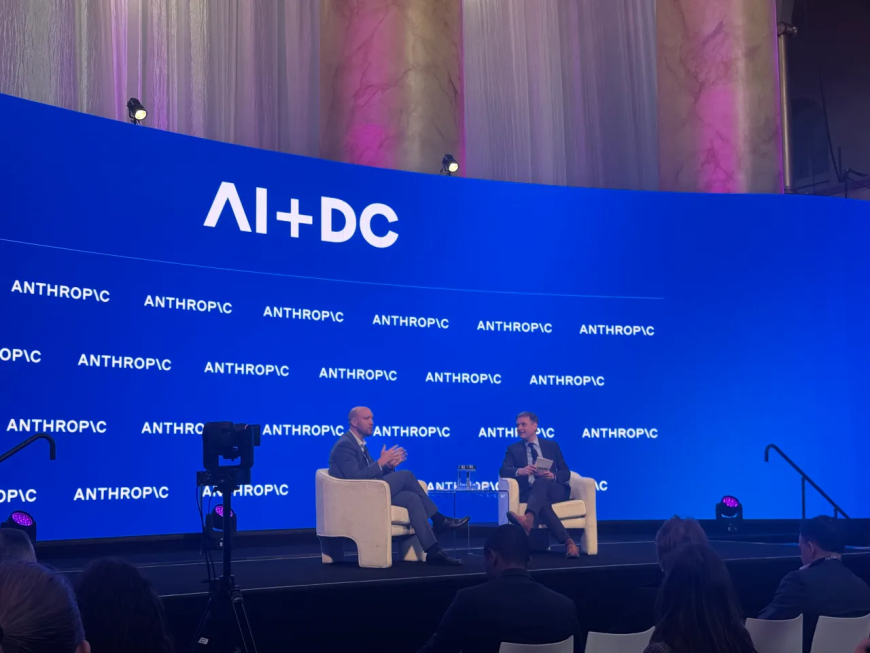
Speaking at the Axios AI Summit in Washington, D.C., Peter McCrory said the company's latest economic impact report shows little evidence so far of large-scale job displacement.
"There's at least no larger material difference in unemployment rates" between workers who rely on Claude for core job tasks in automated ways — such as technical writers, data entry clerks, and software engineers — and those in roles less exposed to AI that involve physical interaction and real-world dexterity, McCrory explained.
Despite this, the rapid spread of AI adoption across industries could quickly change the situation. Dario Amodei has previously warned that AI could eliminate up to half of entry-level white-collar jobs and potentially push unemployment levels to 20% within the next five years.
McCrory emphasised the importance of monitoring these developments closely. He said that displacement effects could emerge rapidly, making it essential to track changes early and develop appropriate policy responses before large-scale impacts occur.
Understanding AI growth, adoption patterns, and the technology's spread across industries is therefore critical to anticipating future labour market shifts.
In principle, McCrory noted, AI systems like Claude can perform nearly any task that can be done on a computer. In reality, however, most users are only utilising a small portion of those capabilities.
Anthropic's analysis focused on roles where AI is already being applied to automate tasks that align with real workplace use cases. These areas are seen as key indicators of where potential job displacement could arise in the future.
The company's fifth economic impact report, released Tuesday, also highlights a widening gap between experienced AI users and those just beginning to adopt the technology.
Early adopters tend to extract significantly greater value from AI tools, using them for complex, work-related applications rather than occasional or casual tasks. Many of these users treat AI as a collaborative tool — a "thought partner" — to refine ideas, iterate on work, and gather feedback.
According to McCrory, this trend suggests that AI is increasingly rewarding those who understand how to integrate it effectively into their workflows, giving them a competitive advantage over less experienced users.
The benefits are not evenly distributed geographically either. The report found that Claude usage is more concentrated in high-income countries and, within the United States, in regions with a higher concentration of knowledge workers. It is also primarily applied to a relatively narrow range of specialised tasks and occupations.
These findings indicate that, rather than levelling the playing field, AI adoption may already be favouring wealthier regions and more skilled users, potentially widening existing inequalities as advanced users continue to move ahead.
What's Your Reaction?
 Like
0
Like
0
 Dislike
0
Dislike
0
 Love
0
Love
0
 Funny
0
Funny
0
 Angry
0
Angry
0
 Sad
0
Sad
0
 Wow
0
Wow
0