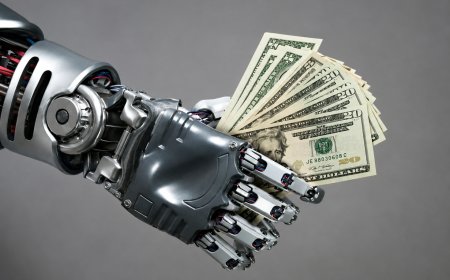
A conversation that has been quietly circulating across Silicon Valley has moved into the spotlight this week: the use of AI tokens in employee compensation packages. The concept is relatively simple. Instead of limiting compensation to salary, equity, and traditional bonuses, companies are beginning to consider providing engineers with allocations of AI tokens — the computational units required to run systems such as Claude, ChatGPT, and Gemini. These tokens can be used to execute automated workflows, run AI agents, generate code, and handle large-scale tasks. The underlying idea is that greater access to computational power directly enhances productivity, and more productive engineers deliver greater value.
NVIDIA CEO Jensen Huang brought significant attention to the concept during the company’s annual GTC conference earlier this week. He suggested that engineers could receive token allocations of roughly half their base salary. According to his estimate, top engineers might consume as much as $250,000 annually in AI compute. Huang framed this not only as a productivity tool but also as a powerful recruiting incentive, predicting that such compensation structures could soon become standard practice across the technology sector.
While Huang’s comments amplified the discussion, the idea had already been gaining traction. Venture capitalist Tomasz Tunguz of Theory Ventures had written about it in mid-February, describing inference costs as an emerging “fourth component” of engineering compensation. Drawing on data from Levels. fyi, he estimated that a top-tier software engineer earns around $375,000 annually. When an additional $100,000 worth of AI tokens is included, the total compensation rises to approximately $475,000 — suggesting that about 20% of total compensation could now be tied to compute resources.
This shift is closely tied to the rapid rise of agentic AI systems. The release of OpenClaw in late January significantly accelerated interest in this space. OpenClaw is an open-source AI assistant designed to operate continuously, handling tasks autonomously, launching sub-agents, and progressing through workflows without constant human input. It represents a broader transition toward AI systems that act independently over time rather than simply responding to prompts.
As a result, token usage has increased dramatically. While a typical user might consume around 10,000 tokens while writing or researching over several hours, engineers deploying multiple AI agents can use millions of tokens in a single day. This consumption often occurs automatically in the background, with systems running continuously without direct human interaction.
By the weekend, The New York Times had explored what it described as the “tokenmaxxing” trend. The report noted that engineers at companies such as Meta and OpenAI are increasingly competing on internal leaderboards that track token usage. Generous token budgets are gradually becoming a standard workplace benefit, similar to perks like free meals or health coverage. One engineer at Ericsson in Stockholm reportedly told The Times that his use of Claude exceeds the value of his salary, although his employer covers the cost.
Despite the apparent advantages, the rise of token-based compensation raises important questions. While increased access to computing can boost short-term productivity, it may also introduce new expectations. If a company is effectively providing resources equivalent to an additional virtual workforce, employees may face pressure to deliver output at a significantly higher rate.
There is also a deeper financial consideration. When the cost of computing per employee approaches or surpasses that employee’s salary, companies may begin to reassess the balance between human labour and automated systems. If AI-driven processes can handle a substantial portion of the workload, the number of human employees required to oversee those systems could come under scrutiny.
Jamaal Glenn, a Stanford MBA graduate and former venture capitalist who now serves as a CFO in financial services, has highlighted another dimension of the issue. He suggests that token allocations may help companies enhance the perceived value of compensation packages without increasing actual cash or equity—the components that typically grow in value over time. Unlike salary or stock grants, token budgets do not vest, appreciate, or carry forward into future negotiations. They are consumed rather than accumulated.
From a company’s perspective, this approach can be highly advantageous. It allows organisations to present an expanded compensation structure while maintaining tighter control over long-term financial commitments. For employees, however, the benefits are less certain. Whether AI tokens represent a meaningful addition to compensation or simply a shifting cost structure depends on factors that are still evolving — and that many engineers may not yet fully understand.






























 Like
0
Like
0
 Dislike
0
Dislike
0
 Love
0
Love
0
 Funny
0
Funny
0
 Angry
0
Angry
0
 Sad
0
Sad
0
 Wow
0
Wow
0