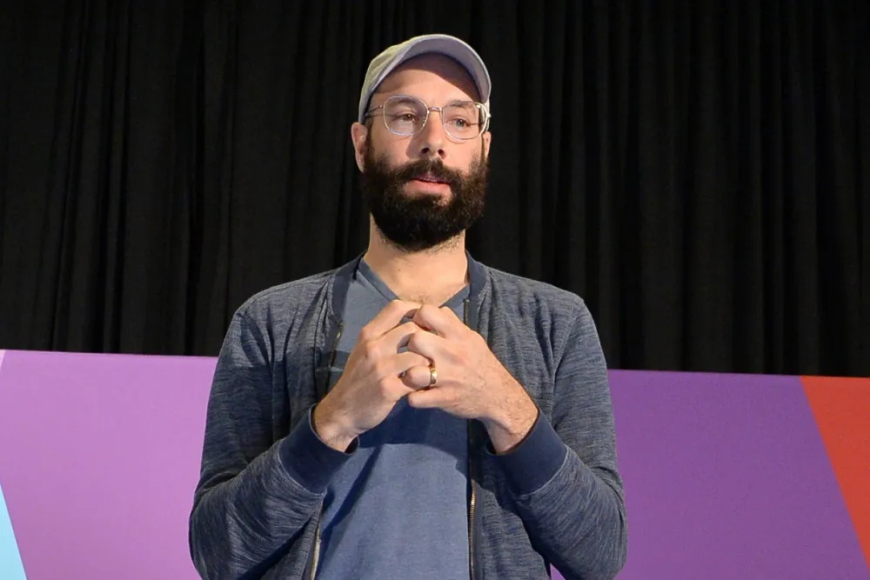
Patreon CEO Jack Conte made it clear during a talk at the SXSW conference in Austin that he does not oppose artificial intelligence — but he strongly disagrees with how some AI companies are using creators’ content.
“I run a frickin’ tech company,” Conte told the audience, emphasising that he is not against technological progress. However, he drew a firm line on using creative work to train AI systems without compensation. He criticised the industry’s reliance on “fair use” as justification, calling the argument “bogus.”
During his presentation, Conte framed AI as part of a broader pattern of disruption that creators have repeatedly experienced in the digital era. He compared the current moment to past shifts, such as the transition from purchasing music on iTunes to streaming platforms, as well as the rise of vertical video formats popularised by apps like TikTok. While acknowledging that AI could disrupt existing business models, he expressed confidence that creators will ultimately adapt and continue to succeed.
“I learned a very important thing as an artist, which is that change does not mean death. You can get back up, and you can fucking go again,” Conte said. He also reflected on how his own experiences as a musician led him to create Patreon to address the challenge of securing financial support for creative work.
Despite his openness to innovation, Conte maintained that AI companies should not be allowed to use creators’ work freely to train their models without providing compensation.
“The AI companies are claiming fair use, but this argument is bogus,” he said, reading from what he described as a manifesto. “It’s bogus because while they claim it’s fair to use the work of creators as training data, they do multimillion-dollar deals with rights holders and publishers like Disney and Condé Nast and Vox and Warner Music.”
He argued that if the fair use claim were truly valid, these companies would not be entering into expensive licensing agreements with major rights holders.
“If it’s legal just to use it, why pay?” Conte asked. “Why pay them and not creators — not the millions of illustrators, musicians, and writers — whose work has been consumed by these models to build hundreds of billions of dollars of value for these companies?”
His remarks also suggest a broader interest in ensuring that Patreon’s community of creators — which includes hundreds of thousands of individuals — could benefit from any such compensation structures in the future.
Conte emphasised that his stance is not rooted in opposition to AI, technology, or change itself.
“I accept the inevitability of change, and I feel agency in discovering my next path through the chaos. A part of that challenge even excites me,” he said. “Still, the AI companies should pay creators for our work, not because the tech is bad — but because a lot of it is good, or it will be soon — and it’s going to be the future.”
He added that planning for the future of AI should include consideration for artists and creative professionals, noting that societies that support and reward creativity tend to benefit as a whole.
The talk concluded on an optimistic note, with Conte expressing confidence that human creativity will remain valuable even as AI continues to advance.
“Great artists don’t play back what already exists,” he said, referencing how large language models generate outputs. “They stand on the shoulders of giants. They push culture forward.”








































 Like
0
Like
0
 Dislike
0
Dislike
0
 Love
0
Love
0
 Funny
0
Funny
0
 Angry
0
Angry
0
 Sad
0
Sad
0
 Wow
0
Wow
0