
































India’s AI surge drives companies to sacrifice short-term revenue for rapid user growth
India’s AI boom is prompting startups and tech firms to prioritise user acquisition over immediate profits, as competition intensifies across consumer and enterprise AI markets.
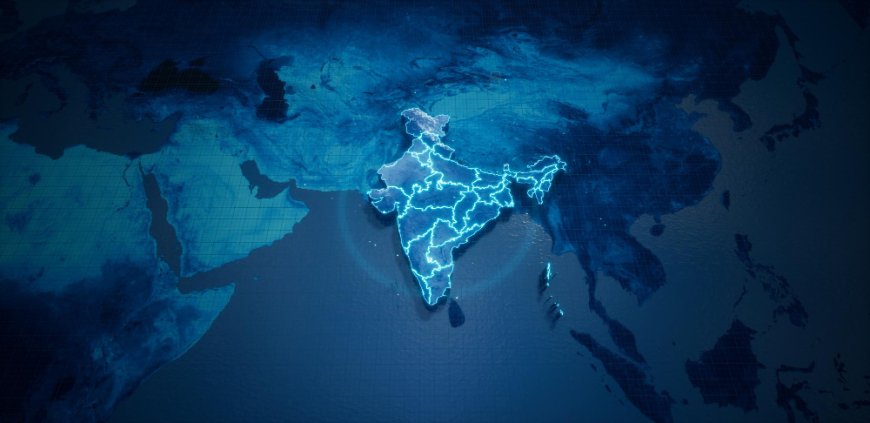
Big tech companies’ push to accelerate AI adoption in India may be entering a new phase, as firms begin winding down free promotions and prepare to test whether the world’s fourth-largest economy can translate explosive usage into a meaningful base of paying subscribers.
India became the largest market for generative AI app downloads in 2025, according to market intelligence firm Sensor Tower, further widening its lead over the United States, with installs rising 207% year over year.
Major players, including OpenAI, Google, and Perplexity, rolled out extended free premium offers to build momentum in India’s highly price-sensitive market. Leading AI firms have also supported India’s ambition to position itself as a global hub for AI. A major AI summit held last week in New Delhi drew high-profile attendees, including OpenAI’s Sam Altman, Anthropic’s Dario Amodei, and Alphabet CEO Sundar Pichai, underscoring India’s increasing significance in the global AI race.
Some of those early growth-focused promotional strategies are now starting to fade. Perplexity ended its bundled Pro offering with Indian telecom Airtel in January. OpenAI’s free ChatGPT Go access in India is no longer available, setting the stage for a clearer measure of how many newly acquired users will convert to paid subscribers once free access ends.
Even with surging installs, India continues to contribute a disproportionately small share of revenue. The shared Sensor Tower data shows the country accounted for around 1% of in-app purchases despite generating roughly 20% of global GenAI app downloads, highlighting the challenge of monetisation in one of the fastest-growing AI markets.
GenAI app adoption in India accelerated sharply throughout 2025. Downloads peaked in September and October, with year-over-year growth rates of roughly 320% and 260%, respectively, according to Sensor Tower. But higher usage did not translate into comparable revenue gains. In November and December 2025, India’s in-app purchase revenue for AI apps fell by 22% and 18%, respectively, month over month. ChatGPT revenue declined even more dramatically—down 33% and 32% over the same period after free sub-$5 ChatGPT Gocess launched in November—illustrating the near-term revenue impact of aggressive promotion.
ChatGPT still accounts for more than 60% of GenAI in-app revenue in India, so changes to its pricing or access strategy can significantly impact the market’s performance.
Sensor Tower linked last year’s adoption surge not only to free trials but also to the launch of new products and improvements on major platforms. The debut of tools such as DeepSeek, Grok, and Meta AI, along with upgrades to chatbots including ChatGPT, Gemini, Claude, and Perplexity, helped drive installs. Viral interest in AI-generated media also contributed, with content-creation and editing apps among the 20 most-downloaded GenAI apps in India.
User growth in India has been equally striking. Sensor Tower reported that India accounted for about 19% of the global user base of leading AI assistant apps in 2025, ahead of the U.S. at 10%. ChatGPT remains the top AI app in India by monthly active users. However, challengers such as Google’s Gemini and Perplexity have gained traction quickly, in part due to motion-based growth campaigns. Earlier Sensor Tower data also showed that ChatGPT was the most-downloaded GenAI app in India and worldwide in 2025. Earlier this month, OpenAI’s CEO said ChatGPT now has more than 100 million weekly active users in India.
The push to offer free access reflects a broader strategy among AI companies to remove pricing barriers in a value-driven market, betting that early adoption and engagement will convert into stronger long-term retention once free periods end, said Sneha Pandey, insights analyst at Sensor Tower.
India’s appeal is rooted in scale. The country has more than 1 billion internet users and roughly 700 million smartphone owners, making it one of the largest addressable markets for AI services worldwide and a central battleground for user growth.
Still, user engagement in India lags behind more mature markets. In 2025, U.S. users of leading AI chatbot apps spent about 21% more time per week inside the apps than users in India, and recorded 17% more sessions on average, according to Sensor Tower.
“AI in-app revenues will likely see meaningful but gradual improvement as users become more deeply integrated into these platforms, making sustained engagement paramount,” Pandey said.
She added that pricing pressure in India is likely to remain high given the country’s young and value-conscious user base. That dynamic makes lower-cost tiers, telecom bundles, and micro-transaction models important for long-term retention.
ChatGPT remained the clear market leader in India entering 2026, with 180 million monthly active users in January, according to Sensor Tower. Google’s Gemini followed with 118 million, Perplexity had 19 million, and Meta AI had 12 million. The figures highlight both India’s enormous AI opportunity and the growing challenge for companies trying to convert rapid user adoption into sustained revenue.
What's Your Reaction?
 Like
0
Like
0
 Dislike
0
Dislike
0
 Love
0
Love
0
 Funny
0
Funny
0
 Angry
0
Angry
0
 Sad
0
Sad
0
 Wow
0
Wow
0