







































Ukraine’s Startup Ecosystem Continues to Grow Despite War
Ukraine’s startups continue to build and raise funding despite the war, with strong growth in defence tech, AI, SaaS, and IT services driving resilience in the tech ecosystem.
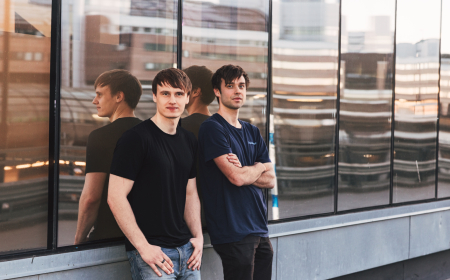
When edtech company Preply reached unicorn status earlier this year, staff in its Kyiv office marked the moment with cake — because that’s simply what people do, even while living through a war.
Four years after Russia launched its full-scale invasion, Ukraine’s startup scene has done far more than endure. Many companies are still building, expanding, and hiring. Preply, for example, plans to use the proceeds from its latest funding round to recruit around 100 engineers across its global teams — including in Ukraine, where roughly one-third of its engineering workforce is based.
Preply is only one case among many. Defence tech has attracted the most global attention, particularly because innovations can move from development to real-world deployment on the battlefield so quickly. But the same pool of technical talent and the same culture of problem-solving are increasingly visible across other sectors too — sectors that are also playing roles in strengthening Ukraine.
Because Ukraine is fighting a much larger aggressor, authorities view attempts to avoid mobilisation negatively. At the same time, startups can qualify for a special status that protects key employees from being drafted if the business is considered supportive of the country. Aspichi is one such startup, its founder Victor Samoilenko said.
Aspichi was initially created in the U.S. in 2021, but when the war began, the company shifted direction entirely. Today, it is best known for Luminify, a mixed-reality mental health platform that has been helping Ukrainians deal with wartime trauma. The startup works directly with military units and also partners with about a dozen clinics that provide mental health services to the broader population.
That population includes soldiers and veterans, families grieving lost loved ones, and millions of people who have relocated — either to western Ukraine or abroad. Even for those who have remained in Kyiv throughout the war, the psychological strain has been severe.
“Everybody is suffering,” Samoilenko said. “My daughter celebrated several New Year’s and Christmas underground; so the effect is enormous.”
Kyiv has faced relentless pressure, including a winter of near-daily strikes against the power grid. Natali Trubnikova, CMO at Kyiv-based IT consultancy firm Gart Solutions, said residents have adapted to outages using high-capacity power banks, gasoline stoves, and diesel generators. But because costs continue to rise, many households must use these resources sparingly, often keeping indoor temperatures as low as possible.
In these conditions, offices have increasingly become places of refuge from the cold.
“Our office has different generators, so we have electricity, internet, and the office is warm, and it’s open 24/7, so any Ukrainian team member can come to the office at any time,” Preply CEO Kirill Bigai said last month.
For smaller startups, coworking spaces have also become vital shelters. LIFT99 Kyiv Hub, a six-year-old coworking venue that was damaged in a Russian strike last August, has reported a sharp rise in membership since it reopened two months ago, according to its sales and partnership manager, Lada Samarska, in a LinkedIn post.
Despite ongoing missile strikes, Kyiv remains far enough from the front lines to remain Ukraine’s primary startup hub, though it is not the only centre of activity. Lviv, the largest city in western Ukraine, has drawn large numbers of displaced Ukrainians, including many tech workers. LEM Station — a renovated tram depot transformed into a creative and entrepreneurial space — has become a visible symbol of Lviv’s expanding ecosystem. The city has also benefited from its proximity to the Polish border.
International visitors have been fewer than before the war, but Lviv remains reachable by train. That accessibility helped tech conference IT Arena 2025 bring 6,450 participants from more than 40 countries to the city. Defencetech had a dedicated stage, but the event also highlighted support for startups across a wider range of categories. Despite the ongoing conflict, venture capital firms continue operating in Ukraine, including 1991, Flyer One Ventures, and SMRK.
And while the travel is long and exhausting, Ukrainian founders and teams are still showing up at tech events abroad. At TechArena in Stockholm earlier this month, members of a Ukrainian delegation said they were tired and waiting for spring. But as they were leaving, they began listing Ukraine’s unicorns — because that’s what you do, even in the middle of a war.
What's Your Reaction?
 Like
0
Like
0
 Dislike
0
Dislike
0
 Love
0
Love
0
 Funny
0
Funny
0
 Angry
0
Angry
0
 Sad
0
Sad
0
 Wow
0
Wow
0