





































Lunar Energy Raises $232M to Deploy Home Batteries That Prop Up the Grid
Lunar Energy has raised $232M to expand home battery deployments that support the power grid as demand for stationary energy storage grows.
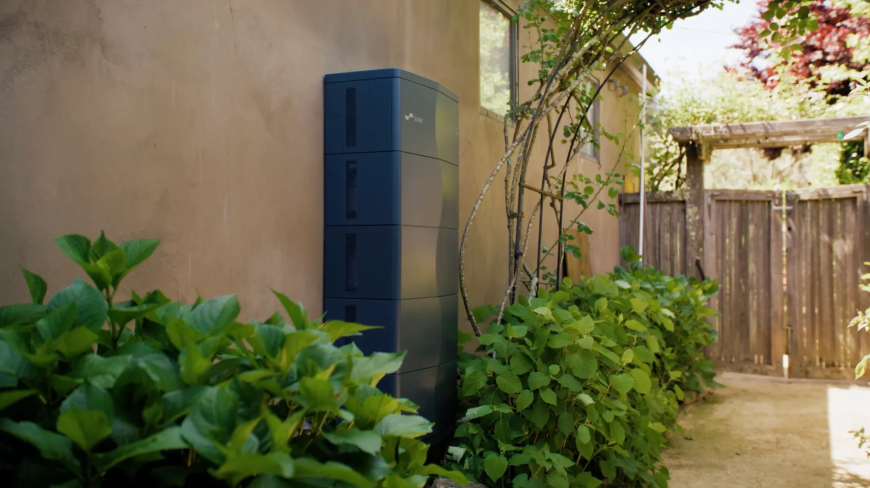
Electric vehicles may dominate headlines, but stationary battery storage is increasingly where investment dollars are flowing in the United States.
One of the latest beneficiaries of that trend is Lunar Energy. The six-year-old startup, which manufactures battery systems for homeowners in California, Georgia, and Washington, announced on Wednesday that it has closed two significant funding rounds. Lunar disclosed a previously unannounced $130 million Series C and a $102 million Series D, bringing its latest capital raise to $232 million.
Activate Capital led the Series C round, while B Capital and Prelude Ventures led the Series D. With these rounds, Lunar has now raised more than $500 million in total funding.
The company plans to use the new capital to expand production significantly. Lunar aims to scale manufacturing to 20,000 battery units by the end of this year, with a longer-term goal of reaching 100,000 units annually by the end of 2028.
Residential and grid-connected battery storage has become a bright spot for energy storage companies, particularly after recent policy shifts. Large portions of the Inflation Reduction Act, which had encouraged domestic battery manufacturing to support the automotive industry, were rolled back under the Trump administration and a GOP-controlled Congress, creating uncertainty for EV-focused battery makers.
At the same time, pressure on the electrical grid continues to grow. An increasingly electrified economy, combined with surging demand from data centres, has made grid-connected batteries one of the most flexible tools for improving grid resilience.
Lunar’s systems are designed not just for backup power in homes, but also to support the broader grid. The company’s battery packs are built using 5-kilowatt-hour modules, typically configured into systems ranging from 15 to 30 kilowatt-hours. When needed, Lunar can draw on its distributed battery fleet to supply electricity back to the grid.
Its virtual power plant (VPP) software adds another layer of control, enabling Lunar to manage not only home batteries but also EV chargers and household appliances. This allows the system to both inject power into the grid and reduce demand during peak periods.
Such virtual power plants are widely expected to replace expensive, highly polluting peaker power plants within the next few years, offering a cleaner, more flexible alternative for managing peak electricity demand.
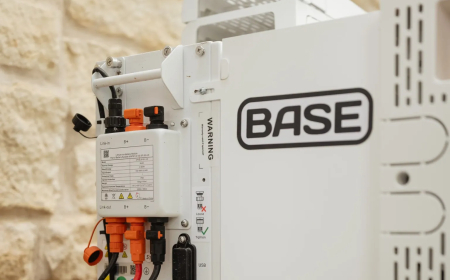
Competition in the residential battery and VPP space has intensified rapidly. In October, Base Power raised $1 billion, less than six months after securing a $200 million round for its residential battery-based VPP. Tesla also operates its own Powerwall-based VPP, expanding its footprint in home energy storage.
Beyond residential systems, Tesla’s grid-scale storage business has been growing rapidly. Meanwhile, JB Straubel’s startup, Redwood Materials, has launched its own energy storage division—even Ford hasignalleded interest in entering the stationary storage market.
Just a few years ago, batteries played a relatively minor role in grid operations. Today, they have become critical infrastructure assets. Their modular design allows them to be built quickly and deployed almost anywhere, and while costs remain higher than some fossil-fuel alternatives, prices continue to fall rapidly.
With demand rising and technology improving, it’s little surprise that investors are increasingly betting on batteries as a cornerstone of the future power grid.
What's Your Reaction?
 Like
0
Like
0
 Dislike
0
Dislike
0
 Love
0
Love
0
 Funny
0
Funny
0
 Angry
0
Angry
0
 Sad
0
Sad
0
 Wow
0
Wow
0