

























Tem raises $75M to remake electricity markets using AI
Tem has raised $75 million to use AI to modernise electricity markets, aiming to improve grid efficiency, pricing transparency, and renewable energy integration.
As artificial intelligence-driven data centres continue to strain electricity demand and pricing, London-based startup Tem believes AI can also be part of the solution.
Tem has developed an AI-powered energy transaction engine designed to reduce costs compared to traditional energy traders. Through its utility division, the company has attracted more than 2,600 business customers across the United Kingdom, with the potential to save up to 30% on energy bills by purchasing electricity through its platform.
The company recently completed an oversubscribed $75 million Series B funding round led by Lightspeed Venture Partners. Additional participants included AlbionVC, Allianz, Atomico, Hitachi Ventures, Revent, Schroders Capital, and Voyager Ventures.
According to a source familiar with the transaction, the latest funding values Tem at over $300 million. The startup intends to deploy the new capital to support international expansion, targeting Australia and the United States, with Texas identified as its initial U.S. market.
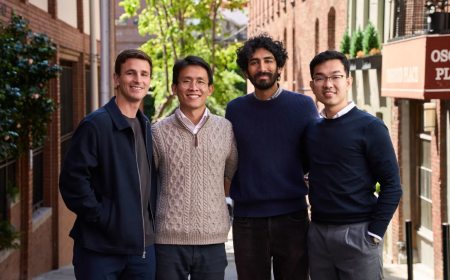
“We’re in a nice position where we have control over our own profitability. So I could have chosen not to raise at all and had a lovely, nice bootstrap business in some ways,” said Joe McDonald, co-founder and CEO of Tem, in an interview. “Well, we’re not that kind of business. We know what we want to achieve as someone who wants to go public over the years.”
Tem operates as a marketplace, connecting electricity producers directly with consumers. From the outset, the company focused primarily on renewable energy generators and small businesses to build both supply and demand simultaneously. “The more decentralised and the more distributed, the better it is for the algorithms,” McDonald explained. “But this works all the way up to enterprise.”
Its customer base includes fast-fashion retailer Boohoo Group, beverage brand Fever-Tree, and football club Newcastle United FC.
At present, Tem effectively runs two interconnected operations. The first, called Rosso, functions as the transaction engine that pairs energy suppliers with buyers. Within Rosso, machine learning systems and large language models are used to forecast supply and demand patterns.
According to McDonald, Rosso aims to reduce costs by eliminating multiple intermediaries in conventional energy markets. “In each of them, you’ve got different teams doing different jobs, taking different levels of profit from back office to trading, trading desks to other trading desks, and probably five to six intermediaries in total that enable the flow of money to move from one side to the other,” he said.
“With AI,” he added, “you now have an opportunity to replace the humans, the labour costs, and the disparate systems into one single transaction infrastructure.” The objective is to narrow the gap between the wholesale electricity price and the rate ultimately paid by customers.
The second component of Tem’s business is RED, described by the company as a “neo-utility” created to demonstrate Rosso’s capabilities in practice.
“When we first started, we tried to sell our infrastructure to the energy companies, and we got nowhere,” McDonald said. RED remains the only utility operating on Rosso’s infrastructure, and its expansion has led Tem to focus more heavily on scaling RED thanon licensing Rosso to external utilities.
However, McDonald indicated that this approach will evolve.
“In reality, it doesn’t matter how good [RED] is; it’s not going to get above a 40% market share. And it shouldn’t, because that becomes a monopoly in itself. So, I’d much rather go to get access to all the transaction flow,” he said.
“Long term, we really don’t mind who owns the customer, who owns the generation as long as our infrastructure is being used,” he continued. “This is just an infrastructure play in the same way AWS was, or Stripe was.”
What's Your Reaction?
 Like
0
Like
0
 Dislike
0
Dislike
0
 Love
0
Love
0
 Funny
0
Funny
0
 Angry
0
Angry
0
 Sad
0
Sad
0
 Wow
0
Wow
0