






































McKinsey and General Catalyst Leaders Say the Era of “Learn Once, Work Forever” Has Ended
McKinsey and General Catalyst leaders say AI is ending the era of “learn once, work forever,” forcing workers and companies to continuously reskill.

If there was one shared message from the CES 2026 keynote discussions, it was this: artificial intelligence is transforming technology and work at a pace unmatched by any previous industrial shift.
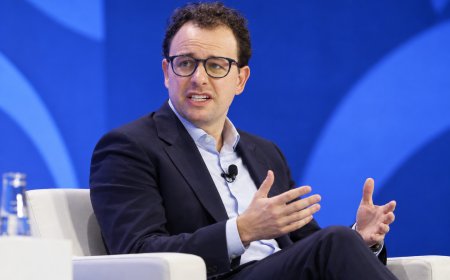
That theme took centre stage during a live taping of the All-In Podcast on Tuesday, where co-host Jason Calacanis spoke with Bob Sternfels, Global Managing Partner of McKinsey & Company, and Hemant Taneja, CEO of General Catalyst. The conversation focused on how AI is reshaping investment decisions and redefining expectations for the global workforce.
“The world has completely changed,” Taneja said, pointing to the extraordinary pace at which AI companies are scaling. He compared the rise of today’s AI leaders with earlier tech success stories, noting that while Stripe took roughly 12 years to reach a $100 billion valuation, Anthropic, a General Catalyst portfolio company, jumped from a $60 billion valuation last year to what he described as “a couple hundred billion dollars” this year.
Taneja said he believes the technology sector is approaching the emergence of multiple trillion-dollar companies. “That’s not a pie-in-the-sky idea with Anthropic, OpenAI, and a few others,” he said.
Calacanis pressed the executives on what is fueling this rapid expansion. Sternfels explained that while many organisations are experimenting with AI tools, broad adoption among non-technology companies remains uneven. According to Sternfels, McKinsey consultants frequently hear the same question from corporate leaders: “Do I listen to my CFO or my CIO right now?”
Chief financial officers, he said, often push to delay AI investments due to uncertain returns, while chief information officers argue that failing to adopt AI risks being left behind. “They’ll say it’s crazy not to do this — we’ll be disrupted,” Sternfels said.
The discussion also turned to AI’s impact on employment. Calacanis noted growing anxiety about whether AI systems could eliminate entry-level roles traditionally filled by recent graduates, and he asked both leaders for advice on navigating this shift.
Sternfels emphasised that while AI models are increasingly capable, human judgment and creativity remain critical. Those skills, he said, will continue to differentiate people in an AI-augmented workplace.
Taneja took a broader view, arguing that continuous learning is no longer optional. “This idea that we spend 22 years learning and then 40 years working is broken,” he said, adding that ongoing “skilling and re-skilling” will be a lifelong requirement.
Calacanis agreed, noting that in some cases it may soon take less time to build an AI agent than to train a new employee. To remain competitive, he said, individuals will need to demonstrate “chutzpah, drive, and passion.”
Sternfels offered insight into how these changes are already reshaping McKinsey itself. He said the firm expects to have roughly as many personalised AI agents as employees by the end of 2026. However, he does not anticipate a net reduction in headcount. Instead, McKinsey is rebalancing its workforce — increasing the number of employees working directly with clients by 25% while reducing back-office roles by a similar margin.
What's Your Reaction?
 Like
0
Like
0
 Dislike
0
Dislike
0
 Love
0
Love
0
 Funny
0
Funny
0
 Angry
0
Angry
0
 Sad
0
Sad
0
 Wow
0
Wow
0