






































Uber and Nuro start trials of premium robotaxi service in San Francisco
Uber and Nuro begin testing a premium robotaxi service in San Francisco, marking a major step toward the adoption of autonomous ride-hailing.
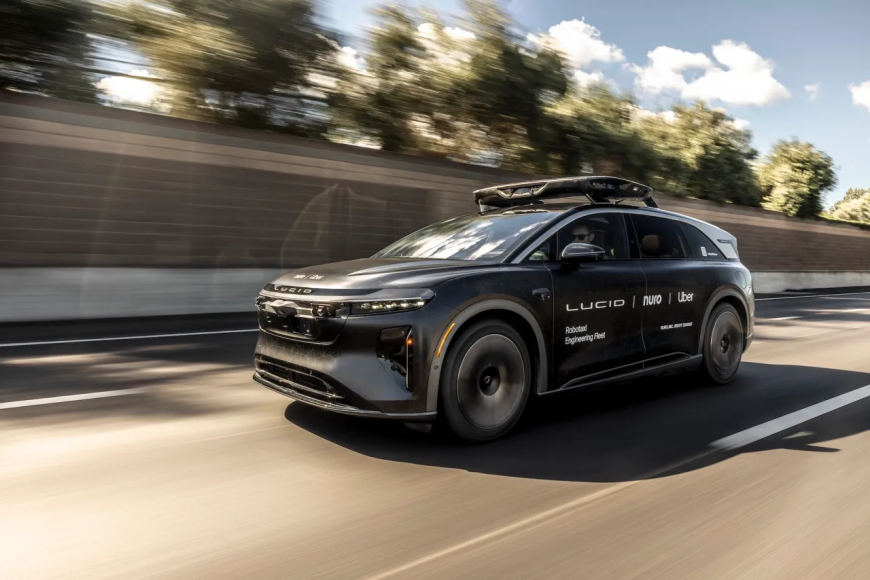
Uber and Nuro have started trial runs of a premium robotaxi service in San Francisco, using specially equipped Lucid Gravity vehicles fitted with advanced self-driving technology.
If a Lucid Gravity SUV covered with sensors and powered by Nuro’s autonomous system is seen driving through San Francisco, it is likely part of this internal testing phase. Currently, a select group of Uber employees can request rides in these robotaxis through the Uber app, marking the latest stage of development ahead of a broader public rollout planned for later this year.
Nuro shared the update in a blog post on Monday, noting that the vehicles are already operating in autonomous mode. However, each vehicle still includes a human safety operator seated behind the wheel as a precautionary measure.
Although the service is not yet available to the general public, this milestone reflects steady progress since Uber and Nuro first announced their partnership and a significant investment in July 2025. As part of that agreement, Uber invested $300 million in Lucid Motors and committed to purchasing at least 20,000 units of the Gravity SUV over six years.
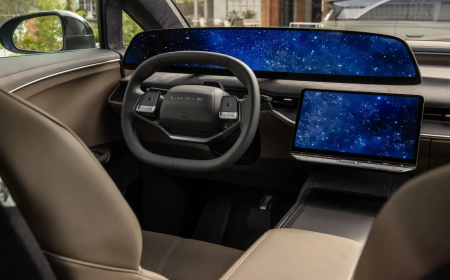
These vehicles are being equipped with Nuro’s self-driving technology, which runs on Nvidia Drive AGX Thor, a powerful computing system designed for autonomous driving. The Lucid Gravity robotaxi, first unveiled in January, features a suite of sensors including high-resolution cameras, solid-state lidar, and radar systems, all working together to help the vehicle interpret and navigate real-world environments.
Uber has also made a separate investment of several hundred million dollars into Nuro, although the exact figure has not been disclosed.
Under the current plan, Uber will own and operate the premium robotaxi service, potentially with support from a third-party partner. According to a regulatory filing released last year, production of these modified Lucid Gravity vehicles is expected to begin in late 2026.
Nuro has already completed closed-course testing and began public road testing of these autonomous vehicles toward the end of last year. The company now operates a fleet of around 100 Lucid Gravity SUVs equipped with its autonomous driving system, which are being used to gather real-world data and refine performance across multiple locations in the United States.
The ongoing employee ride program plays a key role in evaluating how the vehicle, autonomy software, and overall rider experience function together in real-world conditions. It also allows engineers to test critical operational challenges, such as navigating pick-up and drop-off scenarios, which remain one of the more complex aspects of autonomous ride-hailing services.
What's Your Reaction?
 Like
0
Like
0
 Dislike
0
Dislike
0
 Love
0
Love
0
 Funny
0
Funny
0
 Angry
0
Angry
0
 Sad
0
Sad
0
 Wow
0
Wow
0