Google said Tuesday that the generative AI music product ProducerAI is joining Google Labs.
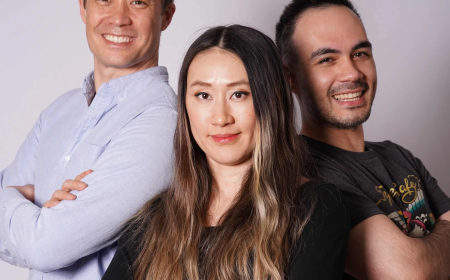
ProducerAI, backed by The Chainsmokers, lets users type plain-language prompts — for example, “make a lofi beat” — and generate music from those requests. The platform uses Google DeepMind’s Lyria 3 music-generation model, which can convert text prompts and even images into audio.
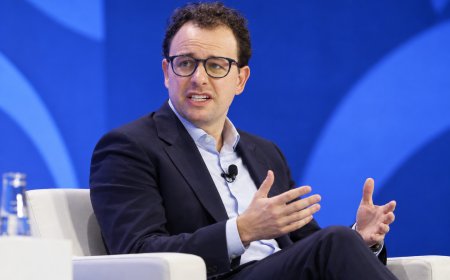
Google noted that it announced last week that Lyria 3 features are coming to its flagship Gemini app. ProducerAI, however, is positioned as a more interactive way to use the model, enabling people to work with it more like a “collaboration partner,” in the words of Elias Roman, senior director of Product Management at Google Labs.
“ProducerAI has allowed me to create in new ways,” Roman wrote in the company’s blog post. “I’ve experimented with new genre blends, expressed how I feel with personalised birthday songs for my loved ones, and made custom workout soundtracks for myself and friends.”
Google also said that Wyclef Jean, the three-time Grammy-winning rapper, used the Lyria 3 model along with Google’s Music AI Sandbox for his recent track “Back From Abu Dhabi.”
“This is not just a machine where you’re clicking a button a hundred times, and then you’re done. It’s a careful kind of curation where you’re going through and saying, ‘Oh, I think that’s something we can use,’” Jeff Chang, director of Product Management at Google DeepMind, said in a video released by the company.
In the same video, Jean described a moment when he wondered what a flute might sound like layered into an existing recording, and he used Google’s tools to add a flute element to the mix quickly.
“What I want everybody to understand […] is you’re in the era where the human has to be the most creative,” Jean said in the video. “There’s one thing that you have over the AI: a soul. And there’s one thing that AI has over you: the infinite information.”
AI in the music industry
AI tools in music remain a divisive topic. Many musicians have strongly opposed the use of generative systems in the creative process, largely because it is widely assumed that many of these models were trained on copyrighted works by artists without permission. In 2024, hundreds of musicians — including Billie Eilish, Katy Perry, and Jon Bon Jovi — signed an open letter urging technology companies not to erode or diminish human creativity through AI music-generation products.
Music publishers have also taken legal action. A group of publishers recently filed a $3 billion lawsuit against Anthropic, alleging the company illegally downloaded more than 20,000 copyrighted songs, including sheet music, lyrics, and musical compositions. Anthropic had already been ordered by a court to provide a $1.5 billion settlement to authors whose books were pirated for AI training.
At the same time, some artists have been more open to AI’s role — especially when it’s used as a tool to improve sound quality rather than replace the creative process. Paul McCartney used AI-driven noise reduction technology — similar to what Zoom or FaceTime uses to suppress background noise in calls — to clean up an old, low-quality John Lennon demo. That restoration work contributed to the “new” Beatles song “Now and Then,” which went on to win a Grammy in 2025.
Meanwhile, AI music-generation tools such as Suno have produced synthetic tracks that sound convincing enough to chart on Spotify and Billboard. Telisha Jones, a 31-year-old from Mississippi, used Suno to turn her poetry — described as organic — into the viral R&B track “How Was I Supposed to Know,” and later signed a record deal with Hallwood Media, reportedly valued at $3 million.
Even now, the legal landscape remains unsettled regarding the use of copyrighted works in AI training. One federal judge, William Alsup, ruled last year that training on copyrighted data is legal, but pirating that material is not.







































 Like
0
Like
0
 Dislike
0
Dislike
0
 Love
0
Love
0
 Funny
0
Funny
0
 Angry
0
Angry
0
 Sad
0
Sad
0
 Wow
0
Wow
0