


































Avalanche thinks the fusion power industry should think smaller
Avalanche argues the fusion power industry should focus on smaller, modular reactors, saying compact designs could reach commercialisation faster and at lower cost.
Nuclear fusion often brings to mind images of enormous reactors or facilities filled with banks of powerful lasers. But Robin Langtry, co-founder and CEO of Avalanche, believes that going smaller may be the better path forward.
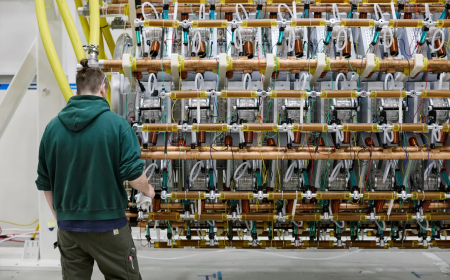
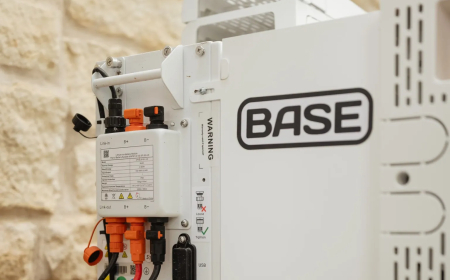
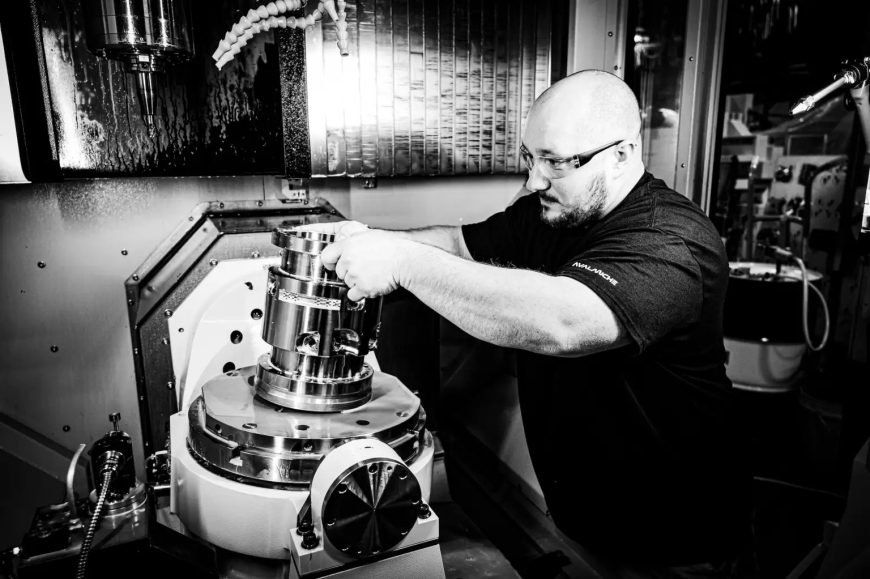
For the past several years, Langtry and his team at Avalanche have been developing what is effectively a desktop-scale fusion device. “We’re using the small size to learn quickly and iterate quickly,” Langtry told TechCrunch.
Fusion power holds the promise of delivering large amounts of clean heat and electricity, provided scientists and engineers can overcome several complex technical hurdles. At its most basic level, fusion seeks to replicate the process that powers the sun. To achieve that, fusion companies must find ways to heat and compress plasma for long enough that atomic nuclei fuse, releasing energy in the process.
The fusion industry is notoriously unforgiving. The underlying physics is highly challenging, the materials science pushes the limits of current technology, and the power requirements can be enormous. Components must be machined with extraordinary precision, and the systems involved are typically so large that rapid experimentation becomes slow and expensive.
Some companies, such as Commonwealth Fusion Systems (CFS), rely on massive magnets to confine plasma inside doughnut-shaped tokamak reactors. Others pursue inertial confinement approaches, compressing fuel pellets with powerful laser arrays. Avalanche takes a different route, using extremely high-voltage electric currents to pull plasma particles into orbit around an electrode. The company also employs magnets to maintain stability, though they are far less potent than those used in traditional tokamak designs. As the orbit tightens and plasma particles accelerate, collisions increase, eventually leading to fusion.
That unconventional approach has attracted investor interest. Avalanche recently secured an additional $29 million in funding in a round led by R.A. Capital Management, with participation from 8090 Industries, Congruent Ventures, Founders Fund, Lowercarbon Capital, Overlay Capital, and Toyota Ventures. In total, Avalanche has raised $80 million to date, a modest sum compared with many fusion startups that have raised hundreds of millions or even billions.
Space-inspired thinking
Langtry’s experience at Blue Origin, the space company backed by Jeff Bezos, has shaped Avalanche’s philosophy.
“We’ve figured out that using this sort of SpaceX ‘new space’ approach is that you can iterate really quickly, you can learn really quickly, and you can solve some of these challenges,” Langtry said. He previously worked at Blue Origin alongside Avalanche co-founder Brian Riordan.
By keeping its devices compact, Avalanche has dramatically accelerated its development cycle. The company has tested design changes “sometimes twice a week,” Langtry said, something that would be far more difficult and costly with a large-scale fusion system.
At present, Avalanche’s reactor measures just 9 centimetres in diameter. A newer version, however, will expand to 25 centimetres and is expected to generate roughly 1 megawatt of power. According to Langtry, that increase in size should provide a “significant bump in confinement time,” improving the chances of achieving plasmas with Q greater than 1. In fusion research, Q refers to the ratio of energy produced to energy consumed. When Q exceeds 1, the system is considered to have reached break-even.
Those experiments will take place at Avalanche’s FusionWERX facility, a commercial testing site that the company also makes available to other fusion startups. By 2027, FusionWERX is expected to be licensed to handle tritium, a hydrogen isotope commonly used as fusion fuel and a key component of many companies’ plans to generate grid-scale power eventually.
Langtry declined to give a specific timeline for when Avalanche might produce more energy than its systems consume, a critical milestone for the industry. Still, he believes the company is progressing on a schedule similar to that of competitors such as CFS and Helion, a view Sam Altman supports.
“I think there’s going to be a lot of fascinating things happening in fusion in 2027 to 2029,” Langtry said.
What's Your Reaction?
 Like
0
Like
0
 Dislike
0
Dislike
0
 Love
0
Love
0
 Funny
0
Funny
0
 Angry
0
Angry
0
 Sad
0
Sad
0
 Wow
0
Wow
0