







































Pacific Fusion finds a cheaper way to make its fusion reactor work
Pacific Fusion says it has developed a lower-cost approach to fusion energy by simplifying reactor design and reducing the expense of key components needed for ignition.
Fusion power’s most persistent challenge still hasn’t been solved: how to ensure that the cost of starting a fusion reaction is lower than the price at which the resulting electricity can be sold.
Many researchers and companies believe they have viable ideas, but no one has fully cracked the problem yet. Commonwealth Fusion Systems, for instance, is confident in its approach and is building a massive reactor expected to cost several hundred million dollars. That facility, however, is not scheduled to turn on until next year, leaving the core economic question unanswered for now.
Other, more recently founded companies believe they can reach fusion power at a lower cost, including Pacific Fusion. On Thursday, the company announced results from experiments conducted at Sandia National Laboratories that it says could eliminate some of the most expensive components of its reactor design. Pacific Fusion shared the findings exclusively with the media.
Fusion energy promises around-the-clock electricity generation delivered in a way that fits neatly into today’s power grids. Most fusion startups are aiming to bring their first commercial fusion power plants online in the early to mid-2030s.
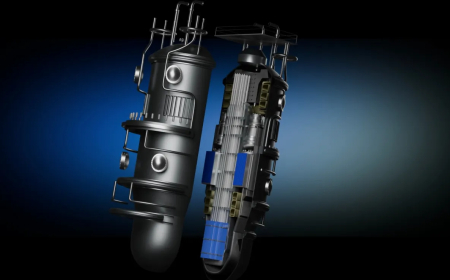
Pacific Fusion is pursuing a pulser-driven inertial confinement fusion (ICF) approach. At a high level, it resembles experiments conducted at the National Ignition Facility. The company rapidly compresses tiny fuel pellets, causing the atoms within the pellets to fuse and release energy.
While the National Ignition Facility relies on lasers to initiate compression, Pacific Fusion plans to use extremely powerful electrical pulses. Those pulses generate a magnetic field that surrounds the fuel pellet — roughly the size of a pencil eraser — forcing it to compress in less than 100 billionths of a second.
“The faster you can implode it, the hotter it’ll get,” said Keith LeChien, co-founder and chief technology officer of Pacific Fusion.
One of the longstanding challenges with pulser-driven ICF is that the fuel pellet has typically needed a preliminary boost to reach the temperatures required for fusion. To achieve those conditions, researchers have often used a combination of lasers and magnetic systems to preheat the fuel. “It’s just a little bit of energy just to give it a little bit of a boost before you compress it,” LeChien said, typically amounting to about 5% to 10% of the total energy involved.
However, adding lasers and magnetic systems increases complexity, upfront cost, and long-term maintenance needs, all of which make it harder to sell fusion-generated electricity at competitive prices.
In its experiments at Sandia, Pacific Fusion modified the cylinder that encases the fuel pellet and adjusted the current delivery. Instead of completely blocking the magnetic field until the main compression pulse, the company allowed a small amount of the magnetic field to leak into the fuel beforehand, gently warming it before compression.
“We can make very subtle changes to how this cylinder is manufactured that allow the magnetic field to leak or to seep into the fuel before it’s compressed,” LeChien said.
The fuel itself is housed in a plastic target wrapped in aluminium. By adjusting the thickness of the aluminium layer, Pacific Fusion can precisely control the amount of magnetic field reaching the fuel. According to LeChien, the required manufacturing tolerances are demanding but well within established industrial capabilities — comparable to those needed to produce a .calibreber bullet casing. “That’s a process that’s been honed and manufactured and perfected over 100-plus years,” he said.
These design changes do not significantly increase the amount of energy required to drive the fusion reaction. “It doesn’t take much energy to actually allow that magnetic field into the centre of the fuel,” LeChien explained. “It’s a tiny fraction, much less than 1%. It’s a very, very, very small fraction of the overall energy in the system, so it’s effectively unnoticeable.”
Removing the magnetic preheating system would simplify the reactor and reduce maintenance needs, resulting in a modest cost reduction. Eliminating the laser component, however, would have a much larger financial impact. “The scale of laser [needed] to preheat these types of systems at high gain is north of $100 million,” LeChien said.
He added that experiments like those conducted at Sandia are also crucial for improving the accuracy of Pacific Fusion’s simulations. “A lot of people have simulated things and said, ‘Oh, this will work, or that will work,’” LeChien said. “It’s a very different game to simulate something, build it, test it, and have it work. Closing that loop is hard.”
What's Your Reaction?
 Like
0
Like
0
 Dislike
0
Dislike
0
 Love
0
Love
0
 Funny
0
Funny
0
 Angry
0
Angry
0
 Sad
0
Sad
0
 Wow
0
Wow
0