







































Nuclear startups return to the spotlight with small reactors and major manufacturing challenges
Nuclear startups are experiencing renewed investor interest as small modular reactors gain momentum, even as manufacturing, supply chain, and workforce challenges threaten to slow large-scale deployment.
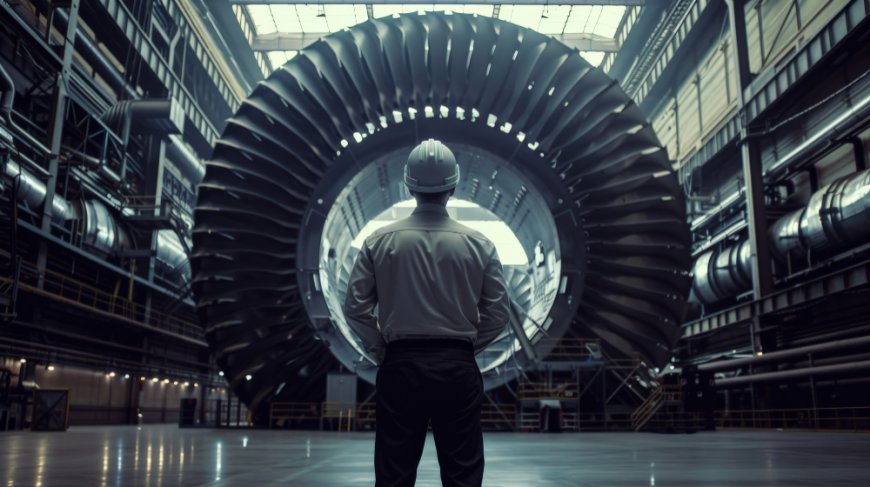
Nuclear startups are once again drawing attention as smaller reactor designs push the industry back into the spotlight, even as long-standing structural and manufacturing challenges remain.
The nuclear sector is in the middle of a revival. Ageing reactors are being refurbished, and investor interest has surged. In just the final weeks of 2025, nuclear startups collectively raised $1.1 billion, fueled by optimism that small-scale reactors can overcome the cost overruns and delays that have plagued traditional atomic projects.
Conventional nuclear power plants are enormous undertakings. The most recent reactors built in the United States — Vogtle Units 3 and 4 in Georgia — required tens of thousands of tons of concrete, use fuel assemblies roughly 14 feet tall, and each generates more than one gigawatt of electricity. However, both units were completed eight years late and exceeded their budgets by more than $20 billion.
The latest generation of nuclear startups believes that reducing reactor size could help avoid those issues. Rather than relying on massive, single-site plants, companies could add capacity incrementally by deploying multiple smaller reactors. Advocates argue these reactors can be manufactured using mass-production methods. As production scales and manufacturers gain experience, efficiency should improve, and costs should decline.
The extent of those cost savings is still being studied, but many startups are betting that the benefits of manufacturing at scale will be meaningful.
Manufacturing itself remains a significant obstacle. Even experienced companies have struggled to scale production efficiently. Tesla, for example, faced substantial challenges producing the Model 3 profitably at high volumes, despite operating in the mature automotive industry. Nuclear startups in the U.S. lack that level of industrial depth.
“I have a number of friends who work in supply chain for nuclear, and they can rattle off like five to ten materials that we just don’t make in the United States,” said Milo Werner, a general partner at DCVC, in an interview with TechCrunch. “We have to buy them overseas. We’ve forgotten how to make them.”
Werner has extensive experience in manufacturing. Before becoming an investor, she worked at Tesla, leading new product introductions, and before that, held a similar role at Fitbit, where she helped launch four factories in China. Alongside her role at DCVC, she also co-founded the NextGen Industry Group, which focuses on advancing new manufacturing technologies.
According to Werner, manufacturers face two primary challenges. The first is capital, since factories require substantial investment. For nuclear startups, this is currently less of a concern. “They’re awash in capital right now,” she said.
The second challenge is human capital. “We haven’t really built any industrial facilities in 40 years in the United States,” Werner said. That gap has eroded institutional knowledge. She compared the situation to spending years inactive and then attempting to run a marathon without preparation.
After decades of offshoring, the U.S. lacks sufficient numbers of experienced workers in factory construction and operations. While some expertise still exists, Werner said there are not enough seasoned professionals to staff large-scale manufacturing efforts. The shortage spans all levels, from machine operators and floor supervisors to financial executives and board members.
There are encouraging signs, however. Werner noted that many startups are building early versions of their products close to their engineering teams. This proximity enables faster feedback and continuous improvement, helping bring manufacturing activity closer to home.
To unlock the advantages of mass production, startups are often advised to start small. Werner emphasised that modularity is essential to investors. Modular designs enable companies to produce limited volumes early, gather manufacturing data, and refine processes over time. Demonstrating measurable improvement can help build investor confidence.
Still, the gains from mass manufacturing rarely happen quickly. Companies frequently forecast rapid cost reductions based on learning curves, but those improvements can take far longer than expected. “Often it takes years, like a decade, to get there,” Werner said.
What's Your Reaction?
 Like
0
Like
0
 Dislike
0
Dislike
0
 Love
0
Love
0
 Funny
0
Funny
0
 Angry
0
Angry
0
 Sad
0
Sad
0
 Wow
0
Wow
0