






































Didero lands $30M to put manufacturing procurement on ‘agentic’ autopilot

Didero raises $30 million to automate manufacturing procurement using agentic AI, aiming to streamline sourcing, supplier communication, and purchasing workflows.

Feb 15, 2026 - 20:05
 7
Didero lands $30M to put manufacturing procurement on ‘agentic’ autopilot
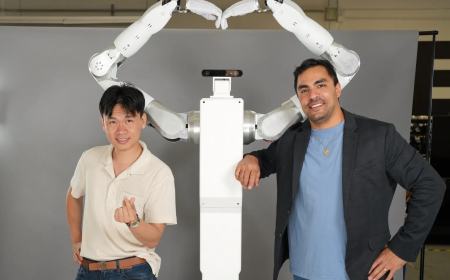
Image Credits: Didero

Tim Spencer first grasped the full complexity of manufacturing procurement while leading Markai, an Asia-based e-commerce business he operated during the pandemic.

“We had thousands of suppliers, and we were distributing products into dozens of countries around the world,” Spencer said. The company’s operations required constant coordination: identifying suppliers, negotiating terms, tracking shipments, and handling payments. Much of that work depended on manual processes, and the scale quickly became overwhelming.

“I found myself running this big team that was not really set up for success,” he explained. Spencer ultimately sold Markai in 2023, around the time advances in generative AI began to signal new possibilities for streamlining complex procurement tasks for manufacturers and distributors.

Later that year, Spencer teamed up with Lorenz Pallhuber, who previously worked in McKinsey’s procurement practice, and Tom Petit, the former technical co-founder of Landis, to launch Didero.

Didero’s objective is to automate the intricate processes involved in global procurement. The startup recently secured a $30 million Series A funding round co-led by Chemistry and Headline, with additional participation from M12.

“Global trade runs on natural language communication,” Spencer noted. “It’s emails, WeChat, phone calls, purchase orders, and packing lists.”

Before the emergence of generative AI tools, these fragmented communications required significant human oversight. Procurement teams often spend their days chasing suppliers for updates and manually entering information into internal systems. Didero says its platform can automatically process this stream of communication, placing a substantial portion of the procurement workflow on autopilot.

The company positions itself as an agentic AI layer that integrates with a firm’s existing ERP system. Acting as a coordinator, Didero reads inbound messages, interprets requests, and carries out the corresponding updates and actions within backend systems.

“The goal is to go from ‘I need a good’ to payment without having to lift a finger,” Spencer said.

Unlike procurement-focused platforms such as Levelpath, Zip, or Oro Labs, which optimise corporate purchasing workflows, Didero focuses specifically on supply chain operations. Its software is designed for manufacturers and distributors that must source raw materials and production inputs to build or distribute products.

Smaller companies are operatingin related areas. For example, Cavela and Pietra assist brands with sourcing manufacturers and negotiating pricing. However, Spencer argues that those firms primarily serve small and mid-sized businesses and do not oversee the full procurement lifecycle from initial quotation through final payment.

Didero reports having signed dozens of customers, though it has publicly named only one so far: Footprint, which develops plant-based, environmentally friendly packaging solutions.

What's Your Reaction?

Like Like 0
Dislike Dislike 0
Love Love 0
Funny Funny 0
Angry Angry 0
Sad Sad 0
Wow Wow 0
Shivangi Yadav Shivangi Yadav is a technology writer at TechAmerica.ai, covering artificial intelligence, startups, digital platforms, consumer technology, mobility, and emerging technologies. Her reporting follows major developments across the global technology industry, from AI companies and startup funding to product launches, regulatory investigations, software platforms, and changes affecting large technology markets. At TechAmerica.ai, Shivangi looks beyond the initial announcement to understand what a development means in practice. Her coverage often examines how new technologies, regulatory decisions, and business moves could affect companies, consumers, and the wider industry. She writes for an international audience, focusing on clear, well-researched reporting that gives readers useful context on fast-moving technology stories.